Texas Gulflink port gets approval from US Maritime Administration
What happened
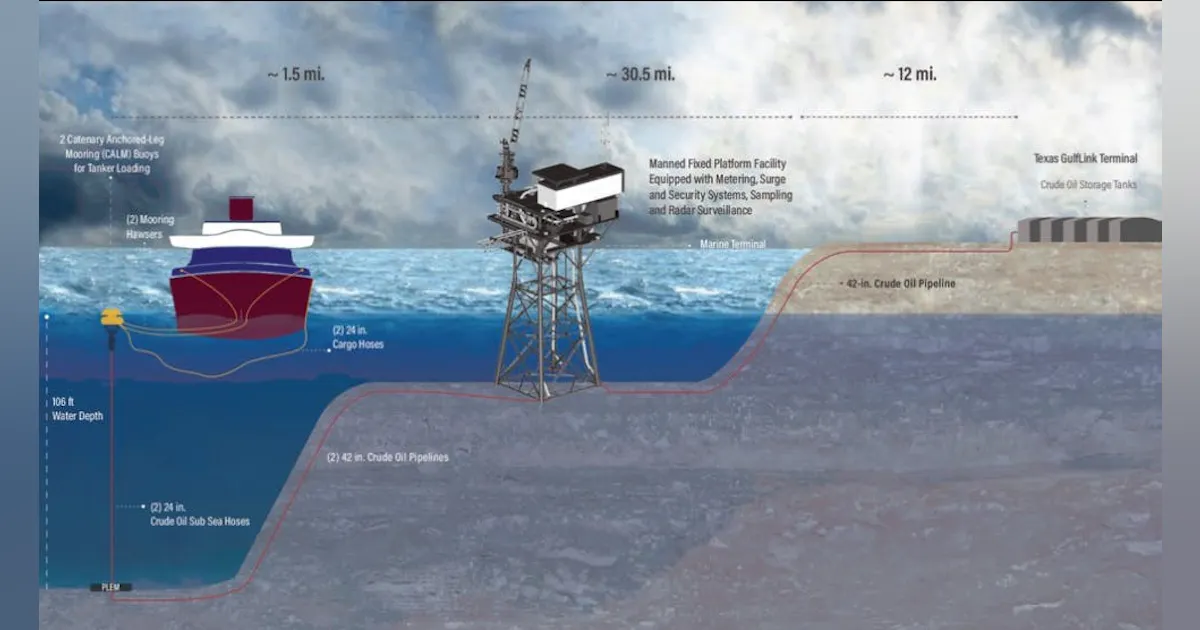
Sentinel Midstream reports that the US Maritime Administration (MARAD) has issued the license (Record of Decision, or ROD) to construct and operate its proposed Texas GulfLink facility. If the project moves forward, the crude oil export terminal will be sited in approximately 104 feet of water some 30 miles off Brazoria County along the Texas Gulf Coast. This matters for Subsea, SURF & Offshore because fresh price movement and input-cost detail should reset bid assumptions, epci risk allocation, and negotiation guardrails with 104, 30, 50 as the clearest commercial anchors; expect backlog-driven pricing
Buyer takeaway
For Subsea, SURF & Offshore, treat this as a cost-boundary signal rather than just a headline; buyer assumptions may need refreshing before the next quote or award decision
Cost / money
Use this to refresh should-cost views and challenge any fast repricing. Keep the read-through directional unless the source itself provides hard commercial numbers
Supplier / commercial
Suppliers with fresh cost justification may push harder on reopeners, indexation, shorter quote validity, or pass-through language. Buyers should separate real drivers from negotiation posture
Safety / operations
The operational risk is indirect: tight budgets or repricing battles often reappear later as reduced slack, substitutions, or execution compromises that buyers then have to manage
What to watch
Watch for shorter quote validity, reopeners, pass-through requests, or attempts to reset pricing on the back of weak evidence
Key facts
- Sentinel Midstream reports that the US Maritime Administration (MARAD) has issued the license
- If the project moves forward, the crude oil export terminal will be sited in approximately 10
- It will feature a manned platform, two SPM buoys, and over 50 miles of pipeline, allowing for
- The project must also reach FID, and Sentinel says that it is engaging with customers and sta
Source excerpts
Texas GulfLink is a proposed offshore crude oil export terminal designed to facilitate the loading of VLCCs (very large crude carriers)
The project must also reach FID, and Sentinel says that it is engaging with customers and stakeholders to secure long-term contracts to support the terminal to advance that goal
By enabling VLCCs to receive crude oil offshore at the terminal, Sentinel Midstream says that the Texas GulfLink facility will set a new standard for crude loading efficiency. It will do this, the company says, by substantially reducing costs, improving vessel traffic in crowded US Gulf Coast ship channels, and reducing air emissions typically associated with lightering operations