Completions & Intervention · Australia (Perth)

Reposition sourcing as offshore service consolidation shifts vessel availability

Published Apr 24, 2026, 6:00 AM AWSTAPACFull category signal
Ask AI
Two US players merge into 'premier integrated offshore services company'

In 60 seconds

Top move

US offshore services merger tightens the pool for mission-critical vessels used in completions and intervention, raising single-supplier exposure for APAC campaigns

Key takeaways

  • US offshore services merger tightens the pool for mission-critical vessels used in completions and intervention, raising single-supplier exposure for APAC campaigns.[2]
  • New-build trenching capacity adds sustainable capability that can win sustainability-weighted scopes, but delivery timing and regional allocation leave APAC availability uncertain.[3]
  • First LNG cargo from Golden Pass confirms additional export supply that can directionally ease gas-price pressure affecting gas-linked completions economics and scheduling.[1]
  • Combined suppliers are likely to repackage integrated subsea offers and pursue cross-selling, which changes how RFx should treat bundled scopes and award rules.[2]
  • Alternative-fuel vessel designs force new contract and operations clauses (bunkering, handling, emergency procedures) that buyers must include before mobilisation.[3]

What changed since last run

  • Removed prior emphasis on the ExxonMobil–Saipem Guyana contract; current run focuses on supplier consolidation, new sustainable trenching builds, and LNG supply milestones.
  • Added concrete supplier capacity signals (Helix/Hornbeck merger, Jan De Nul newbuild) and an LNG export milestone as new inputs to APAC completions sourcing.

Key facts

  • Merger forms combined company operating under Hornbeck Offshore Services
  • Shareholder ownership split weighted toward Hornbeck
  • Company cites revenue and cost synergies as rationale
  • Newbuild trencher support vessel announced (Ulstein design)
  • Vessel capable of biofuel and green-methanol operation
  • Delivery forecast outside the immediate term

Why it matters

US offshore services merger tightens the pool for mission-critical vessels used in completions and intervention, raising single-supplier exposure for APAC campaigns. New-build trenching capacity adds sustainable capability that can win sustainability-weighted scopes, but delivery timing and regional allocation leave APAC availability uncertain. First LNG cargo from Golden Pass confirms additional export supply that can directionally ease gas-price pressure affecting gas-linked completions economics and scheduling. Combined suppliers are likely to repackage integrated subsea offers and pursue cross-selling, which changes how RFx should treat bundled scopes and award rules

Cost / money

  • Merger can raise baseline dayrates for certain vessel and integrated packages where spot competition is reduced.[2]
  • Additional LNG export capacity is a supply-side signal that can directionally relieve gas-price risk feeding into project cost assumptions for gas-dependent interventions.[1]

Supplier / commercial

  • The combined Helix/Hornbeck entity creates a larger integrated fleet able to offer packaged engineering-delivery deals, reducing alternate-bid liquidity for bundled subsea scopes.[2]
  • Jan De Nul’s low-emission trencher strengthens suppliers that can meet sustainability clauses and may command premium commercial terms where green-fuel logistics are required.[3]

Safety / operations

  • Integration of two service businesses can temporarily strain procedures and crew alignment—buyers should plan audits and crew competency checks on critical mobilisations.[2]
  • Alternative fuels (biofuel/green methanol) change bunkering, storage, and emergency response requirements that operations teams must validate before accepting charters.[3]

What to watch

  • Watch for withdrawal of competing spot tonnage from the market during integration, which would tighten availability for APAC interventions.[2]
  • Watch deployment priorities for Jan De Nul’s trencher; owners may allocate it to European offshore-wind work before APAC projects, limiting local access.[3]

Top stories

Story 1Offshore EnergyApr 23, 2026

Two US players merge into 'premier integrated offshore services company'

Signal moderateSource-grounded

What happened

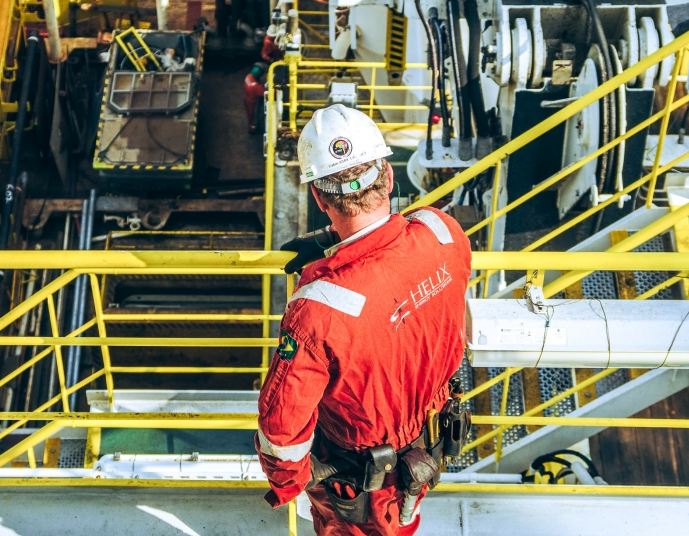
Helix Energy Solutions and Hornbeck Offshore Services announced a merger to create a larger integrated offshore services company operating under the Hornbeck name. The combined firm highlights revenue and cost synergies and a larger fleet, which makes packaged, cross-selling offers more likely. Watch fleet redeployment and whether spot tonnage is withdrawn during integration, as that will directly affect APAC vessel availability

Buyer takeaway

Treat this as a material supplier-consolidation event that can increase single-supplier exposure on vessel and integrated-subsea packages

Cost / money

Directionally raises pricing posture risk where competition reduces; combined packages may be offered at bundled rates that change award economics

Supplier / commercial

Expect cross-selling of vessels and services and potential repackaging of scopes that shrink the active bidder field for integrated awards

Safety / operations

Integration can create short-term procedural and crew-alignment risk; require audits and competency verification during transition mobilisations

What to watch

Watch for spot-tonnage withdrawal, changes to charter terms, and early consolidation of contracts that limit alternate sources

Key facts

  • Merger forms combined company operating under Hornbeck Offshore Services
  • Shareholder ownership split weighted toward Hornbeck
  • Company cites revenue and cost synergies as rationale

Source excerpts

Home Fossil Energy Two US players merge into ‘premier integrated offshore services company’ April 23, 2026, by Texas-headquartered offshore energy services provider Helix Energy Solutions and Hornbeck Offshore Services, a Louisiana-headquartered supplier of offshore transport services, have entered into a definitive agreement to combine in an all-stock transaction, establishing what they say will become a premier integrated offshore services company. Hornbeck shareholders will own approximately 55% and Helix sh
Home Fossil Energy Two US players merge into ‘premier integrated offshore services company’ April 23, 2026, by Texas-headquartered offshore energy services provider Helix Energy Solutions and Hornbeck Offshore Services, a Louisiana-headquartered supplier of offshore transport services, have entered into a definitive agreement to combine in an all-stock transaction, establishing what they say will become a premier integrated offshore services company
” According to Helix, the merger will combine Helix’s well intervention assets and robotics with Hornbeck’s specialty and ultra-high specification offshore support vessels to form a complementary, end-to-end service offering that meets a broader share of clients’ deepwater needs
Story 2Offshore EnergyApr 23, 2026

Jan De Nul's newbuild trencher bears name of 19th-century British engineer

Signal moderateDirectional

What happened

Jan De Nul unveiled a new trencher support vessel able to run on biofuel and green methanol and equipped with ultra-low emission technology. Delivery is expected in the medium term, so near-term APAC operational effect is limited but the asset strengthens the market for sustainable trenching services. Buyers should monitor deployment plans and whether operators prioritise European offshore-wind projects before offering the vessel in APAC

Buyer takeaway

Consider this an incremental increase in specialized trenching capacity that may initially serve Europe-first projects; confirm APAC availability before relying on it

Cost / money

New low-emission assets may command premium dayrates but help meet sustainability procurement criteria

Supplier / commercial

Owners can leverage green capability to win sustainability-weighted contracts; contract clauses should reflect fuel logistics differences

Safety / operations

Alternative-fuel operations change bunkering, fuel handling, and emergency procedures—these must be validated in pre-mobilisation checks

What to watch

Watch allocation to offshore-wind projects in Europe and the vessel's regional deployment plan to assess APAC relevance

Key facts

  • Newbuild trencher support vessel announced (Ulstein design)
  • Vessel capable of biofuel and green-methanol operation
  • Delivery forecast outside the immediate term

Source excerpts

Home Subsea Jan De Nul’s newbuild trencher bears name of 19th-century British engineer April 23, 2026, by Jan De Nul has named its new trenching support vessel Isambard Kingdom Brunel, after a 19th-century British engineer, who the company describes as one of the key figures of the Industrial Revolution. Source: Jan De Nul Jan De Nul announced on March 10 that it was expanding its fleet with the addition of two trenching support vessels, one newbuild and the other to be converted from a water injection dredger
It will be capable of running on biofuel and green methanol, in addition to being equipped with ultra-low emission (ULEv) technology
The newbuild trenching support vessel is of an Ulstein design and will be built at the China Merchants Heavy Industry (CMHI) shipyard. It will be capable of running on biofuel and green methanol, in addition to being equipped with ultra-low emission (ULEv) technology
Story 3Offshore EnergyApr 23, 2026

QatarEnergy and ExxonMobil's $10B US project exports first LNG cargo

Signal strongSource-grounded

What happened

QatarEnergy and ExxonMobil’s Golden Pass exported the first LNG cargo from Train 1 after sustaining liquefaction operations. EPC contractors remain active on the remaining trains, indicating ongoing commissioning and construction activity while export capacity ramps. Buyers should track the commissioning cadence for later trains to understand how additional supply may influence regional gas price direction

Buyer takeaway

Treat this as a confirmed uptick in LNG export capability that can influence gas-market direction and cost assumptions for gas-exposed projects

Cost / money

Additional export capacity can directionally ease gas-price risk, affecting cost assumptions for gas-dependent completion campaigns

Supplier / commercial

Continued EPC activity sustains demand for construction and commissioning services, keeping certain specialist categories engaged

Safety / operations

No immediate change to completions operations, but contractor activity can affect global availability of specialist crews and equipment

What to watch

Watch the commissioning schedule for trains 2 and 3 to gauge longer-term impacts on regional gas pricing and contractor availability

Key facts

  • First LNG cargo loaded from Train 1
  • Project comprises three liquefaction trains with ongoing work on trains 2 and 3
  • Major EPC contractors continue commissioning work

Source excerpts

“The Golden Pass LNG project is one of the single largest investment decisions in the history of the U
Source: QatarEnergy via LinkedIn It was reported today, April 23, that the first LNG cargo from the Golden Pass LNG project in Sabine Pass had been loaded onboard QatarEnergy’s Al-Qaiyyah LNG carrier, recently built in Korea, with a capacity of 174,000 cubic meters (cbm). This comes after the project achieved sustained liquefaction operations and first LNG production from the first of three LNG trains on March 30
Home Fossil Energy QatarEnergy and ExxonMobil’s $10B US project exports first LNG cargo April 23, 2026, by Some 24 days after achieving first LNG production from the first of three planned trains, QatarEnergy and ExxonMobil’s liquefied natural gas (LNG) project in Texas, the U

VP Snapshot

Executive Risk & Action View

US offshore services merger tightens the pool for mission-critical vessels used in completions and intervention, raising single-supplier exposure for APAC campaigns.

Overall
59
Cost
61
Supply
79
Schedule
20
Compliance
15

Top signals

30-180dcost

Signal 1: Cost / money

Merger can raise baseline dayrates for certain vessel and integrated packages where spot competition is reduced.

Signal 2: Cost / money

Additional LNG export capacity is a supply-side signal that can directionally relieve gas-price risk feeding into project cost assumptions for gas-dependent interventions.

30-180dsupply

Signal 3: Supplier / commercial

The combined Helix/Hornbeck entity creates a larger integrated fleet able to offer packaged engineering-delivery deals, reducing alternate-bid liquidity for bundled subsea scopes.

Signal 5: Safety / operations

Integration of two service businesses can temporarily strain procedures and crew alignment—buyers should plan audits and crew competency checks on critical mobilisations.

30-180dcommercial

Signal 4: Supplier / commercial

Jan De Nul’s low-emission trencher strengthens suppliers that can meet sustainability clauses and may command premium commercial terms where green-fuel logistics are required.

30-180dsupplier

Signal 6: Safety / operations

Alternative fuels (biofuel/green methanol) change bunkering, storage, and emergency response requirements that operations teams must validate before accepting charters.

Recommended actions

CategoryDue 3d

Map active APAC contracts to Helix and Hornbeck assets to reveal single-supplier dependencies.

Inventory showing contracts, mobilisation risk, and alternative sourcing gaps.

ContractsDue 3d

Flag live tenders for trenching or seabed works and note potential competitive impact of Jan De Nul’s newbuild.

Tenders annotated for potential competitor capabilities and sustainability implications.

ContractsDue 21d

Update charter RFx templates to include consolidated-supplier scenarios, bundled-offer evaluation, and revised award thresholds.

RFx templates and evaluation checklists that factor consolidation risk into award decisions.

OpsDue 21d

Work with Ops to add an alternative-fuel handling annex and pre-mobilisation checklist to vessel charters.

Standard contract annex and checklist used in future charters for low-emission vessels.

CategoryDue 60d

Run a sourcing review for gas-exposed completions projects to adjust approval gates and cost assumptions.

Revised gating criteria and updated procurement cost assumptions for gas-linked campaigns.

Risk register

RiskTriggerMitigation
Watch for withdrawal of competing spot tonnage from the market during integration, which would tighten availability for APAC interventions.Watch for withdrawal of competing spot tonnage from the market during integration, which would tighten availability for APAC interventions.Confirm exposure with category, contracts, and operations before the next supplier commitment.
Watch deployment priorities for Jan De Nul’s trencher; owners may allocate it to European offshore-wind work before APAC projects, limiting local access.Watch deployment priorities for Jan De Nul’s trencher; owners may allocate it to European offshore-wind work before APAC projects, limiting local access.Confirm exposure with category, contracts, and operations before the next supplier commitment.

CM Snapshot

Category Manager Decision Detail

Today's priorities

Map active APAC contracts to Helix and Hornbeck assets to reveal single-supplier dependencies.

because the announced merger changes supplier concentration and could affect mobilisation or single-source exposure on vessel and subsea services.

Due 3d

high

CM move

Use this as the immediate supplier or contract action to move before the next sourcing gate.

Flag live tenders for trenching or seabed works and note potential competitive impact of Jan De Nul’s newbuild.

because a new low-emission trencher can influence bidders' technical offers and sustainability scoring even before APAC deployment is confirmed.

Due 3d

high

CM move

Use this as the immediate supplier or contract action to move before the next sourcing gate.

Update charter RFx templates to include consolidated-supplier scenarios, bundled-offer evaluation, and revised award thresholds.

because supplier consolidation can change pricing posture and reduce alternate sourcing options, so award rules must preserve buyer leverage.

Due 21d

high

CM move

Use this as the immediate supplier or contract action to move before the next sourcing gate.

Work with Ops to add an alternative-fuel handling annex and pre-mobilisation checklist to vessel charters.

because biofuel and green-methanol capability require different bunkering arrangements and safety controls that must be contractually defined before mobilisation.

Due 21d

high

CM move

Use this as the immediate supplier or contract action to move before the next sourcing gate.

Supplier radar

Offshore Energy

high

Observed supplier signal

The combined Helix/Hornbeck entity creates a larger integrated fleet able to offer packaged engineering-delivery deals, reducing alternate-bid liquidity for bundled subsea scopes.

Commercial implication

The combined Helix/Hornbeck entity creates a larger integrated fleet able to offer packaged engineering-delivery deals, reducing alternate-bid liquidity for bundled subsea scopes.

Next step: Validate the source-backed signal with incumbents and alternates before the next award or pricing decision.

Offshore Energy

high

Observed supplier signal

Jan De Nul’s low-emission trencher strengthens suppliers that can meet sustainability clauses and may command premium commercial terms where green-fuel logistics are required.

Commercial implication

Jan De Nul’s low-emission trencher strengthens suppliers that can meet sustainability clauses and may command premium commercial terms where green-fuel logistics are required.

Next step: Validate the source-backed signal with incumbents and alternates before the next award or pricing decision.

Negotiation levers

Map active APAC contracts to Helix and Hornbeck assets to reveal single-supplier dependencies.

When to use: because the announced merger changes supplier concentration and could affect mobilisation or single-source exposure on vessel and subsea services.

Expected outcome: Inventory showing contracts, mobilisation risk, and alternative sourcing gaps.

Commercial mechanism to carry into the next supplier conversation

Flag live tenders for trenching or seabed works and note potential competitive impact of Jan De Nul’s newbuild.

When to use: because a new low-emission trencher can influence bidders' technical offers and sustainability scoring even before APAC deployment is confirmed.

Expected outcome: Tenders annotated for potential competitor capabilities and sustainability implications.

Commercial mechanism to carry into the next supplier conversation

Update charter RFx templates to include consolidated-supplier scenarios, bundled-offer evaluation, and revised award thresholds.

When to use: because supplier consolidation can change pricing posture and reduce alternate sourcing options, so award rules must preserve buyer leverage.

Expected outcome: RFx templates and evaluation checklists that factor consolidation risk into award decisions.

Commercial mechanism to carry into the next supplier conversation

Work with Ops to add an alternative-fuel handling annex and pre-mobilisation checklist to vessel charters.

When to use: because biofuel and green-methanol capability require different bunkering arrangements and safety controls that must be contractually defined before mobilisation.

Expected outcome: Standard contract annex and checklist used in future charters for low-emission vessels.

Commercial mechanism to carry into the next supplier conversation

Talking points

US offshore services merger tightens the pool for mission-critical vessels used in completions and intervention, raising single-supplier exposure for APAC campaigns.
New-build trenching capacity adds sustainable capability that can win sustainability-weighted scopes, but delivery timing and regional allocation leave APAC availability uncertain.
First LNG cargo from Golden Pass confirms additional export supply that can directionally ease gas-price pressure affecting gas-linked completions economics and scheduling.
Combined suppliers are likely to repackage integrated subsea offers and pursue cross-selling, which changes how RFx should treat bundled scopes and award rules.

Supplier radar

SupplierSignalImplicationNext stepConfidence
Offshore EnergyThe combined Helix/Hornbeck entity creates a larger integrated fleet able to offer packaged engineering-delivery deals, reducing alternate-bid liquidity for bundled subsea scopes.The combined Helix/Hornbeck entity creates a larger integrated fleet able to offer packaged engineering-delivery deals, reducing alternate-bid liquidity for bundled subsea scopes.Validate the source-backed signal with incumbents and alternates before the next award or pricing decision.high
Offshore EnergyJan De Nul’s low-emission trencher strengthens suppliers that can meet sustainability clauses and may command premium commercial terms where green-fuel logistics are required.Jan De Nul’s low-emission trencher strengthens suppliers that can meet sustainability clauses and may command premium commercial terms where green-fuel logistics are required.Validate the source-backed signal with incumbents and alternates before the next award or pricing decision.high

Negotiation levers

  • Map active APAC contracts to Helix and Hornbeck assets to reveal single-supplier dependencies.because the announced merger changes supplier concentration and could affect mobilisation or single-source exposure on vessel and subsea services.Inventory showing contracts, mobilisation risk, and alternative sourcing gaps.

    high confidence

  • Flag live tenders for trenching or seabed works and note potential competitive impact of Jan De Nul’s newbuild.because a new low-emission trencher can influence bidders' technical offers and sustainability scoring even before APAC deployment is confirmed.Tenders annotated for potential competitor capabilities and sustainability implications.

    high confidence

  • Update charter RFx templates to include consolidated-supplier scenarios, bundled-offer evaluation, and revised award thresholds.because supplier consolidation can change pricing posture and reduce alternate sourcing options, so award rules must preserve buyer leverage.RFx templates and evaluation checklists that factor consolidation risk into award decisions.

    high confidence

  • Work with Ops to add an alternative-fuel handling annex and pre-mobilisation checklist to vessel charters.because biofuel and green-methanol capability require different bunkering arrangements and safety controls that must be contractually defined before mobilisation.Standard contract annex and checklist used in future charters for low-emission vessels.

    high confidence

What to do / What to watch

What to do now

  • Map active APAC contracts to Helix and Hornbeck assets to reveal single-supplier dependencies.

    Why: because the announced merger changes supplier concentration and could affect mobilisation or single-source exposure on vessel and subsea services.

    Owner: Category

    Expected outcome: Inventory showing contracts, mobilisation risk, and alternative sourcing gaps.

    [2]
  • Flag live tenders for trenching or seabed works and note potential competitive impact of Jan De Nul’s newbuild.

    Why: because a new low-emission trencher can influence bidders' technical offers and sustainability scoring even before APAC deployment is confirmed.

    Owner: Contracts

    Expected outcome: Tenders annotated for potential competitor capabilities and sustainability implications.

    [3]

Next few weeks

  • Update charter RFx templates to include consolidated-supplier scenarios, bundled-offer evaluation, and revised award thresholds.

    Why: because supplier consolidation can change pricing posture and reduce alternate sourcing options, so award rules must preserve buyer leverage.

    Owner: Contracts

    Expected outcome: RFx templates and evaluation checklists that factor consolidation risk into award decisions.

    [2]
  • Work with Ops to add an alternative-fuel handling annex and pre-mobilisation checklist to vessel charters.

    Why: because biofuel and green-methanol capability require different bunkering arrangements and safety controls that must be contractually defined before mobilisation.

    Owner: Ops

    Expected outcome: Standard contract annex and checklist used in future charters for low-emission vessels.

    [3]

Longer view

  • Run a sourcing review for gas-exposed completions projects to adjust approval gates and cost assumptions.

    Why: because additional LNG export capacity from projects like Golden Pass can directionally change gas-price assumptions and affect project economics and scheduling.

    Owner: Category

    Expected outcome: Revised gating criteria and updated procurement cost assumptions for gas-linked campaigns.

    [1]

What to watch

  • Watch for withdrawal of competing spot tonnage from the market during integration, which would tighten availability for APAC interventions
  • Watch deployment priorities for Jan De Nul’s trencher; owners may allocate it to European offshore-wind work before APAC projects, limiting local access
  • Watch for withdrawal of competing spot tonnage from the market during integration, which would tighten availability for APAC interventions.: Watch for withdrawal of competing spot tonnage from the market during integration, which would tighten availability for APAC interventions
  • Watch deployment priorities for Jan De Nul’s trencher; owners may allocate it to European offshore-wind work before APAC projects, limiting local access.: Watch deployment priorities for Jan De Nul’s trencher; owners may allocate it to European offshore-wind work before APAC projects, limiting local access
  • US offshore services merger tightens the pool for mission-critical vessels used in completions and intervention, raising single-supplier exposure for APAC campaigns
  • New-build trenching capacity adds sustainable capability that can win sustainability-weighted scopes, but delivery timing and regional allocation leave APAC availability uncertain
  • First LNG cargo from Golden Pass confirms additional export supply that can directionally ease gas-price pressure affecting gas-linked completions economics and scheduling
  • Combined suppliers are likely to repackage integrated subsea offers and pursue cross-selling, which changes how RFx should treat bundled scopes and award rules

Market pulse

IndexLatestChangeAs of
WTI Crude (WTI)71.23 /bbl+0.00 (+0.00%)Apr 23, 2026, 10:03 PM
Brent Crude (BRENT)74.89 /bbl+0.00 (+0.00%)Apr 23, 2026, 10:03 PM
Natural Gas (NG)3.12 /MMBtu+0.00 (+0.00%)Apr 23, 2026, 10:03 PM
Schlumberger (SLB)48 +0.00 (+0.00%)Apr 23, 2026, 10:03 PM
Halliburton (HAL)35 +0.00 (+0.00%)Apr 23, 2026, 10:03 PM
  • Brent Crude: Brent price directionally affects offshore project economics and dayrate appetite for long-lead completions packages
  • Schlumberger: Service-provider stock moves can indicate margin and demand trends that influence supplier pricing posture for intervention equipment and services

Sources

Inline citations jump here. Expand a source to read the excerpt, the AI interpretation, and the original link.

[1] QatarEnergy and ExxonMobil's $10B US project exports first LNG cargo

offshore-energy.biz · Apr 23, 2026

Expand

AI reading

QatarEnergy and ExxonMobil’s Golden Pass exported the first LNG cargo from Train 1 after sustaining liquefaction operations. EPC contractors remain active on the remaining trains, indicating ongoing commissioning and construction activity while export capacity ramps. Buyers should track the commissioning cadence for later trains to understand how additional supply may influence regional gas price direction

Buyer takeaway

Treat this as a confirmed uptick in LNG export capability that can influence gas-market direction and cost assumptions for gas-exposed projects

Cost / money

Additional export capacity can directionally ease gas-price risk, affecting cost assumptions for gas-dependent completion campaigns

Supplier / commercial

Continued EPC activity sustains demand for construction and commissioning services, keeping certain specialist categories engaged

Safety / operations

No immediate change to completions operations, but contractor activity can affect global availability of specialist crews and equipment

What to watch

Watch the commissioning schedule for trains 2 and 3 to gauge longer-term impacts on regional gas pricing and contractor availability

Key facts

  • First LNG cargo loaded from Train 1
  • Project comprises three liquefaction trains with ongoing work on trains 2 and 3
  • Major EPC contractors continue commissioning work

Source excerpts

“The Golden Pass LNG project is one of the single largest investment decisions in the history of the U
Source: QatarEnergy via LinkedIn It was reported today, April 23, that the first LNG cargo from the Golden Pass LNG project in Sabine Pass had been loaded onboard QatarEnergy’s Al-Qaiyyah LNG carrier, recently built in Korea, with a capacity of 174,000 cubic meters (cbm). This comes after the project achieved sustained liquefaction operations and first LNG production from the first of three LNG trains on March 30
Home Fossil Energy QatarEnergy and ExxonMobil’s $10B US project exports first LNG cargo April 23, 2026, by Some 24 days after achieving first LNG production from the first of three planned trains, QatarEnergy and ExxonMobil’s liquefied natural gas (LNG) project in Texas, the U

Used in this brief

  • Next quarter — Run a sourcing review for gas-exposed completions projects to adjust approval gates and cost assumptions.. Rationale: because additional LNG export capacity from projects like Golden Pass can directionally change gas-price assumptions and affect project economics and scheduling.. Owner: Category. KPI: Revised gating criteria and updated procurement cost assumptions for gas-linked campaigns
  • QatarEnergy and ExxonMobil’s Golden Pass exported the first LNG cargo from Train 1 after sustaining liquefaction operations. EPC contractors remain active on the remaining trains, indicating ongoing commissioning and construction activity while export capacity ramps. Buyers should track the commissioning cadence for later trains to understand how additional supply may influence regional gas price direction
  • Buyer bottom line: confirmed increase in LNG export capability is a market signal that can ease gas-price-driven urgency for gas-dependent completions and intervention programs
Open original source

[2] Two US players merge into 'premier integrated offshore services company'

offshore-energy.biz · Apr 23, 2026

Expand

AI reading

Helix Energy Solutions and Hornbeck Offshore Services announced a merger to create a larger integrated offshore services company operating under the Hornbeck name. The combined firm highlights revenue and cost synergies and a larger fleet, which makes packaged, cross-selling offers more likely. Watch fleet redeployment and whether spot tonnage is withdrawn during integration, as that will directly affect APAC vessel availability

Buyer takeaway

Treat this as a material supplier-consolidation event that can increase single-supplier exposure on vessel and integrated-subsea packages

Cost / money

Directionally raises pricing posture risk where competition reduces; combined packages may be offered at bundled rates that change award economics

Supplier / commercial

Expect cross-selling of vessels and services and potential repackaging of scopes that shrink the active bidder field for integrated awards

Safety / operations

Integration can create short-term procedural and crew-alignment risk; require audits and competency verification during transition mobilisations

What to watch

Watch for spot-tonnage withdrawal, changes to charter terms, and early consolidation of contracts that limit alternate sources

Key facts

  • Merger forms combined company operating under Hornbeck Offshore Services
  • Shareholder ownership split weighted toward Hornbeck
  • Company cites revenue and cost synergies as rationale

Source excerpts

Home Fossil Energy Two US players merge into ‘premier integrated offshore services company’ April 23, 2026, by Texas-headquartered offshore energy services provider Helix Energy Solutions and Hornbeck Offshore Services, a Louisiana-headquartered supplier of offshore transport services, have entered into a definitive agreement to combine in an all-stock transaction, establishing what they say will become a premier integrated offshore services company. Hornbeck shareholders will own approximately 55% and Helix sh
Home Fossil Energy Two US players merge into ‘premier integrated offshore services company’ April 23, 2026, by Texas-headquartered offshore energy services provider Helix Energy Solutions and Hornbeck Offshore Services, a Louisiana-headquartered supplier of offshore transport services, have entered into a definitive agreement to combine in an all-stock transaction, establishing what they say will become a premier integrated offshore services company
” According to Helix, the merger will combine Helix’s well intervention assets and robotics with Hornbeck’s specialty and ultra-high specification offshore support vessels to form a complementary, end-to-end service offering that meets a broader share of clients’ deepwater needs

Used in this brief

  • Next 72 hours — Map active APAC contracts to Helix and Hornbeck assets to reveal single-supplier dependencies.. Rationale: because the announced merger changes supplier concentration and could affect mobilisation or single-source exposure on vessel and subsea services.. Owner: Category. KPI: Inventory showing contracts, mobilisation risk, and alternative sourcing gaps
  • Next 2-4 weeks — Update charter RFx templates to include consolidated-supplier scenarios, bundled-offer evaluation, and revised award thresholds.. Rationale: because supplier consolidation can change pricing posture and reduce alternate sourcing options, so award rules must preserve buyer leverage.. Owner: Contracts. KPI: RFx templates and evaluation checklists that factor consolidation risk into award decisions
  • Watch for withdrawal of competing spot tonnage from the market during integration, which would tighten availability for APAC interventions
Open original source

[3] Jan De Nul's newbuild trencher bears name of 19th-century British engineer

offshore-energy.biz · Apr 23, 2026

Expand

AI reading

Jan De Nul unveiled a new trencher support vessel able to run on biofuel and green methanol and equipped with ultra-low emission technology. Delivery is expected in the medium term, so near-term APAC operational effect is limited but the asset strengthens the market for sustainable trenching services. Buyers should monitor deployment plans and whether operators prioritise European offshore-wind projects before offering the vessel in APAC

Buyer takeaway

Consider this an incremental increase in specialized trenching capacity that may initially serve Europe-first projects; confirm APAC availability before relying on it

Cost / money

New low-emission assets may command premium dayrates but help meet sustainability procurement criteria

Supplier / commercial

Owners can leverage green capability to win sustainability-weighted contracts; contract clauses should reflect fuel logistics differences

Safety / operations

Alternative-fuel operations change bunkering, fuel handling, and emergency procedures—these must be validated in pre-mobilisation checks

What to watch

Watch allocation to offshore-wind projects in Europe and the vessel's regional deployment plan to assess APAC relevance

Key facts

  • Newbuild trencher support vessel announced (Ulstein design)
  • Vessel capable of biofuel and green-methanol operation
  • Delivery forecast outside the immediate term

Source excerpts

Home Subsea Jan De Nul’s newbuild trencher bears name of 19th-century British engineer April 23, 2026, by Jan De Nul has named its new trenching support vessel Isambard Kingdom Brunel, after a 19th-century British engineer, who the company describes as one of the key figures of the Industrial Revolution. Source: Jan De Nul Jan De Nul announced on March 10 that it was expanding its fleet with the addition of two trenching support vessels, one newbuild and the other to be converted from a water injection dredger
It will be capable of running on biofuel and green methanol, in addition to being equipped with ultra-low emission (ULEv) technology
The newbuild trenching support vessel is of an Ulstein design and will be built at the China Merchants Heavy Industry (CMHI) shipyard. It will be capable of running on biofuel and green methanol, in addition to being equipped with ultra-low emission (ULEv) technology

Used in this brief

  • Next 72 hours — Flag live tenders for trenching or seabed works and note potential competitive impact of Jan De Nul’s newbuild.. Rationale: because a new low-emission trencher can influence bidders' technical offers and sustainability scoring even before APAC deployment is confirmed.. Owner: Contracts. KPI: Tenders annotated for potential competitor capabilities and sustainability implications
  • Next 2-4 weeks — Work with Ops to add an alternative-fuel handling annex and pre-mobilisation checklist to vessel charters.. Rationale: because biofuel and green-methanol capability require different bunkering arrangements and safety controls that must be contractually defined before mobilisation.. Owner: Ops. KPI: Standard contract annex and checklist used in future charters for low-emission vessels
  • Watch deployment priorities for Jan De Nul’s trencher; owners may allocate it to European offshore-wind work before APAC projects, limiting local access
Open original source

[4] Brent Crude

finance.yahoo.com · n.d.

Expand

[5] Schlumberger

finance.yahoo.com · n.d.

Expand