Wells Materials & OCTG · Australia (Perth)

Prioritise Offshore Methane Measurement and Coating QA for APAC Wells

Published Apr 24, 2026, 6:08 AM AWSTAPACFull category signal
Ask AI
Bringing credible methane measurement offshore

In 60 seconds

Top move

UAV-based gas-mapping (LiDAR) is now operationally credible for offshore platforms; plan to buy measurable emission services and define data-delivery and verification requirements in contracts

Key takeaways

  • UAV-based gas-mapping (LiDAR) is now operationally credible for offshore platforms; plan to buy measurable emission services and define data-delivery and verification requirements in contracts.[2]
  • Internal flow coatings remain a tangible fabrication and commercial risk — require pre-production shop trials, at least one approved alternate, and clear acceptance criteria to avoid rework and disputes.[3]
  • GIRA’s hydrogen test beds and working groups are a strategic signal that future OCTG and pipe specs may change; treat this as a readiness item, not an immediate procurement mandate.[1]
  • Local SCADA/RTU/DCS modernisation activity means integration and OT cyber requirements will be real costs when ingesting external measurement feeds; scope integration and security up front.[4]
  • Some items are research- or vendor-watch level (hydrogen readiness, broad vendor tech claims); separate tactical procurement (inspection, coatings) from strategic monitoring work.[1]

What changed since last run

  • Added explicit procurement implications for offshore UAV Gas Mapping LiDAR (Bridger) that were not in the prior brief.
  • Introduced a supplier-development / hydrogen-readiness action area tied to GIRA research that was not previously flagged.

Key facts

  • UAV-based Gas Mapping LiDAR extended for offshore deployments
  • Delivers quantified emission rates with equipment attribution
  • Positioned to support higher-level reporting and LDAR optimisation
  • Internal flow coatings frequently treated as routine but can fail
  • Recommendation: at least two approved alternatives and comparative testing
  • Failures discovered post-production escalate into rework and disputes

Why it matters

UAV-based gas-mapping (LiDAR) is now operationally credible for offshore platforms; plan to buy measurable emission services and define data-delivery and verification requirements in contracts. Internal flow coatings remain a tangible fabrication and commercial risk — require pre-production shop trials, at least one approved alternate, and clear acceptance criteria to avoid rework and disputes. GIRA’s hydrogen test beds and working groups are a strategic signal that future OCTG and pipe specs may change; treat this as a readiness item, not an immediate procurement mandate. Local SCADA/RTU/DCS modernisation activity means integration and OT cyber requirements will be real costs when ingesting external measurement feeds; scope integration and security up front

Cost / money

  • Shifting from ad-hoc platform surveys to contracted UAV LiDAR services moves spend into recurring service fees and data-validation work rather than one-off mobilisation costs.[2]
  • Late discovery of internal-coating formulation or application problems drives rework, fabrication delays and commercial disputes that raise delivered project cost.[3]

Supplier / commercial

  • Specialist airborne/UAV emissions providers can command scheduling leverage around limited offshore weather windows; preferred-supplier terms or options protect availability.[2]
  • Coating vendors may resist comparative testing or limit liability; stronger contract clauses (shop-trial acceptance, alternates, remedies) preserve buyer leverage.[3]

Safety / operations

  • UAV-based measurement reduces risky manual inspections on platforms and provides equipment-level attribution so operators can prioritise high-impact fixes faster.[2]
  • Undetected coating issues discovered after fabrication can create hazardous on-site remediation work and complicate safe installation; verify coating quality before acceptance.[3][1]

What to watch

  • Watch suppliers shortening quote validity or tightening mobilization slots as demand clusters in narrow weather windows — this is an early-signal of availability pressure.[2]
  • Avoid inserting prescriptive hydrogen clauses before test outcomes and standards settle — premature requirements could shrink the vendor pool or force costly rework later.[1]

Top stories

Story 1The Australian PipelinerApr 14, 2026

Bringing credible methane measurement offshore

Signal strongSource-grounded

What happened

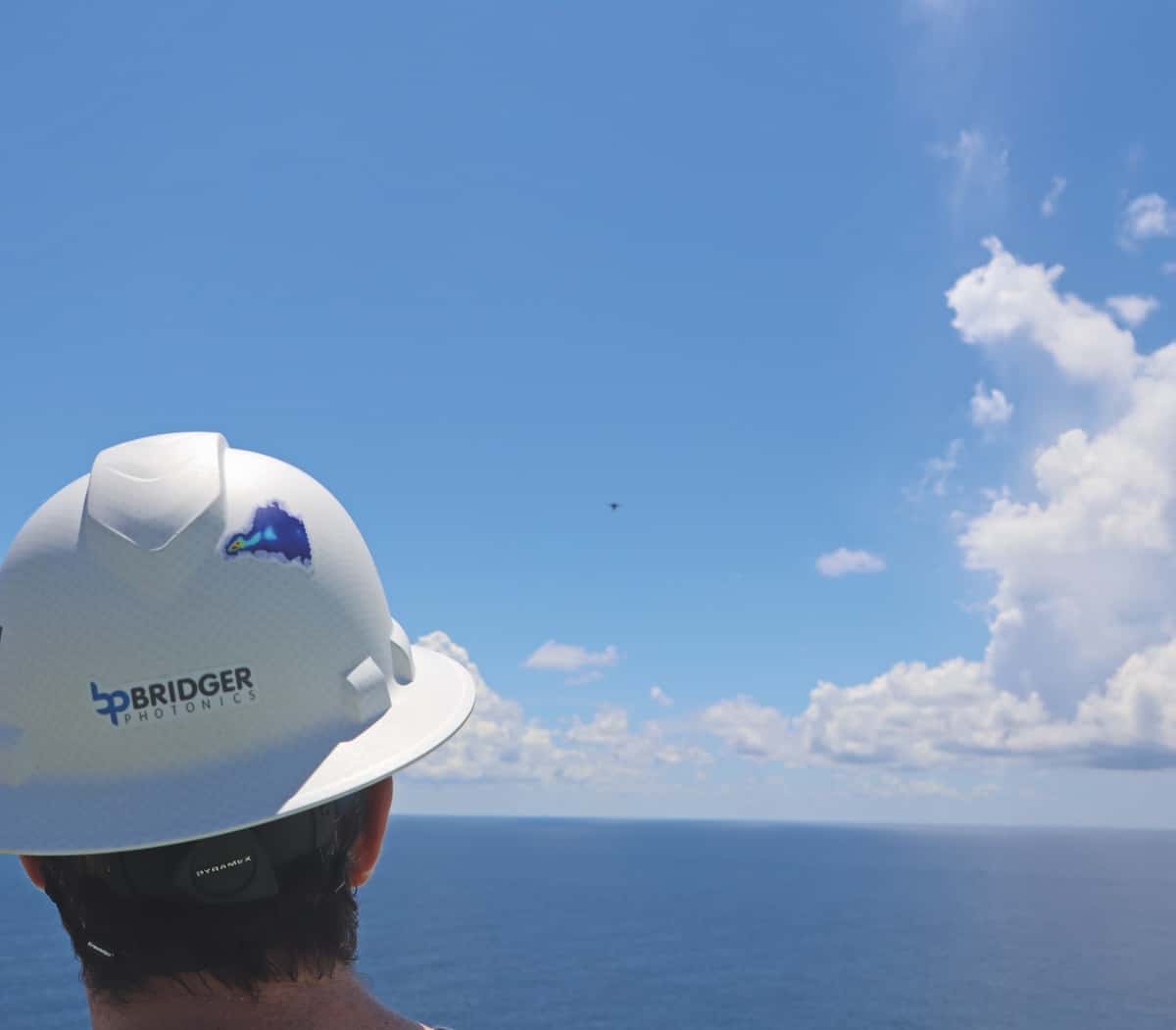
Bridger Photonics has extended its Gas Mapping LiDAR into unmanned aerial vehicle deployments tailored for offshore platforms. The system delivers quantified emission rates with equipment-level attribution suitable for higher-level reporting and mitigation prioritisation. Watch whether operators move from occasional surveys to contracted recurring measurement services and how vendors deliver integration-ready data

Buyer takeaway

Treat airborne/UAV GML as a recurring service that needs specified outputs, delivery cadence and verification procedures in contracts

Cost / money

Shifts spend from ad-hoc mobilisation to recurring service and data-validation fees

Supplier / commercial

Specialist providers may require preferred terms or slot options due to weather-limited windows

Safety / operations

Reduces personnel exposure from close-up platform inspections and enables faster prioritisation

What to watch

Confirm data formats, custody and proof-of-measurement chains before contract award; expect demand clustering on weather windows

Key facts

  • UAV-based Gas Mapping LiDAR extended for offshore deployments
  • Delivers quantified emission rates with equipment attribution
  • Positioned to support higher-level reporting and LDAR optimisation

Source excerpts

Offshore UAV-based GML combines two complementary measurement modes: UAV GML: Optimised for equipment- and source-level detection and localisation across offshore platforms and other complex facilities Flux curtain system: Uses coordinated dual-UAV flights to quantify total facility methane emissions by measuring downwind flux Used together, these methods provide both granular source attribution and facility-scale totals from a single deployment, producing data suitable for OGMP 2. 0 Level 4 and Level 5 reporti
Just as importantly, the repeatability of Bridger’s scans allows operators to track emissions over time and across all asset types using like-for-like data, supporting mitigation validation and long-term performance tracking. From compliance to emissions intelligence The value of offshore aerial LiDAR extends beyond emissions reporting
The results are better data, faster decisions, and a scalable approach to offshore methane management aligned with the industry’s next phase of emissions accountability
Story 2The Australian PipelinerApr 13, 2026

Internal coatings: Why familiar systems still deserve serious scrutiny

Signal moderateSource-grounded

What happened

The article warns that internal flow coatings often treated as routine can change formulation or application behaviour and cause major production and quality issues. It recommends at least two approved alternatives and comparative shop-trials before final approval to avoid costly rework and disputes. Watch for suppliers who resist trials or offer subjective pictorial acceptance standards

Buyer takeaway

Require pre-production shop trials and measurable acceptance criteria; don't accept coatings as drop-in items

Cost / money

Failure to qualify coatings early translates into rework, delay and higher delivered cost

Supplier / commercial

Suppliers may try to limit liability; require transparency on formulation changes and approved alternates

Safety / operations

Fabrication defects can create field installation safety risks during remediation; verify before acceptance

What to watch

Watch suppliers pushing subjective pictorial standards—insist on measurable criteria and comparative test records

Key facts

  • Internal flow coatings frequently treated as routine but can fail
  • Recommendation: at least two approved alternatives and comparative testing
  • Failures discovered post-production escalate into rework and disputes

Source excerpts

If the blasted profile is too coarse relative to the thickness of the internal coating, the coating may not fully cover the peaks, which undermines the intended finish and can force a thicker application than originally planned. That adds cost and creates further control challenges
If the blasted profile is too coarse relative to the thickness of the internal coating, the coating may not fully cover the peaks, which undermines the intended finish and can force a thicker application than originally planned
That is why internal coatings should be treated with the same discipline as any other coating scope that has potential to affect performance, delivery and client acceptance
Story 3The Australian PipelinerApr 15, 2026

Driving innovation in gas infrastructure

Signal moderateDirectional

What happened

Gas Infrastructure Research Australia has activated a research program including a recommissioned hydrogen test bed and working groups on materials, design and operations. The work aims to extend understanding of material behaviour under hydrogen exposure and to inform future standards. This is a strategic development to monitor for future spec changes that will affect OCTG and pipeline sourcing

Buyer takeaway

Treat GIRA activity as an early indicator of future material and testing expectations rather than an immediate procurement requirement

Cost / money

May drive future testing costs and tighter material acceptance criteria in later procurements

Supplier / commercial

Suppliers able to show hydrogen compatibility may gain commercial preference as standards firm up

Safety / operations

Testing reduces long-term operational risk by clarifying material behaviour; current implications are strategic

What to watch

Avoid premature prescriptive hydrogen clauses until test results and standards mature

Key facts

  • GIRA program active with multiple approved projects
  • Includes a recommissioned hydrogen test bed for extended exposure testing
  • Working groups set up on infrastructure design, operations and strategic research

Source excerpts

Hydrogen test bed The construction of the ‘Hydrogen Test Bed’, located at Deakin University’s Hycel site in Warrnambool, was a major success story of Future Fuels CRC. While the world-leading project successfully demonstrated the ability to safely transport 100 per cent hydrogen through a range of pipe materials (such as vintage and modern PE63, PE80, PE100 and uPVC), further exposure to hydrogen (beyond the initial three-year period) will allow network operators to better understand the service-life impacts o
Hydrogen test bed The construction of the ‘Hydrogen Test Bed’, located at Deakin University’s Hycel site in Warrnambool, was a major success story of Future Fuels CRC
GIRA discusses its latest research projects
Story 4Processonline

Process control systems :: Process Online

Signal moderateSource-grounded

What happened

Process Online documents active SCADA/RTU, DCS modernisation and real-time telemetry projects across Australia, highlighting vendor activity on integration and OT security. These projects show how external measurement data will need compatible formats and cyber controls to be usable. Watch vendor claims on plug-and-play integration and embedded security features when procuring measurement services or telemetry-capable devices

Buyer takeaway

Require vendors to demonstrate data delivery formats, SCADA integration approach and OT security controls in proposals

Cost / money

Integration and cyber-hardening add implementation costs that should be scoped into procurements

Supplier / commercial

Vendors bundling integration/security may simplify execution but check for vendor-lock and pass-through pricing

Safety / operations

Proper integration ensures measurement data is actionable and does not introduce OT cyber risks

What to watch

Verify vendor plug-and-play claims; mismatched data formats and security postures increase implementation risk

Key facts

  • Real-time telemetry rollouts and SCADA modernisation reported in Australia
  • DCS and cloud SCADA vendors publishing modernisation programs
  • Emphasis on telemetry, OT cyber security and open integration standards

Source excerpts

Nozomi Networks and Schneider Electric embed security sensor in RTUs 14 August, 2025 A fully integrated security layer in an RTU aims to deliver cybersecurity protection for field control system data and devices
Process control systems Real-time metering upgrade for Melbourne 27 March, 2026 | Supplied by: Melbourne Water Melbourne Water has finalised the rollout of real‍-‍time telemetry across surface water diversion meters, providing direct access to water usage
Mitsubishi Electric GOT3000 HMI 18 September, 2025 | Supplied by: Mitsubishi Electric Australia The GOT3000 is designed to act not only as a machine interface but as a secure gateway between factory equipment and higher-level IT systems. Nozomi Networks and Schneider Electric embed security sensor in RTUs 14 August, 2025 A fully integrated security layer in an RTU aims to deliver cybersecurity protection for field control system data and devices

VP Snapshot

Executive Risk & Action View

UAV-based gas-mapping (LiDAR) is now operationally credible for offshore platforms; plan to buy measurable emission services and define data-delivery and verification requirements in contracts.

Overall
64
Cost
61
Supply
61
Schedule
20
Compliance
15

Top signals

30-180dcost

Signal 1: Cost / money

Shifting from ad-hoc platform surveys to contracted UAV LiDAR services moves spend into recurring service fees and data-validation work rather than one-off mobilisation costs.

Signal 2: Cost / money

Late discovery of internal-coating formulation or application problems drives rework, fabrication delays and commercial disputes that raise delivered project cost.

0-30dsupply

Signal 3: Supplier / commercial

Specialist airborne/UAV emissions providers can command scheduling leverage around limited offshore weather windows; preferred-supplier terms or options protect availability.

30-180dcommercial

Signal 4: Supplier / commercial

Coating vendors may resist comparative testing or limit liability; stronger contract clauses (shop-trial acceptance, alternates, remedies) preserve buyer leverage.

30-180dsupplier

Signal 5: Safety / operations

UAV-based measurement reduces risky manual inspections on platforms and provides equipment-level attribution so operators can prioritise high-impact fixes faster.

Signal 6: Safety / operations

Undetected coating issues discovered after fabrication can create hazardous on-site remediation work and complicate safe installation; verify coating quality before acceptance.

Recommended actions

CategoryDue 3d

Review live RFQs and active fabrication contracts for offshore assets and flag any missing emissions measurement, data-delivery or acceptance clauses.

List of RFQs/contracts needing emissions or data-delivery scope updates

ContractsDue 3d

Insert mandatory shop-trial and at-least-one-approved-alternate language into current internal-coating RFQs and supplier evaluation checklists.

RFQ templates updated with comparative testing and acceptance criteria

CategoryDue 21d

Run a market-sounding with UAV/airborne gas-mapping vendors to capture service models, sample deliverables, and typical data formats for SCADA integration.

Vendor capability matrix and recommended data/integration template for procurements

ContractsDue 21d

Work with Legal/Contracts to draft coating non-conformance remedies, conditional-acceptance tied to shop-trial outcomes, and transparency requirements for formulation changes.

Contract clause set ready for inclusion in fabrication and coating agreements

CategoryDue 60d

Start a supplier-development and qualification program to test OCTG, pipe and coatings against hydrogen-exposure protocols and align future specs with GIRA outputs.

Supplier qualification roadmap and prioritized test plan for hydrogen exposure

OpsDue 60d

Coordinate Ops and IT to document integration and OT cyber-security requirements for accepting real-time remote measurement feeds into plant SCADA and asset systems.

Integration requirements and cyber clauses included in future measurement and telemetry procurements

Risk register

RiskTriggerMitigation
Watch suppliers shortening quote validity or tightening mobilization slots as demand clusters in narrow weather windows — this is an early-signal of availability pressure.Watch suppliers shortening quote validity or tightening mobilization slots as demand clusters in narrow weather windows — this is an early-signal of availability pressure.Confirm exposure with category, contracts, and operations before the next supplier commitment.
Avoid inserting prescriptive hydrogen clauses before test outcomes and standards settle — premature requirements could shrink the vendor pool or force costly rework later.Avoid inserting prescriptive hydrogen clauses before test outcomes and standards settle — premature requirements could shrink the vendor pool or force costly rework later.Confirm exposure with category, contracts, and operations before the next supplier commitment.

CM Snapshot

Category Manager Decision Detail

Today's priorities

Review live RFQs and active fabrication contracts for offshore assets and flag any missing emissions measurement, data-delivery or acceptance clauses.

because Bridger’s UAV LiDAR capability makes emission data auditable and operators will need contractual requirements for data format, cadence and verification.

Due 3d

high

CM move

Use this as the immediate supplier or contract action to move before the next sourcing gate.

Insert mandatory shop-trial and at-least-one-approved-alternate language into current internal-coating RFQs and supplier evaluation checklists.

because internal-coating formulation and application variability has caused costly rework and disputes when qualification is omitted.

Due 3d

high

CM move

Use this as the immediate supplier or contract action to move before the next sourcing gate.

Run a market-sounding with UAV/airborne gas-mapping vendors to capture service models, sample deliverables, and typical data formats for SCADA integration.

because vendors vary in data output and custody chains and integration requirements need to be scoped before awarding recurring measurement contracts.

Due 21d

high

CM move

Use this as the immediate supplier or contract action to move before the next sourcing gate.

Work with Legal/Contracts to draft coating non-conformance remedies, conditional-acceptance tied to shop-trial outcomes, and transparency requirements for formulation changes.

because the industry record shows unresolved coating qualification exposes buyers to rework, delay and warranty disputes during production.

Due 21d

high

CM move

Use this as the immediate supplier or contract action to move before the next sourcing gate.

Supplier radar

The Australian Pipeliner

high

Observed supplier signal

Specialist airborne/UAV emissions providers can command scheduling leverage around limited offshore weather windows; preferred-supplier terms or options protect availability.

Commercial implication

Specialist airborne/UAV emissions providers can command scheduling leverage around limited offshore weather windows; preferred-supplier terms or options protect availability.

Next step: Validate the source-backed signal with incumbents and alternates before the next award or pricing decision.

The Australian Pipeliner

high

Observed supplier signal

Coating vendors may resist comparative testing or limit liability; stronger contract clauses (shop-trial acceptance, alternates, remedies) preserve buyer leverage.

Commercial implication

Coating vendors may resist comparative testing or limit liability; stronger contract clauses (shop-trial acceptance, alternates, remedies) preserve buyer leverage.

Next step: Validate the source-backed signal with incumbents and alternates before the next award or pricing decision.

Negotiation levers

Review live RFQs and active fabrication contracts for offshore assets and flag any missing emissions measurement, data-delivery or acceptance clauses.

When to use: because Bridger’s UAV LiDAR capability makes emission data auditable and operators will need contractual requirements for data format, cadence and verification.

Expected outcome: List of RFQs/contracts needing emissions or data-delivery scope updates

Commercial mechanism to carry into the next supplier conversation

Insert mandatory shop-trial and at-least-one-approved-alternate language into current internal-coating RFQs and supplier evaluation checklists.

When to use: because internal-coating formulation and application variability has caused costly rework and disputes when qualification is omitted.

Expected outcome: RFQ templates updated with comparative testing and acceptance criteria

Commercial mechanism to carry into the next supplier conversation

Run a market-sounding with UAV/airborne gas-mapping vendors to capture service models, sample deliverables, and typical data formats for SCADA integration.

When to use: because vendors vary in data output and custody chains and integration requirements need to be scoped before awarding recurring measurement contracts.

Expected outcome: Vendor capability matrix and recommended data/integration template for procurements

Commercial mechanism to carry into the next supplier conversation

Work with Legal/Contracts to draft coating non-conformance remedies, conditional-acceptance tied to shop-trial outcomes, and transparency requirements for formulation changes.

When to use: because the industry record shows unresolved coating qualification exposes buyers to rework, delay and warranty disputes during production.

Expected outcome: Contract clause set ready for inclusion in fabrication and coating agreements

Commercial mechanism to carry into the next supplier conversation

Talking points

UAV-based gas-mapping (LiDAR) is now operationally credible for offshore platforms; plan to buy measurable emission services and define data-delivery and verification requirements in contracts.
Internal flow coatings remain a tangible fabrication and commercial risk — require pre-production shop trials, at least one approved alternate, and clear acceptance criteria to avoid rework and disputes.
GIRA’s hydrogen test beds and working groups are a strategic signal that future OCTG and pipe specs may change; treat this as a readiness item, not an immediate procurement mandate.
Local SCADA/RTU/DCS modernisation activity means integration and OT cyber requirements will be real costs when ingesting external measurement feeds; scope integration and security up front.

Supplier radar

SupplierSignalImplicationNext stepConfidence
The Australian PipelinerSpecialist airborne/UAV emissions providers can command scheduling leverage around limited offshore weather windows; preferred-supplier terms or options protect availability.Specialist airborne/UAV emissions providers can command scheduling leverage around limited offshore weather windows; preferred-supplier terms or options protect availability.Validate the source-backed signal with incumbents and alternates before the next award or pricing decision.high
The Australian PipelinerCoating vendors may resist comparative testing or limit liability; stronger contract clauses (shop-trial acceptance, alternates, remedies) preserve buyer leverage.Coating vendors may resist comparative testing or limit liability; stronger contract clauses (shop-trial acceptance, alternates, remedies) preserve buyer leverage.Validate the source-backed signal with incumbents and alternates before the next award or pricing decision.high

Negotiation levers

  • Review live RFQs and active fabrication contracts for offshore assets and flag any missing emissions measurement, data-delivery or acceptance clauses.because Bridger’s UAV LiDAR capability makes emission data auditable and operators will need contractual requirements for data format, cadence and verification.List of RFQs/contracts needing emissions or data-delivery scope updates

    high confidence

  • Insert mandatory shop-trial and at-least-one-approved-alternate language into current internal-coating RFQs and supplier evaluation checklists.because internal-coating formulation and application variability has caused costly rework and disputes when qualification is omitted.RFQ templates updated with comparative testing and acceptance criteria

    high confidence

  • Run a market-sounding with UAV/airborne gas-mapping vendors to capture service models, sample deliverables, and typical data formats for SCADA integration.because vendors vary in data output and custody chains and integration requirements need to be scoped before awarding recurring measurement contracts.Vendor capability matrix and recommended data/integration template for procurements

    high confidence

  • Work with Legal/Contracts to draft coating non-conformance remedies, conditional-acceptance tied to shop-trial outcomes, and transparency requirements for formulation changes.because the industry record shows unresolved coating qualification exposes buyers to rework, delay and warranty disputes during production.Contract clause set ready for inclusion in fabrication and coating agreements

    high confidence

What to do / What to watch

What to do now

  • Review live RFQs and active fabrication contracts for offshore assets and flag any missing emissions measurement, data-delivery or acceptance clauses.

    Why: because Bridger’s UAV LiDAR capability makes emission data auditable and operators will need contractual requirements for data format, cadence and verification.

    Owner: Category

    Expected outcome: List of RFQs/contracts needing emissions or data-delivery scope updates

    [2]
  • Insert mandatory shop-trial and at-least-one-approved-alternate language into current internal-coating RFQs and supplier evaluation checklists.

    Why: because internal-coating formulation and application variability has caused costly rework and disputes when qualification is omitted.

    Owner: Contracts

    Expected outcome: RFQ templates updated with comparative testing and acceptance criteria

    [3]

Next few weeks

  • Run a market-sounding with UAV/airborne gas-mapping vendors to capture service models, sample deliverables, and typical data formats for SCADA integration.

    Why: because vendors vary in data output and custody chains and integration requirements need to be scoped before awarding recurring measurement contracts.

    Owner: Category

    Expected outcome: Vendor capability matrix and recommended data/integration template for procurements

    [2]
  • Work with Legal/Contracts to draft coating non-conformance remedies, conditional-acceptance tied to shop-trial outcomes, and transparency requirements for formulation changes.

    Why: because the industry record shows unresolved coating qualification exposes buyers to rework, delay and warranty disputes during production.

    Owner: Contracts

    Expected outcome: Contract clause set ready for inclusion in fabrication and coating agreements

    [3]

Longer view

  • Start a supplier-development and qualification program to test OCTG, pipe and coatings against hydrogen-exposure protocols and align future specs with GIRA outputs.

    Why: because GIRA’s hydrogen testing work is an early indicator that material acceptance criteria may change and qualifying suppliers now reduces future supply risk.

    Owner: Category

    Expected outcome: Supplier qualification roadmap and prioritized test plan for hydrogen exposure

    [1]
  • Coordinate Ops and IT to document integration and OT cyber-security requirements for accepting real-time remote measurement feeds into plant SCADA and asset systems.

    Why: because local SCADA/RTU modernisation and rising OT cyber risks mean external measurement feeds must meet data and security standards to be usable.

    Owner: Ops

    Expected outcome: Integration requirements and cyber clauses included in future measurement and telemetry procurements

    [4]

What to watch

  • Watch suppliers shortening quote validity or tightening mobilization slots as demand clusters in narrow weather windows — this is an early-signal of availability pressure
  • Avoid inserting prescriptive hydrogen clauses before test outcomes and standards settle — premature requirements could shrink the vendor pool or force costly rework later
  • Watch suppliers shortening quote validity or tightening mobilization slots as demand clusters in narrow weather windows — this is an early-signal of availability pressure.: Watch suppliers shortening quote validity or tightening mobilization slots as demand clusters in narrow weather windows — this is an early-signal of availability pressure
  • Avoid inserting prescriptive hydrogen clauses before test outcomes and standards settle — premature requirements could shrink the vendor pool or force costly rework later.: Avoid inserting prescriptive hydrogen clauses before test outcomes and standards settle — premature requirements could shrink the vendor pool or force costly rework later
  • UAV-based gas-mapping (LiDAR) is now operationally credible for offshore platforms; plan to buy measurable emission services and define data-delivery and verification requirements in contracts
  • Internal flow coatings remain a tangible fabrication and commercial risk — require pre-production shop trials, at least one approved alternate, and clear acceptance criteria to avoid rework and disputes
  • GIRA’s hydrogen test beds and working groups are a strategic signal that future OCTG and pipe specs may change; treat this as a readiness item, not an immediate procurement mandate
  • Local SCADA/RTU/DCS modernisation activity means integration and OT cyber requirements will be real costs when ingesting external measurement feeds; scope integration and security up front

Market pulse

IndexLatestChangeAs of
HRC Steel (HRC)740 /ton+0.00 (+0.00%)Apr 23, 2026, 10:13 PM
Copper (COPPER)3.85 /lb+0.00 (+0.00%)Apr 23, 2026, 10:13 PM
Iron Ore (IRON)108.5 /t+0.00 (+0.00%)Apr 23, 2026, 10:13 PM
Tenaris (TS)32 +0.00 (+0.00%)Apr 23, 2026, 10:13 PM
  • HRC Steel: HRC steel trends affect OCTG and fabrication cost posture; factor material price into supplier leverage and service-cost decisions
  • Tenaris: Tenaris (OCTG sector reference) pricing and availability trends are a useful proxy for OCTG supplier commercial posture

Sources

Inline citations jump here. Expand a source to read the excerpt, the AI interpretation, and the original link.

[1] Driving innovation in gas infrastructure

pipeliner.com.au · Apr 15, 2026

Expand

AI reading

Gas Infrastructure Research Australia has activated a research program including a recommissioned hydrogen test bed and working groups on materials, design and operations. The work aims to extend understanding of material behaviour under hydrogen exposure and to inform future standards. This is a strategic development to monitor for future spec changes that will affect OCTG and pipeline sourcing

Buyer takeaway

Treat GIRA activity as an early indicator of future material and testing expectations rather than an immediate procurement requirement

Cost / money

May drive future testing costs and tighter material acceptance criteria in later procurements

Supplier / commercial

Suppliers able to show hydrogen compatibility may gain commercial preference as standards firm up

Safety / operations

Testing reduces long-term operational risk by clarifying material behaviour; current implications are strategic

What to watch

Avoid premature prescriptive hydrogen clauses until test results and standards mature

Key facts

  • GIRA program active with multiple approved projects
  • Includes a recommissioned hydrogen test bed for extended exposure testing
  • Working groups set up on infrastructure design, operations and strategic research

Source excerpts

Hydrogen test bed The construction of the ‘Hydrogen Test Bed’, located at Deakin University’s Hycel site in Warrnambool, was a major success story of Future Fuels CRC. While the world-leading project successfully demonstrated the ability to safely transport 100 per cent hydrogen through a range of pipe materials (such as vintage and modern PE63, PE80, PE100 and uPVC), further exposure to hydrogen (beyond the initial three-year period) will allow network operators to better understand the service-life impacts o
Hydrogen test bed The construction of the ‘Hydrogen Test Bed’, located at Deakin University’s Hycel site in Warrnambool, was a major success story of Future Fuels CRC
GIRA discusses its latest research projects

Used in this brief

  • Next quarter — Start a supplier-development and qualification program to test OCTG, pipe and coatings against hydrogen-exposure protocols and align future specs with GIRA outputs.. Rationale: because GIRA’s hydrogen testing work is an early indicator that material acceptance criteria may change and qualifying suppliers now reduces future supply risk.. Owner: Category. KPI: Supplier qualification roadmap and prioritized test plan for hydrogen exposure
  • Avoid inserting prescriptive hydrogen clauses before test outcomes and standards settle — premature requirements could shrink the vendor pool or force costly rework later
  • Introduced a supplier-development / hydrogen-readiness action area tied to GIRA research that was not previously flagged
Open original source

[2] Bringing credible methane measurement offshore

pipeliner.com.au · Apr 14, 2026

Expand

AI reading

Bridger Photonics has extended its Gas Mapping LiDAR into unmanned aerial vehicle deployments tailored for offshore platforms. The system delivers quantified emission rates with equipment-level attribution suitable for higher-level reporting and mitigation prioritisation. Watch whether operators move from occasional surveys to contracted recurring measurement services and how vendors deliver integration-ready data

Buyer takeaway

Treat airborne/UAV GML as a recurring service that needs specified outputs, delivery cadence and verification procedures in contracts

Cost / money

Shifts spend from ad-hoc mobilisation to recurring service and data-validation fees

Supplier / commercial

Specialist providers may require preferred terms or slot options due to weather-limited windows

Safety / operations

Reduces personnel exposure from close-up platform inspections and enables faster prioritisation

What to watch

Confirm data formats, custody and proof-of-measurement chains before contract award; expect demand clustering on weather windows

Key facts

  • UAV-based Gas Mapping LiDAR extended for offshore deployments
  • Delivers quantified emission rates with equipment attribution
  • Positioned to support higher-level reporting and LDAR optimisation

Source excerpts

Offshore UAV-based GML combines two complementary measurement modes: UAV GML: Optimised for equipment- and source-level detection and localisation across offshore platforms and other complex facilities Flux curtain system: Uses coordinated dual-UAV flights to quantify total facility methane emissions by measuring downwind flux Used together, these methods provide both granular source attribution and facility-scale totals from a single deployment, producing data suitable for OGMP 2. 0 Level 4 and Level 5 reporti
Just as importantly, the repeatability of Bridger’s scans allows operators to track emissions over time and across all asset types using like-for-like data, supporting mitigation validation and long-term performance tracking. From compliance to emissions intelligence The value of offshore aerial LiDAR extends beyond emissions reporting
The results are better data, faster decisions, and a scalable approach to offshore methane management aligned with the industry’s next phase of emissions accountability

Used in this brief

  • Safety / operations: UAV-based measurement reduces risky manual inspections on platforms and provides equipment-level attribution so operators can prioritise high-impact fixes faster
  • Next 72 hours — Review live RFQs and active fabrication contracts for offshore assets and flag any missing emissions measurement, data-delivery or acceptance clauses.. Rationale: because Bridger’s UAV LiDAR capability makes emission data auditable and operators will need contractual requirements for data format, cadence and verification.. Owner: Category. KPI: List of RFQs/contracts needing emissions or data-delivery scope updates
  • Next 2-4 weeks — Run a market-sounding with UAV/airborne gas-mapping vendors to capture service models, sample deliverables, and typical data formats for SCADA integration.. Rationale: because vendors vary in data output and custody chains and integration requirements need to be scoped before awarding recurring measurement contracts.. Owner: Category. KPI: Vendor capability matrix and recommended data/integration template for procurements
Open original source

[3] Internal coatings: Why familiar systems still deserve serious scrutiny

pipeliner.com.au · Apr 13, 2026

Expand

AI reading

The article warns that internal flow coatings often treated as routine can change formulation or application behaviour and cause major production and quality issues. It recommends at least two approved alternatives and comparative shop-trials before final approval to avoid costly rework and disputes. Watch for suppliers who resist trials or offer subjective pictorial acceptance standards

Buyer takeaway

Require pre-production shop trials and measurable acceptance criteria; don't accept coatings as drop-in items

Cost / money

Failure to qualify coatings early translates into rework, delay and higher delivered cost

Supplier / commercial

Suppliers may try to limit liability; require transparency on formulation changes and approved alternates

Safety / operations

Fabrication defects can create field installation safety risks during remediation; verify before acceptance

What to watch

Watch suppliers pushing subjective pictorial standards—insist on measurable criteria and comparative test records

Key facts

  • Internal flow coatings frequently treated as routine but can fail
  • Recommendation: at least two approved alternatives and comparative testing
  • Failures discovered post-production escalate into rework and disputes

Source excerpts

If the blasted profile is too coarse relative to the thickness of the internal coating, the coating may not fully cover the peaks, which undermines the intended finish and can force a thicker application than originally planned. That adds cost and creates further control challenges
If the blasted profile is too coarse relative to the thickness of the internal coating, the coating may not fully cover the peaks, which undermines the intended finish and can force a thicker application than originally planned
That is why internal coatings should be treated with the same discipline as any other coating scope that has potential to affect performance, delivery and client acceptance

Used in this brief

  • Cost / money: Late discovery of internal-coating formulation or application problems drives rework, fabrication delays and commercial disputes that raise delivered project cost
  • Safety / operations: Undetected coating issues discovered after fabrication can create hazardous on-site remediation work and complicate safe installation; verify coating quality before acceptance
  • Next 72 hours — Insert mandatory shop-trial and at-least-one-approved-alternate language into current internal-coating RFQs and supplier evaluation checklists.. Rationale: because internal-coating formulation and application variability has caused costly rework and disputes when qualification is omitted.. Owner: Contracts. KPI: RFQ templates updated with comparative testing and acceptance criteria
Open original source

[4] Process control systems :: Process Online

processonline.com.au · n.d.

Expand

AI reading

Process Online documents active SCADA/RTU, DCS modernisation and real-time telemetry projects across Australia, highlighting vendor activity on integration and OT security. These projects show how external measurement data will need compatible formats and cyber controls to be usable. Watch vendor claims on plug-and-play integration and embedded security features when procuring measurement services or telemetry-capable devices

Buyer takeaway

Require vendors to demonstrate data delivery formats, SCADA integration approach and OT security controls in proposals

Cost / money

Integration and cyber-hardening add implementation costs that should be scoped into procurements

Supplier / commercial

Vendors bundling integration/security may simplify execution but check for vendor-lock and pass-through pricing

Safety / operations

Proper integration ensures measurement data is actionable and does not introduce OT cyber risks

What to watch

Verify vendor plug-and-play claims; mismatched data formats and security postures increase implementation risk

Key facts

  • Real-time telemetry rollouts and SCADA modernisation reported in Australia
  • DCS and cloud SCADA vendors publishing modernisation programs
  • Emphasis on telemetry, OT cyber security and open integration standards

Source excerpts

Nozomi Networks and Schneider Electric embed security sensor in RTUs 14 August, 2025 A fully integrated security layer in an RTU aims to deliver cybersecurity protection for field control system data and devices
Process control systems Real-time metering upgrade for Melbourne 27 March, 2026 | Supplied by: Melbourne Water Melbourne Water has finalised the rollout of real‍-‍time telemetry across surface water diversion meters, providing direct access to water usage
Mitsubishi Electric GOT3000 HMI 18 September, 2025 | Supplied by: Mitsubishi Electric Australia The GOT3000 is designed to act not only as a machine interface but as a secure gateway between factory equipment and higher-level IT systems. Nozomi Networks and Schneider Electric embed security sensor in RTUs 14 August, 2025 A fully integrated security layer in an RTU aims to deliver cybersecurity protection for field control system data and devices

Used in this brief

  • Next quarter — Coordinate Ops and IT to document integration and OT cyber-security requirements for accepting real-time remote measurement feeds into plant SCADA and asset systems.. Rationale: because local SCADA/RTU modernisation and rising OT cyber risks mean external measurement feeds must meet data and security standards to be usable.. Owner: Ops. KPI: Integration requirements and cyber clauses included in future measurement and telemetry procurements
  • Process Online documents active SCADA/RTU, DCS modernisation and real-time telemetry projects across Australia, highlighting vendor activity on integration and OT security. These projects show how external measurement data will need compatible formats and cyber controls to be usable. Watch vendor claims on plug-and-play integration and embedded security features when procuring measurement services or telemetry-capable devices
  • Buyer bottom line: Define integration and OT cyber requirements up front; measurement vendors must demonstrate delivery formats and security controls
Open original source

[5] HRC Steel

cmegroup.com · n.d.

Expand

[6] Tenaris

finance.yahoo.com · n.d.

Expand