Subsea, SURF & Offshore · Australia (Perth)

Prioritise APAC subsea readiness for recent gas development signals

Published May 8, 2026, 6:06 AM AWSTAPACFull category signal
Ask AI
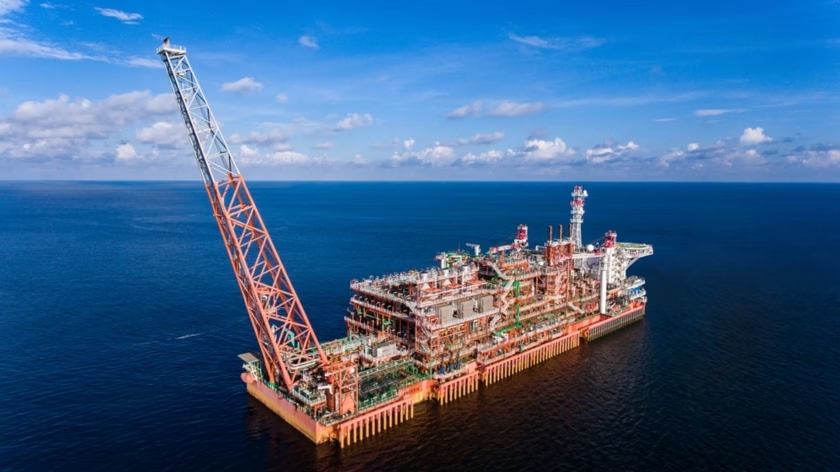
Giant Southeast Asian gas discovery passes test with flying colors

In 60 seconds

Top move

Eni’s Geliga‑1 well test shows high deliverability and makes fast‑track development commercially plausible; that raises near‑term demand for deepwater subsea, flowlines and tieback work in Indonesia

Key takeaways

  • Eni’s Geliga‑1 well test shows high deliverability and makes fast‑track development commercially plausible; that raises near‑term demand for deepwater subsea, flowlines and tieback work in Indonesia.[1]
  • Amplitude Energy received a production licence for the Annie field off Victoria, Australia, moving the asset from exploration to development planning and creating a firm subsea tie‑in and pipeline scope to price and schedule against.[5]
  • Murphy Oil’s Vietnam activity (platform/FSO work and ongoing appraisals) indicates upcoming local fabrication, hook‑up and charter requirements that will compete for APAC SURF and marine installation resources.[4]
  • Seatrium’s MOU with ABS creates a clearer pathway for verification and classification of new offshore tech and fabrication in Singapore, which buyers can use to de‑risk novel SURF equipment or autonomous tooling.[2]
  • NKT’s zero‑carbon cable accessories factory is supplier progress on sustainability and manufacturing resilience; useful for sourcing greener cable accessories but operational impact in APAC is peripheral and should be treated as supplier capability context.[3]

What changed since last run

  • New material: Eni’s DST from Geliga‑1 confirms strong deliverability and shifts SE Asia attention from exploration to potential accelerated development (distinct from earlier Malampaya pipelay scheduling).
  • New material: Amplitude Energy’s production licence for Annie converts a regional prospect into a development project with a planned first‑gas programme, adding a clear APAC SURF tender horizon.
  • New material: Murphy Oil updates include FSO readiness and Vietnam appraisal progress that increase local installation and hook‑up activity to monitor alongside regional vessel availability.

Key facts

  • Annie production licence (VIC/L37) covering discovered field
  • Field located about 30 km off Port Campbell in 60–70 m water depth
  • Planned integration into the east coast domestic gas supply chain
  • DST flowed at up to 60 million scfd during test (rig constrained)
  • Estimated sustainable production around 200 million scfd from Geliga‑1
  • Drilled in ~2,000 m water depth to ~5,100 m total depth

Why it matters

Eni’s Geliga‑1 well test shows high deliverability and makes fast‑track development commercially plausible; that raises near‑term demand for deepwater subsea, flowlines and tieback work in Indonesia. Amplitude Energy received a production licence for the Annie field off Victoria, Australia, moving the asset from exploration to development planning and creating a firm subsea tie‑in and pipeline scope to price and schedule against. Murphy Oil’s Vietnam activity (platform/FSO work and ongoing appraisals) indicates upcoming local fabrication, hook‑up and charter requirements that will compete for APAC SURF and marine installation resources. Seatrium’s MOU with ABS creates a clearer pathway for verification and classification of new offshore tech and fabrication in Singapore, which buyers can use to de‑risk novel SURF equipment or autonomous tooling

Cost / money

  • Large, high‑deliverability gas finds in Indonesia can pull scarce deepwater installation vessels and specialist SURF crews into the region, increasing mobilisation exposure and upward pressure on day‑rates for buyers.[1]
  • Converting Australia’s Annie licence into development redirects near‑term CAPEX toward subsea tie‑ins, pipeline and onshore integration, changing cash‑flow timing and procurement prioritisation for APAC SURF budgets.[5]

Supplier / commercial

  • Suppliers in SE Asia working on deepwater SURF and tie‑backs may shorten quote validity and require mobilisation pass‑through clauses as they prioritise high‑value, fast‑moving developments.[1]
  • Seatrium’s MOU with ABS improves buyers’ ability to qualify vendors for novel fabrication or autonomous systems faster, which can shorten technical acceptance timelines and change bid evaluation weightings.[2]

Safety / operations

  • Deepwater developments (Geliga‑1 scale) increase uptime dependency on subsea integrity, ROV work and spare‑parts availability — buyers must confirm inspection and contingency spares before award.[1]
  • Murphy’s Vietnam FSO/platform deliveries require validated installation sequences and FAT/commissioning plans to avoid offshore rework that creates safety and schedule risk during hook‑up.[4]

What to watch

  • Watch for suppliers to narrow commercial windows (shorter RFQ validity and quicker mobilisation asks) as SE Asian projects show development momentum; this is an early‑signal of tightened negotiating timeframes.[1]
  • Watch regulatory and local content constraints in Australia and Vietnam that can reallocate scopes onshore or require additional approvals for shore‑control (ROC) models and local fabrication.[5]

Top stories

Story 1Offshore EnergyMay 7, 2026

Australian offshore production license paving the way for first gas in 2028

Signal strongSource-grounded

What happened

Amplitude Energy was granted a production licence for the Annie field off Victoria, enabling the company to proceed with field development planning and target first gas as its development milestone. The Annie licence sits near existing Otway infrastructure and implies subsea tie‑in and pipeline work that will need detailed interfaces with the Casino/CHN system; watch award timelines and pipeline routing decisions

Buyer takeaway

Treat Annie as a development pipeline and SURF tender horizon requiring early interface and route validation with existing CHN pipeline infrastructure

Cost / money

Development planning will convert exploration budgets into CAPEX for subsea tie‑ins and pipeline work that must be priced into the next procurement cycle

Supplier / commercial

Local fabrication yards and pipelay suppliers become relevant bidders; expect negotiations over mobilisation, local content and onshore integration scope

Safety / operations

Shallow water tie‑ins still require validated installation and commissioning plans; ensure FAT and pre‑lay testing are specified

What to watch

Watch for permitting or onshore‑integration constraints that can alter scope splits between offshore contractors and onshore pipeline owners

Key facts

  • Annie production licence (VIC/L37) covering discovered field
  • Field located about 30 km off Port Campbell in 60–70 m water depth
  • Planned integration into the east coast domestic gas supply chain

Source excerpts

Otway Basin assets; Source: Amplitude Energy Amplitude Energy has received a production licence, VIC/L37, which covers the Annie field that was first discovered in 2019. Thanks to this, the firm can move forward with field development activities, with the first gas planned for 2028
“Timely approvals and regulatory certainty for oil & gas projects remain critical given the length of investment cycle required
Home Fossil Energy Australian offshore production license paving the way for first gas in 2028 May 7, 2026, by Amplitude Energy (formerly Cooper Energy), an Australian gas production company focused on supplying the Southeast domestic gas market, has obtained a production license, which encompasses an undeveloped gas discovery in the Otway Basin off the coast of Victoria, Australia
Story 2Offshore EnergyMay 7, 2026

Giant Southeast Asian gas discovery passes test with flying colors

Signal strongSource-grounded

What happened

Eni’s Geliga‑1 DST flowed strongly and confirmed high deliverability for a major gas discovery in Indonesia, supporting faster development options that leverage nearby infrastructure concepts. The test flowed up to reported rig‑constrained rates and reinforced in‑place estimates, so procurement should watch for accelerated SURF tenders and increased demand for deepwater installation vessels

Buyer takeaway

Treat the DST as a credible shift toward development; plan for SURF, deepwater flowline and FPSO/processing interface procurement scenarios

Cost / money

Fast‑track development intent is likely to increase demand for deepwater SURF assets and vessel time, creating upward pressure on mobilisation and day‑rates

Supplier / commercial

Deepwater SURF contractors will prioritise high‑value, fast‑moving programmes and may shorten quote validity and ask for mobilisation cost pass‑throughs

Safety / operations

Deepwater install and pre‑commissioning increase uptime dependency on ROV fleets, test equipment and spare inventories; verify spares and contingency resources early

What to watch

Watch for suppliers to force shortened commercial windows and prioritise capacity allocation across nearby projects

Key facts

  • DST flowed at up to 60 million scfd during test (rig constrained)
  • Estimated sustainable production around 200 million scfd from Geliga‑1
  • Drilled in ~2,000 m water depth to ~5,100 m total depth

Source excerpts

The Geliga‑1 discovery is located in the Ganal PSC, operated by Eni with an 82% interest, while Sinopec holds the remaining 18%
The Geliga discovery is interpreted to add to the value of this sale
According to Eni, early evaluations indicate that the combined Geliga and Gula discoveries could underpin incremental production of around 1 billion scfd of gas and 80,000 bpd of condensate. A plan of development (POD) is currently being prepared and is expected to be submitted to the government of Indonesia in the coming weeks
Story 3Offshore EnergyMay 7, 2026

Murphy Oil edging closer to bringing online projects in US Gulf and Vietnam

Signal moderateSource-grounded

What happened

Murphy Oil is progressing multiple projects including Vietnam appraisals and the Lac Da Vang platform/FSO work, with the FSO delivery noted as aligned to the schedule and local fabrication activity ongoing. That activity will create regional requirements for installation, hook‑up and long‑term charter support, which buyers should align against yard outputs and regional vessel bookings

Buyer takeaway

Consider Vietnam platform/FSO work as a near‑term demand on local yards and charter pools; align award pacing with fabrication milestones

Cost / money

Local fabrication and on‑site installation drive costs in charters and vessel stays; late changes can be costly due to demobilisation/re‑mobility

Supplier / commercial

Local joint ventures and yard partners may seek extended scopes for O&M or hook‑up if fabrication schedules slip

Safety / operations

Platform integration and FSO hook‑up require tight FAT, pre‑lift checks and staged commissioning to avoid offshore rework

What to watch

Watch yard completion timing and jetty/transport constraints that can push installation windows and incur extra vessel days

Key facts

  • FSO delivery scheduled for third quarter (as reported in project updates)
  • Ongoing appraisal programme with results expected in the near term
  • Platform jacket and piles already load‑out completed by local yards

Source excerpts

Home Fossil Energy Murphy Oil edging closer to bringing online projects in US Gulf and Vietnam May 7, 2026, by Houston-headquartered oil and gas company Murphy Oil has made progress across multiple onshore and offshore exploration and production projects, with two on track to achieve first oil this year in the Americas and Asia. Illustration; Source: Murphy Oil Murphy Oil has been busy with multiple activities across continents
Murphy has other assets in Vietnam, including the Lac Da Vang (Golden Camel) field development in Block 15-1/05. The firm made inroads in the construction of a floating storage and offloading (FSO) vessel in the Southeast Asian country
The firm made inroads in the construction of a floating storage and offloading (FSO) vessel in the Southeast Asian country. The FSO is now ready to launch and is set to be delivered to the location in the third quarter of 2026 in line with the schedule
Story 4Offshore EnergyMay 7, 2026

Seatrium and ABS join forces to advance maritime and offshore energy spheres

Signal moderateDirectional

What happened

Seatrium and ABS signed an MOU to collaborate on technology assessment, regulatory readiness and classification pathways for maritime and offshore solutions, creating clearer verification routes for new equipment and fabrication. The arrangement is aimed at accelerating adoption of novel offshore tech and helps buyers de‑risk trials or non‑standard designs by using formal ABS engagement

Buyer takeaway

Leverage the MOU to require classification and verification checkpoints in RFQs for non‑standard components or systems

Cost / money

Faster verification can reduce time in cost‑loaded hold periods, but buyers should still budget for AiP or additional third‑party verification where needed

Supplier / commercial

Vendors with Seatrium/ABS alignment may offer stronger acceptance credentials and win higher evaluation scores

Safety / operations

Using ABS pathways should lower technical acceptance risk and contribute to predictable commissioning schedules

What to watch

MOU improves pathways but does not replace project‑specific certification; confirm exact verification deliverables in contracts

Key facts

  • MOU focuses on technology assessment, regulatory readiness and classification verification
  • Intended to support autonomous tech, decarbonisation and harsh‑environment solutions
  • Builds on ABS’s recent approvals and AiP work in the offshore sector

Source excerpts

Matthew Tremblay, ABS Senior Vice President of Global Offshore, commented: “This agreement positions ABS and Seatrium to work closely together at the intersection of innovation and regulation. “This is the latest step in our industry-leading technology collaboration with Seatrium that promises to make a real contribution to the safer application of next-generation technologies
“Our collaboration with ABS under this MOU supports technology assessment, regulatory readiness, classification, and verification pathways of emerging solutions across new energies, maritime decarbonization, autonomous technologies, harsh-environment applications, and advanced offshore infrastructure
Home Fossil Energy Seatrium and ABS join forces to advance maritime and offshore energy spheres May 7, 2026, by Intending to drive maritime and offshore energy innovation, the American Bureau of Shipping (ABS), a classification society, has forged a partnership with Seatrium Technology and Innovation, a technology subsidiary of Singapore’s offshore, marine, and energy engineering solutions specialist Seatrium
Story 5Offshore EnergyMay 7, 2026

NKT's German cable accessories site becomes its first zero-carbon factory

Signal limitedDirectional

What happened

NKT’s Nordenham cable‑accessories site became its first zero‑carbon factory by phasing out natural gas and upgrading energy efficiency, demonstrating supplier progress on manufacturing decarbonisation. The factory change is a supplier sustainability milestone that can be referenced in sourcing decisions for cable accessories, though its direct impact on APAC logistics and lead times is limited

Buyer takeaway

Include supplier decarbonisation credentials in evaluation criteria for cable accessories but validate logistics and local stock availability separately

Cost / money

Sustainability upgrades may improve long‑term cost exposure but are not a substitute for confirming current lead times and local inventory

Supplier / commercial

Suppliers with certified zero‑carbon sites can ask for premium positioning in tenders; balance that against delivery and price metrics

Safety / operations

Factory process improvements reduce operational emissions and may improve quality consistency, indirectly reducing installation rework risk

What to watch

Sustainability claims are material but peripheral to immediate APAC installation scheduling; verify certification and supply chain traceability

Key facts

  • Factory achieves zero Scope 1 and 2 carbon emissions after phasing out natural gas
  • Initiatives include waste‑heat reuse and EV/zero‑emission material handling
  • Operation supports ~390 employees at the Nordenham site

Source excerpts

Home Subsea NKT’s German cable accessories site becomes its first zero-carbon factory May 7, 2026, by NKT’s medium‑voltage cable accessories site in Nordenham, Germany, has become its first zero-carbon factory as part of the Danish firm’s goal of achieving complete zero-emission operations across all sites. Source: NKT The factory has reached this goal by phasing out natural gas, now operating with zero carbon emissions in Scopes 1 and 2
With this, we are also supporting our customers in achieving their decarbonisation targets,” said Matthias Schaber, Head of Sustainability, Accessories at NKT
In February, a long-term power purchase agreement (PPA) was signed for the supply of electricity from Uniper’s newly developed photovoltaic (PV) facility in Wilhelmshaven, Germany

VP Snapshot

Executive Risk & Action View

Eni’s Geliga‑1 well test shows high deliverability and makes fast‑track development commercially plausible; that raises near‑term demand for deepwater subsea, flowlines and tieback work in Indonesia.

Overall
65
Cost
61
Supply
43
Schedule
38
Compliance
15

Top signals

30-180dcost

Signal 1: Cost / money

Large, high‑deliverability gas finds in Indonesia can pull scarce deepwater installation vessels and specialist SURF crews into the region, increasing mobilisation exposure and upward pressure on day‑rates for buyers.

Signal 2: Cost / money

Converting Australia’s Annie licence into development redirects near‑term CAPEX toward subsea tie‑ins, pipeline and onshore integration, changing cash‑flow timing and procurement prioritisation for APAC SURF budgets.

30-180dcommercial

Signal 3: Supplier / commercial

Suppliers in SE Asia working on deepwater SURF and tie‑backs may shorten quote validity and require mobilisation pass‑through clauses as they prioritise high‑value, fast‑moving developments.

Signal 4: Supplier / commercial

Seatrium’s MOU with ABS improves buyers’ ability to qualify vendors for novel fabrication or autonomous systems faster, which can shorten technical acceptance timelines and change bid evaluation weightings.

0-30dsupply

Signal 5: Safety / operations

Deepwater developments (Geliga‑1 scale) increase uptime dependency on subsea integrity, ROV work and spare‑parts availability — buyers must confirm inspection and contingency spares before award.

30-180dschedule

Signal 6: Safety / operations

Murphy’s Vietnam FSO/platform deliveries require validated installation sequences and FAT/commissioning plans to avoid offshore rework that creates safety and schedule risk during hook‑up.

Recommended actions

CategoryDue 3d

Map existing APAC SURF, pipelay and heavy‑lift vessel bookings against the likely windows for Geliga, Annie and Vietnam hook‑ups.

Shortlist of booking overlaps and at‑risk scopes to inform provisional holds or sequencing decisions.

ContractsDue 21d

Ask Contracts to prepare mobilisation/demobilisation pass‑through and shortened quote‑validity clause templates tailored for deepwater SURF and FSO/FSRU scopes.

Clause package ready for inclusion in upcoming RFQs and LoIs to avoid last‑minute commercial exposure.

CategoryDue 21d

Engage shortlisted SURF and subsea‑cable suppliers for capacity checks and provisional hold notes rather than full awards.

Documented provisional holds or capacity statements to reduce award sequencing risk.

OpsDue 21d

Run Ops and Technical alignment with local yards and Seatrium contacts to leverage ABS pathways for verifying novel equipment or fabrication offers.

List of verification checkpoints and preferred vendor qualification paths leveraging ABS engagement.

OpsDue 60d

Initiate supplier qualification for SURF contractors focused on long‑duration deepwater campaign readiness: spares, ROV coverage, crew rotation and uptime KPIs.

Preferred‑supplier shortlist with validated maintenance and uptime mitigation plans to support prolonged deployments.

LegalDue 60d

Ask Legal to update contract templates to explicitly allocate mobilisation risk, pass‑throughs, and responsibilities for remote operations or ROC fallback.

Amended contract clauses ready for APAC RFQs covering mobilisation pass‑throughs and remote‑operation responsibilities.

Risk register

RiskTriggerMitigation
Watch for suppliers to narrow commercial windows (shorter RFQ validity and quicker mobilisation asks) as SE Asian projects show development momentum; this is an early‑signal of tightened negotiating timeframes.Watch for suppliers to narrow commercial windows (shorter RFQ validity and quicker mobilisation asks) as SE Asian projects show development momentum; this is an early‑signal of tightened negotiating timeframes.Confirm exposure with category, contracts, and operations before the next supplier commitment.
Watch regulatory and local content constraints in Australia and Vietnam that can reallocate scopes onshore or require additional approvals for shore‑control (ROC) models and local fabrication.Watch regulatory and local content constraints in Australia and Vietnam that can reallocate scopes onshore or require additional approvals for shore‑control (ROC) models and local fabrication.Confirm exposure with category, contracts, and operations before the next supplier commitment.

CM Snapshot

Category Manager Decision Detail

Today's priorities

Map existing APAC SURF, pipelay and heavy‑lift vessel bookings against the likely windows for Geliga, Annie and Vietnam hook‑ups.

Do this because regional development signals increase competition for specialist vessels and crews and mapping reveals probable overlap and mobilisation conflicts.

Due 3d

high

CM move

Use this as the immediate supplier or contract action to move before the next sourcing gate.

Ask Contracts to prepare mobilisation/demobilisation pass‑through and shortened quote‑validity clause templates tailored for deepwater SURF and FSO/FSRU scopes.

Do this because suppliers are likely to protect scarce vessel time and ask for pass‑throughs or shorter holds when multiple developments compete in APAC.

Due 21d

high

CM move

Use this as the immediate supplier or contract action to move before the next sourcing gate.

Engage shortlisted SURF and subsea‑cable suppliers for capacity checks and provisional hold notes rather than full awards.

Do this because confirming soft capacity preserves options and helps sequence projects where vessel and crew availability will be constrained.

Due 21d

high

CM move

Use this as the immediate supplier or contract action to move before the next sourcing gate.

Run Ops and Technical alignment with local yards and Seatrium contacts to leverage ABS pathways for verifying novel equipment or fabrication offers.

Do this because the Seatrium–ABS collaboration can shorten verification timelines for new tech if buyers coordinate acceptance criteria in advance.

Due 21d

high

CM move

Use this as the immediate supplier or contract action to move before the next sourcing gate.

Supplier radar

Offshore Energy

high

Observed supplier signal

Suppliers in SE Asia working on deepwater SURF and tie‑backs may shorten quote validity and require mobilisation pass‑through clauses as they prioritise high‑value, fast‑moving developments.

Commercial implication

Suppliers in SE Asia working on deepwater SURF and tie‑backs may shorten quote validity and require mobilisation pass‑through clauses as they prioritise high‑value, fast‑moving developments.

Next step: Validate the source-backed signal with incumbents and alternates before the next award or pricing decision.

Offshore Energy

high

Observed supplier signal

Seatrium’s MOU with ABS improves buyers’ ability to qualify vendors for novel fabrication or autonomous systems faster, which can shorten technical acceptance timelines and change bid evaluation weightings.

Commercial implication

Seatrium’s MOU with ABS improves buyers’ ability to qualify vendors for novel fabrication or autonomous systems faster, which can shorten technical acceptance timelines and change bid evaluation weightings.

Next step: Validate the source-backed signal with incumbents and alternates before the next award or pricing decision.

Negotiation levers

Map existing APAC SURF, pipelay and heavy‑lift vessel bookings against the likely windows for Geliga, Annie and Vietnam hook‑ups.

When to use: Do this because regional development signals increase competition for specialist vessels and crews and mapping reveals probable overlap and mobilisation conflicts.

Expected outcome: Shortlist of booking overlaps and at‑risk scopes to inform provisional holds or sequencing decisions.

Commercial mechanism to carry into the next supplier conversation

Ask Contracts to prepare mobilisation/demobilisation pass‑through and shortened quote‑validity clause templates tailored for deepwater SURF and FSO/FSRU scopes.

When to use: Do this because suppliers are likely to protect scarce vessel time and ask for pass‑throughs or shorter holds when multiple developments compete in APAC.

Expected outcome: Clause package ready for inclusion in upcoming RFQs and LoIs to avoid last‑minute commercial exposure.

Commercial mechanism to carry into the next supplier conversation

Engage shortlisted SURF and subsea‑cable suppliers for capacity checks and provisional hold notes rather than full awards.

When to use: Do this because confirming soft capacity preserves options and helps sequence projects where vessel and crew availability will be constrained.

Expected outcome: Documented provisional holds or capacity statements to reduce award sequencing risk.

Commercial mechanism to carry into the next supplier conversation

Run Ops and Technical alignment with local yards and Seatrium contacts to leverage ABS pathways for verifying novel equipment or fabrication offers.

When to use: Do this because the Seatrium–ABS collaboration can shorten verification timelines for new tech if buyers coordinate acceptance criteria in advance.

Expected outcome: List of verification checkpoints and preferred vendor qualification paths leveraging ABS engagement.

Commercial mechanism to carry into the next supplier conversation

Talking points

Eni’s Geliga‑1 well test shows high deliverability and makes fast‑track development commercially plausible; that raises near‑term demand for deepwater subsea, flowlines and tieback work in Indonesia.
Amplitude Energy received a production licence for the Annie field off Victoria, Australia, moving the asset from exploration to development planning and creating a firm subsea tie‑in and pipeline scope to price and schedule against.
Murphy Oil’s Vietnam activity (platform/FSO work and ongoing appraisals) indicates upcoming local fabrication, hook‑up and charter requirements that will compete for APAC SURF and marine installation resources.
Seatrium’s MOU with ABS creates a clearer pathway for verification and classification of new offshore tech and fabrication in Singapore, which buyers can use to de‑risk novel SURF equipment or autonomous tooling.

Supplier radar

SupplierSignalImplicationNext stepConfidence
Offshore EnergySuppliers in SE Asia working on deepwater SURF and tie‑backs may shorten quote validity and require mobilisation pass‑through clauses as they prioritise high‑value, fast‑moving developments.Suppliers in SE Asia working on deepwater SURF and tie‑backs may shorten quote validity and require mobilisation pass‑through clauses as they prioritise high‑value, fast‑moving developments.Validate the source-backed signal with incumbents and alternates before the next award or pricing decision.high
Offshore EnergySeatrium’s MOU with ABS improves buyers’ ability to qualify vendors for novel fabrication or autonomous systems faster, which can shorten technical acceptance timelines and change bid evaluation weightings.Seatrium’s MOU with ABS improves buyers’ ability to qualify vendors for novel fabrication or autonomous systems faster, which can shorten technical acceptance timelines and change bid evaluation weightings.Validate the source-backed signal with incumbents and alternates before the next award or pricing decision.high

Negotiation levers

  • Map existing APAC SURF, pipelay and heavy‑lift vessel bookings against the likely windows for Geliga, Annie and Vietnam hook‑ups.Do this because regional development signals increase competition for specialist vessels and crews and mapping reveals probable overlap and mobilisation conflicts.Shortlist of booking overlaps and at‑risk scopes to inform provisional holds or sequencing decisions.

    high confidence

  • Ask Contracts to prepare mobilisation/demobilisation pass‑through and shortened quote‑validity clause templates tailored for deepwater SURF and FSO/FSRU scopes.Do this because suppliers are likely to protect scarce vessel time and ask for pass‑throughs or shorter holds when multiple developments compete in APAC.Clause package ready for inclusion in upcoming RFQs and LoIs to avoid last‑minute commercial exposure.

    high confidence

  • Engage shortlisted SURF and subsea‑cable suppliers for capacity checks and provisional hold notes rather than full awards.Do this because confirming soft capacity preserves options and helps sequence projects where vessel and crew availability will be constrained.Documented provisional holds or capacity statements to reduce award sequencing risk.

    high confidence

  • Run Ops and Technical alignment with local yards and Seatrium contacts to leverage ABS pathways for verifying novel equipment or fabrication offers.Do this because the Seatrium–ABS collaboration can shorten verification timelines for new tech if buyers coordinate acceptance criteria in advance.List of verification checkpoints and preferred vendor qualification paths leveraging ABS engagement.

    high confidence

What to do / What to watch

What to do now

  • Map existing APAC SURF, pipelay and heavy‑lift vessel bookings against the likely windows for Geliga, Annie and Vietnam hook‑ups.

    Why: Do this because regional development signals increase competition for specialist vessels and crews and mapping reveals probable overlap and mobilisation conflicts.

    Owner: Category

    Expected outcome: Shortlist of booking overlaps and at‑risk scopes to inform provisional holds or sequencing decisions.

    [1]

Next few weeks

  • Ask Contracts to prepare mobilisation/demobilisation pass‑through and shortened quote‑validity clause templates tailored for deepwater SURF and FSO/FSRU scopes.

    Why: Do this because suppliers are likely to protect scarce vessel time and ask for pass‑throughs or shorter holds when multiple developments compete in APAC.

    Owner: Contracts

    Expected outcome: Clause package ready for inclusion in upcoming RFQs and LoIs to avoid last‑minute commercial exposure.

    [1]
  • Engage shortlisted SURF and subsea‑cable suppliers for capacity checks and provisional hold notes rather than full awards.

    Why: Do this because confirming soft capacity preserves options and helps sequence projects where vessel and crew availability will be constrained.

    Owner: Category

    Expected outcome: Documented provisional holds or capacity statements to reduce award sequencing risk.

    [5]
  • Run Ops and Technical alignment with local yards and Seatrium contacts to leverage ABS pathways for verifying novel equipment or fabrication offers.

    Why: Do this because the Seatrium–ABS collaboration can shorten verification timelines for new tech if buyers coordinate acceptance criteria in advance.

    Owner: Ops

    Expected outcome: List of verification checkpoints and preferred vendor qualification paths leveraging ABS engagement.

    [2]

Longer view

  • Initiate supplier qualification for SURF contractors focused on long‑duration deepwater campaign readiness: spares, ROV coverage, crew rotation and uptime KPIs.

    Why: Do this because Geliga‑scale developments and converted Australian licences increase uptime dependency and favour suppliers with proven long‑duration readiness.

    Owner: Ops

    Expected outcome: Preferred‑supplier shortlist with validated maintenance and uptime mitigation plans to support prolonged deployments.

    [1]
  • Ask Legal to update contract templates to explicitly allocate mobilisation risk, pass‑throughs, and responsibilities for remote operations or ROC fallback.

    Why: Do this because changing mobilisation dynamics and increasing interest in shore‑managed models shift risk between buyer and supplier and require explicit contractual treatment.

    Owner: Legal

    Expected outcome: Amended contract clauses ready for APAC RFQs covering mobilisation pass‑throughs and remote‑operation responsibilities.

    [5]

What to watch

  • Watch for suppliers to narrow commercial windows (shorter RFQ validity and quicker mobilisation asks) as SE Asian projects show development momentum; this is an early‑signal of tightened negotiating timeframes
  • Watch regulatory and local content constraints in Australia and Vietnam that can reallocate scopes onshore or require additional approvals for shore‑control (ROC) models and local fabrication
  • Watch for suppliers to narrow commercial windows (shorter RFQ validity and quicker mobilisation asks) as SE Asian projects show development momentum; this is an early‑signal of tightened negotiating timeframes.: Watch for suppliers to narrow commercial windows (shorter RFQ validity and quicker mobilisation asks) as SE Asian projects show development momentum; this is an early‑signal of tightened negotiating timeframes
  • Watch regulatory and local content constraints in Australia and Vietnam that can reallocate scopes onshore or require additional approvals for shore‑control (ROC) models and local fabrication.: Watch regulatory and local content constraints in Australia and Vietnam that can reallocate scopes onshore or require additional approvals for shore‑control (ROC) models and local fabrication
  • Eni’s Geliga‑1 well test shows high deliverability and makes fast‑track development commercially plausible; that raises near‑term demand for deepwater subsea, flowlines and tieback work in Indonesia
  • Amplitude Energy received a production licence for the Annie field off Victoria, Australia, moving the asset from exploration to development planning and creating a firm subsea tie‑in and pipeline scope to price and schedule against
  • Murphy Oil’s Vietnam activity (platform/FSO work and ongoing appraisals) indicates upcoming local fabrication, hook‑up and charter requirements that will compete for APAC SURF and marine installation resources
  • Seatrium’s MOU with ABS creates a clearer pathway for verification and classification of new offshore tech and fabrication in Singapore, which buyers can use to de‑risk novel SURF equipment or autonomous tooling

Market pulse

IndexLatestChangeAs of
WTI Crude (WTI)71.23 /bbl+0.00 (+0.00%)May 7, 2026, 10:08 PM
Brent Crude (BRENT)74.89 /bbl+0.00 (+0.00%)May 7, 2026, 10:08 PM
Natural Gas (NG)3.12 /MMBtu+0.00 (+0.00%)May 7, 2026, 10:08 PM
Dry Bulk Shipping (BDRY) (BDRY)0 +0.00 (+0.00%)May 7, 2026, 10:08 PM
WTI (Fuel) (WTI)71.23 /bbl+0.00 (+0.00%)May 7, 2026, 10:08 PM
TechnipFMC (FTI)22 +0.00 (+0.00%)May 7, 2026, 10:08 PM
  • Natural Gas: High natural gas market attention increases buyer pressure to secure midstream and regasification‑linked SURF scopes
  • Dry Bulk Shipping (BDRY): Dry bulk shipping dynamics affect heavy‑lift transits and repositioning costs for pipelay and installation vessels
  • TechnipFMC: TechnipFMC stock and sector signals indicate contractor sentiment and investment appetite for SURF equipment and fabrication

Sources

Inline citations jump here. Expand a source to read the excerpt, the AI interpretation, and the original link.

[1] Giant Southeast Asian gas discovery passes test with flying colors

offshore-energy.biz · May 7, 2026

Expand

AI reading

Eni’s Geliga‑1 DST flowed strongly and confirmed high deliverability for a major gas discovery in Indonesia, supporting faster development options that leverage nearby infrastructure concepts. The test flowed up to reported rig‑constrained rates and reinforced in‑place estimates, so procurement should watch for accelerated SURF tenders and increased demand for deepwater installation vessels

Buyer takeaway

Treat the DST as a credible shift toward development; plan for SURF, deepwater flowline and FPSO/processing interface procurement scenarios

Cost / money

Fast‑track development intent is likely to increase demand for deepwater SURF assets and vessel time, creating upward pressure on mobilisation and day‑rates

Supplier / commercial

Deepwater SURF contractors will prioritise high‑value, fast‑moving programmes and may shorten quote validity and ask for mobilisation cost pass‑throughs

Safety / operations

Deepwater install and pre‑commissioning increase uptime dependency on ROV fleets, test equipment and spare inventories; verify spares and contingency resources early

What to watch

Watch for suppliers to force shortened commercial windows and prioritise capacity allocation across nearby projects

Key facts

  • DST flowed at up to 60 million scfd during test (rig constrained)
  • Estimated sustainable production around 200 million scfd from Geliga‑1
  • Drilled in ~2,000 m water depth to ~5,100 m total depth

Source excerpts

The Geliga‑1 discovery is located in the Ganal PSC, operated by Eni with an 82% interest, while Sinopec holds the remaining 18%
The Geliga discovery is interpreted to add to the value of this sale
According to Eni, early evaluations indicate that the combined Geliga and Gula discoveries could underpin incremental production of around 1 billion scfd of gas and 80,000 bpd of condensate. A plan of development (POD) is currently being prepared and is expected to be submitted to the government of Indonesia in the coming weeks

Used in this brief

  • Next 72 hours — Map existing APAC SURF, pipelay and heavy‑lift vessel bookings against the likely windows for Geliga, Annie and Vietnam hook‑ups.. Rationale: Do this because regional development signals increase competition for specialist vessels and crews and mapping reveals probable overlap and mobilisation conflicts.. Owner: Category. KPI: Shortlist of booking overlaps and at‑risk scopes to inform provisional holds or sequencing decisions
  • Next 2-4 weeks — Ask Contracts to prepare mobilisation/demobilisation pass‑through and shortened quote‑validity clause templates tailored for deepwater SURF and FSO/FSRU scopes.. Rationale: Do this because suppliers are likely to protect scarce vessel time and ask for pass‑throughs or shorter holds when multiple developments compete in APAC.. Owner: Contracts. KPI: Clause package ready for inclusion in upcoming RFQs and LoIs to avoid last‑minute commercial exposure
  • Next quarter — Initiate supplier qualification for SURF contractors focused on long‑duration deepwater campaign readiness: spares, ROV coverage, crew rotation and uptime KPIs.. Rationale: Do this because Geliga‑scale developments and converted Australian licences increase uptime dependency and favour suppliers with proven long‑duration readiness.. Owner: Ops. KPI: Preferred‑supplier shortlist with validated maintenance and uptime mitigation plans to support prolonged deployments
Open original source

[2] Seatrium and ABS join forces to advance maritime and offshore energy spheres

offshore-energy.biz · May 7, 2026

Expand

AI reading

Seatrium and ABS signed an MOU to collaborate on technology assessment, regulatory readiness and classification pathways for maritime and offshore solutions, creating clearer verification routes for new equipment and fabrication. The arrangement is aimed at accelerating adoption of novel offshore tech and helps buyers de‑risk trials or non‑standard designs by using formal ABS engagement

Buyer takeaway

Leverage the MOU to require classification and verification checkpoints in RFQs for non‑standard components or systems

Cost / money

Faster verification can reduce time in cost‑loaded hold periods, but buyers should still budget for AiP or additional third‑party verification where needed

Supplier / commercial

Vendors with Seatrium/ABS alignment may offer stronger acceptance credentials and win higher evaluation scores

Safety / operations

Using ABS pathways should lower technical acceptance risk and contribute to predictable commissioning schedules

What to watch

MOU improves pathways but does not replace project‑specific certification; confirm exact verification deliverables in contracts

Key facts

  • MOU focuses on technology assessment, regulatory readiness and classification verification
  • Intended to support autonomous tech, decarbonisation and harsh‑environment solutions
  • Builds on ABS’s recent approvals and AiP work in the offshore sector

Source excerpts

Matthew Tremblay, ABS Senior Vice President of Global Offshore, commented: “This agreement positions ABS and Seatrium to work closely together at the intersection of innovation and regulation. “This is the latest step in our industry-leading technology collaboration with Seatrium that promises to make a real contribution to the safer application of next-generation technologies
“Our collaboration with ABS under this MOU supports technology assessment, regulatory readiness, classification, and verification pathways of emerging solutions across new energies, maritime decarbonization, autonomous technologies, harsh-environment applications, and advanced offshore infrastructure
Home Fossil Energy Seatrium and ABS join forces to advance maritime and offshore energy spheres May 7, 2026, by Intending to drive maritime and offshore energy innovation, the American Bureau of Shipping (ABS), a classification society, has forged a partnership with Seatrium Technology and Innovation, a technology subsidiary of Singapore’s offshore, marine, and energy engineering solutions specialist Seatrium

Used in this brief

  • Next 2-4 weeks — Run Ops and Technical alignment with local yards and Seatrium contacts to leverage ABS pathways for verifying novel equipment or fabrication offers.. Rationale: Do this because the Seatrium–ABS collaboration can shorten verification timelines for new tech if buyers coordinate acceptance criteria in advance.. Owner: Ops. KPI: List of verification checkpoints and preferred vendor qualification paths leveraging ABS engagement
  • Seatrium and ABS signed an MOU to collaborate on technology assessment, regulatory readiness and classification pathways for maritime and offshore solutions, creating clearer verification routes for new equipment and fabrication. The arrangement is aimed at accelerating adoption of novel offshore tech and helps buyers de‑risk trials or non‑standard designs by using formal ABS engagement
  • Buyer bottom line: use the Seatrium–ABS pathway to shorten technical acceptance and classification uncertainty when procuring novel SURF equipment or advanced fabrication solutions
Open original source

[3] NKT's German cable accessories site becomes its first zero-carbon factory

offshore-energy.biz · May 7, 2026

Expand

AI reading

NKT’s Nordenham cable‑accessories site became its first zero‑carbon factory by phasing out natural gas and upgrading energy efficiency, demonstrating supplier progress on manufacturing decarbonisation. The factory change is a supplier sustainability milestone that can be referenced in sourcing decisions for cable accessories, though its direct impact on APAC logistics and lead times is limited

Buyer takeaway

Include supplier decarbonisation credentials in evaluation criteria for cable accessories but validate logistics and local stock availability separately

Cost / money

Sustainability upgrades may improve long‑term cost exposure but are not a substitute for confirming current lead times and local inventory

Supplier / commercial

Suppliers with certified zero‑carbon sites can ask for premium positioning in tenders; balance that against delivery and price metrics

Safety / operations

Factory process improvements reduce operational emissions and may improve quality consistency, indirectly reducing installation rework risk

What to watch

Sustainability claims are material but peripheral to immediate APAC installation scheduling; verify certification and supply chain traceability

Key facts

  • Factory achieves zero Scope 1 and 2 carbon emissions after phasing out natural gas
  • Initiatives include waste‑heat reuse and EV/zero‑emission material handling
  • Operation supports ~390 employees at the Nordenham site

Source excerpts

Home Subsea NKT’s German cable accessories site becomes its first zero-carbon factory May 7, 2026, by NKT’s medium‑voltage cable accessories site in Nordenham, Germany, has become its first zero-carbon factory as part of the Danish firm’s goal of achieving complete zero-emission operations across all sites. Source: NKT The factory has reached this goal by phasing out natural gas, now operating with zero carbon emissions in Scopes 1 and 2
With this, we are also supporting our customers in achieving their decarbonisation targets,” said Matthias Schaber, Head of Sustainability, Accessories at NKT
In February, a long-term power purchase agreement (PPA) was signed for the supply of electricity from Uniper’s newly developed photovoltaic (PV) facility in Wilhelmshaven, Germany

Used in this brief

  • NKT’s Nordenham cable‑accessories site became its first zero‑carbon factory by phasing out natural gas and upgrading energy efficiency, demonstrating supplier progress on manufacturing decarbonisation. The factory change is a supplier sustainability milestone that can be referenced in sourcing decisions for cable accessories, though its direct impact on APAC logistics and lead times is limited
  • Buyer bottom line: supplier sustainability improves offer attractiveness for cable accessory sourcing, but do not assume immediate APAC lead‑time or pricing benefits
  • Include supplier decarbonisation credentials in evaluation criteria for cable accessories but validate logistics and local stock availability separately
Open original source

[4] Murphy Oil edging closer to bringing online projects in US Gulf and Vietnam

offshore-energy.biz · May 7, 2026

Expand

AI reading

Murphy Oil is progressing multiple projects including Vietnam appraisals and the Lac Da Vang platform/FSO work, with the FSO delivery noted as aligned to the schedule and local fabrication activity ongoing. That activity will create regional requirements for installation, hook‑up and long‑term charter support, which buyers should align against yard outputs and regional vessel bookings

Buyer takeaway

Consider Vietnam platform/FSO work as a near‑term demand on local yards and charter pools; align award pacing with fabrication milestones

Cost / money

Local fabrication and on‑site installation drive costs in charters and vessel stays; late changes can be costly due to demobilisation/re‑mobility

Supplier / commercial

Local joint ventures and yard partners may seek extended scopes for O&M or hook‑up if fabrication schedules slip

Safety / operations

Platform integration and FSO hook‑up require tight FAT, pre‑lift checks and staged commissioning to avoid offshore rework

What to watch

Watch yard completion timing and jetty/transport constraints that can push installation windows and incur extra vessel days

Key facts

  • FSO delivery scheduled for third quarter (as reported in project updates)
  • Ongoing appraisal programme with results expected in the near term
  • Platform jacket and piles already load‑out completed by local yards

Source excerpts

Home Fossil Energy Murphy Oil edging closer to bringing online projects in US Gulf and Vietnam May 7, 2026, by Houston-headquartered oil and gas company Murphy Oil has made progress across multiple onshore and offshore exploration and production projects, with two on track to achieve first oil this year in the Americas and Asia. Illustration; Source: Murphy Oil Murphy Oil has been busy with multiple activities across continents
Murphy has other assets in Vietnam, including the Lac Da Vang (Golden Camel) field development in Block 15-1/05. The firm made inroads in the construction of a floating storage and offloading (FSO) vessel in the Southeast Asian country
The firm made inroads in the construction of a floating storage and offloading (FSO) vessel in the Southeast Asian country. The FSO is now ready to launch and is set to be delivered to the location in the third quarter of 2026 in line with the schedule

Used in this brief

  • New material: Murphy Oil updates include FSO readiness and Vietnam appraisal progress that increase local installation and hook‑up activity to monitor alongside regional vessel availability
  • Murphy Oil is progressing multiple projects including Vietnam appraisals and the Lac Da Vang platform/FSO work, with the FSO delivery noted as aligned to the schedule and local fabrication activity ongoing. That activity will create regional requirements for installation, hook‑up and long‑term charter support, which buyers should align against yard outputs and regional vessel bookings
  • Buyer bottom line: progressing platform and FSO programmes in Vietnam bring local SURF and hook‑up work that will compete for APAC marine resources and fabrication capacity
Open original source

[5] Australian offshore production license paving the way for first gas in 2028

offshore-energy.biz · May 7, 2026

Expand

AI reading

Amplitude Energy was granted a production licence for the Annie field off Victoria, enabling the company to proceed with field development planning and target first gas as its development milestone. The Annie licence sits near existing Otway infrastructure and implies subsea tie‑in and pipeline work that will need detailed interfaces with the Casino/CHN system; watch award timelines and pipeline routing decisions

Buyer takeaway

Treat Annie as a development pipeline and SURF tender horizon requiring early interface and route validation with existing CHN pipeline infrastructure

Cost / money

Development planning will convert exploration budgets into CAPEX for subsea tie‑ins and pipeline work that must be priced into the next procurement cycle

Supplier / commercial

Local fabrication yards and pipelay suppliers become relevant bidders; expect negotiations over mobilisation, local content and onshore integration scope

Safety / operations

Shallow water tie‑ins still require validated installation and commissioning plans; ensure FAT and pre‑lay testing are specified

What to watch

Watch for permitting or onshore‑integration constraints that can alter scope splits between offshore contractors and onshore pipeline owners

Key facts

  • Annie production licence (VIC/L37) covering discovered field
  • Field located about 30 km off Port Campbell in 60–70 m water depth
  • Planned integration into the east coast domestic gas supply chain

Source excerpts

Otway Basin assets; Source: Amplitude Energy Amplitude Energy has received a production licence, VIC/L37, which covers the Annie field that was first discovered in 2019. Thanks to this, the firm can move forward with field development activities, with the first gas planned for 2028
“Timely approvals and regulatory certainty for oil & gas projects remain critical given the length of investment cycle required
Home Fossil Energy Australian offshore production license paving the way for first gas in 2028 May 7, 2026, by Amplitude Energy (formerly Cooper Energy), an Australian gas production company focused on supplying the Southeast domestic gas market, has obtained a production license, which encompasses an undeveloped gas discovery in the Otway Basin off the coast of Victoria, Australia

Used in this brief

  • Eni’s Geliga‑1 well test shows high deliverability and makes fast‑track development commercially plausible; that raises near‑term demand for deepwater subsea, flowlines and tieback work in Indonesia. Amplitude Energy received a production licence for the Annie field off Victoria, Australia, moving the asset from exploration to development planning and creating a firm subsea tie‑in and pipeline scope to price and schedule against. Murphy Oil’s Vietnam activity (platform/FSO work and ongoing appraisals) indicates upcoming local fabrication, hook‑up and charter requirements that will compete for APAC SURF and marine installation resources. Seatrium’s MOU with ABS creates a clearer pathway for verification and classification of new offshore tech and fabrication in Singapore, which buyers can use to de‑risk novel SURF equipment or autonomous tooling
  • Next 2-4 weeks — Engage shortlisted SURF and subsea‑cable suppliers for capacity checks and provisional hold notes rather than full awards.. Rationale: Do this because confirming soft capacity preserves options and helps sequence projects where vessel and crew availability will be constrained.. Owner: Category. KPI: Documented provisional holds or capacity statements to reduce award sequencing risk
  • Next quarter — Ask Legal to update contract templates to explicitly allocate mobilisation risk, pass‑throughs, and responsibilities for remote operations or ROC fallback.. Rationale: Do this because changing mobilisation dynamics and increasing interest in shore‑managed models shift risk between buyer and supplier and require explicit contractual treatment.. Owner: Legal. KPI: Amended contract clauses ready for APAC RFQs covering mobilisation pass‑throughs and remote‑operation responsibilities
Open original source

[6] Natural Gas

finance.yahoo.com · n.d.

Expand

[7] Dry Bulk Shipping (BDRY)

finance.yahoo.com · n.d.

Expand

[8] TechnipFMC

finance.yahoo.com · n.d.

Expand