Projects (EPC/EPCM & Construction) · Australia (Perth)

Prioritize Supplier Slots Ahead of Woodside North-West Shelf Progress

Published May 12, 2026, 6:00 AM AWSTAPACFull category signal
Ask AI
$30 billion mega gas project set to enrich Australia’s countrywide GDP by $98.7 billion

In 60 seconds

Top move

Woodside’s North West Shelf concept-phase progress and government environmental sign-off represent a material, long‑lead demand signal for Australian EPC and construction capacity; plan for sustained mobilisation pressure rather than a short spike

Key takeaways

  • Woodside’s North West Shelf concept-phase progress and government environmental sign-off represent a material, long‑lead demand signal for Australian EPC and construction capacity; plan for sustained mobilisation pressure rather than a short spike.[3]
  • Local and regional suppliers are likely to shorten quote validity and press mobilisation-deposit terms as large public and private projects compete for yards, heavy equipment and skilled crews—buyer negotiation room will shrink on timing and pass‑throughs.[3][1]
  • Regional tech and verification partnerships (example: Seatrium with Bureau Veritas) increase local capability to qualify new technologies and speed approvals, which can reduce AiP friction and change supplier leverage on compliance and testing scopes.[1]
  • The Browse / NWS project is still in concept and FEED-preparation stages, so direct award timing and slot absorption remain multi‑phase and partly uncertain; treat this as a sustained capacity driver, not an immediate contract award.[3]
  • Clean-fuels technology tie-ups (Topsoe + BioVeritas) are an early-signal that owner/developer interest in integrated renewable-fuels processing will grow — expect EPC scopes that require new licence-integration and feedstock handling expertise.[2]

What changed since last run

  • Added Woodside NWS concept-phase economic update as a concrete, regional demand signal to factor into supplier slot planning and capacity registers (previous brief flagged local demand pressure but did not cite Woodsi...

Key facts

  • Project in concept definition phase with activities supporting FEED entry
  • Capital expenditure estimated in the report at approximately $25–$30 billion
  • Reported large economy‑wide employment and tax uplift expectations
  • MoU focused on approval‑in‑principle and technology qualification programs
  • Targets technical guidance, compliance support and independent verification services
  • Aims to support scalable offshore and digital solutions in the region

Why it matters

Woodside’s North West Shelf concept-phase progress and government environmental sign-off represent a material, long‑lead demand signal for Australian EPC and construction capacity; plan for sustained mobilisation pressure rather than a short spike. Local and regional suppliers are likely to shorten quote validity and press mobilisation-deposit terms as large public and private projects compete for yards, heavy equipment and skilled crews—buyer negotiation room will shrink on timing and pass‑throughs. Regional tech and verification partnerships (example: Seatrium with Bureau Veritas) increase local capability to qualify new technologies and speed approvals, which can reduce AiP friction and change supplier leverage on compliance and testing scopes. The Browse / NWS project is still in concept and FEED-preparation stages, so direct award timing and slot absorption remain multi‑phase and partly uncertain; treat this as a sustained capacity driver, not an immediate contract award

Cost / money

  • Large capital scale of the NWS concept will amplify mobilisation premiums and reduce availability of below‑market bids as suppliers prioritise long‑term, higher‑value work over spot opportunities.[3]
  • Integrated renewable fuels and second‑generation feedstock projects increase buyer exposure to specialised equipment and licence-holder pass‑throughs, potentially raising engineering and commissioning pass‑through costs.[2]
  • Local verification and AiP capability growth can lower some technical approval costs over time but may increase upfront testing scope and supplier fees for qualification work.[1]

Supplier / commercial

  • Expect suppliers to shorten quote validity and ask for mobilisation deposits as they see large public and private projects competing for the same fabrication slots and heavy-lift resources.[3]
  • Partnerships that expand local technical capability (verification, AiP) shift leverage toward suppliers who can demonstrate qualified product lines or prior verification — buyers without preferred‑supplier arrangements may lose negotiating power on scope and timing.[1]

Safety / operations

  • Longer, large-scale offshore developments increase the chance of clustered mobilisations and SIMOPS pressure; procurement should require staged handover and independent verification to preserve safety buffers.[3][1]
  • New fuel-processing and renewable-fuel projects bring integration risk during commissioning—contract clarity on temporary fuel logistics, commissioning pass‑throughs and independent testing reduces safety and execution exposure.[2]

What to watch

  • Watch for suppliers to use visible project scale to push broader pass‑through clauses, earlier milestone billing, or redeployment premiums — this is an early-signal of potential contract‑creep in mobilisation and logistics pricing.[3]

Top stories

Story 1Offshore EnergyMay 11, 2026

$30 billion mega gas project set to enrich Australia’s countrywide GDP by $98.7 billion

Signal strongSource-grounded

What happened

Woodside published an economic impact assessment tied to a concept‑phase Browse/North‑West Shelf (NWS) extension that highlights the project’s large capital scale and long‑term regional economic benefit. The project remains in concept definition with ongoing activities to support FEED entry; the developer has secured environmental approval at state level, which keeps the project a material future demand signal for WA fabrication, marine and construction suppliers. Watch FEED entry and FEED‑related supplier slot commitments as the next concrete timing signal for mobilisation demand

Buyer takeaway

Treat the NWS concept progress as a multi‑year capacity driver in WA — mobilisations and yard slots will be reprioritised by suppliers toward this scale of work

Cost / money

Directional upward pressure on mobilisation premiums, lead times and contractor pass‑through clauses as suppliers reallocate capacity to higher‑value projects

Supplier / commercial

Suppliers will shorten quote windows and seek mobilisation deposits or earlier milestone billing where they can; relationship frameworks and early slot commitments become stronger negotiation levers

Safety / operations

Clustered site activity increases SIMOPS risk; procurement should require staged handover and independent verification to protect schedule and HSE

What to watch

Watch FEED entry dates and any supplier communications on slot reservations or deposit terms as an early indicator of mobilisation‑pricing shifts

Key facts

  • Project in concept definition phase with activities supporting FEED entry
  • Capital expenditure estimated in the report at approximately $25–$30 billion
  • Reported large economy‑wide employment and tax uplift expectations

Source excerpts

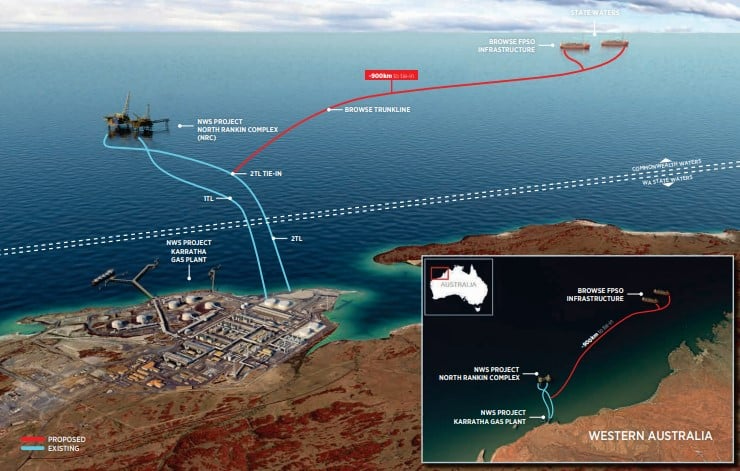
Browse to North-West Shelf project development concept; Source: Woodside After Woodside obtained environmental approval for the North West Shelf (NWS) project extension from the Western Australian government, restarting the federal environmental approvals process, the green light was perceived to be the key to advancing the firm’s Browse gas project and extending the Karratha gas plant’s life to 2070. This project is currently in the concept definition phase, and key activities continue in support of progress
The Australian operator has now released an economic impact assessment by Deloitte Access Economics, which estimates the Browse to NWS project could contribute a long-term uplift of around A$147 billion ($102
This project is currently in the concept definition phase, and key activities continue in support of progress towards front-end engineering and design (FEED) entry
Story 2Offshore EnergyMay 11, 2026

After ABS, Seatrium forges partnership with Bureau Veritas

Signal moderateDirectional

What happened

Seatrium Technology & Innovation signed a memorandum with Bureau Veritas to receive technical guidance, compliance support and independent verification services, aiming to speed approval‑in‑principle and technology qualification in the region. The MoU explicitly targets AiP, technology qualification and scaling of sustainable and digital solutions—this improves local verification capacity and changes how buyers should approach qualification and compliance requirements. Watch whether this partnership shortens vendor qualification timelines or changes preferred‑supplier scoring for AiP‑ready products

Buyer takeaway

Use local verification improvements to shorten qualification timelines, but demand documented AiP capability from suppliers to capture the benefit

Cost / money

Potential to reduce late‑stage approval costs, but expect higher upfront verification fees and scope for suppliers to charge for qualification activities

Supplier / commercial

Suppliers with pre‑qualified technologies gain leverage; buyers without pre‑approved supplier pools risk weaker negotiating positions on technical change orders

Safety / operations

Independent verification improves technical robustness and reduces design‑related rework, supporting safer execution if integrated into contract milestones

What to watch

Monitor whether vendors begin to require higher fees for AiP work or seek to pass verification costs to buyers as standard billable items

Key facts

  • MoU focused on approval‑in‑principle and technology qualification programs
  • Targets technical guidance, compliance support and independent verification services
  • Aims to support scalable offshore and digital solutions in the region

Source excerpts

Source: Bureau Veritas Bureau Veritas will provide technical guidance, compliance support and independent verification services to assist Seatrium in navigating complex technical requirements, regulatory frameworks and applicable international standards
Source: Bureau Veritas Bureau Veritas will provide technical guidance, compliance support and independent verification services to assist Seatrium in navigating complex technical requirements, regulatory frameworks and applicable international standards. Besides focusing on supporting the development of innovative sustainable energy solutions and digital economy solutions, the partnership will support selected concepts through approval in principle (AiP), technology qualification program, product line optimizat
Besides focusing on supporting the development of innovative sustainable energy solutions and digital economy solutions, the partnership will support selected concepts through approval in principle (AiP), technology qualification program, product line optimization, manufacturing readiness and type approval strategies
Story 3Hydrocarbon EngineeringMay 11, 2026

Topsoe and BioVeritas to accelerate second-generation renewable fuels production

Signal moderateDirectional

What happened

Topsoe and BioVeritas agreed to enable second‑generation renewable fuels production by combining Topsoe’s HydroFlex technology with BioVeritas’ conversion process for woody biomass and agricultural residues. The arrangement creates practical integration pathways for SAF and renewable fuel projects that can fit into existing refinery or processing infrastructure, which will expand the range of EPC scopes and licensor interfaces buyers must manage. Watch for developers to include these combined technology packages in future EPC tender scopes, which can change supplier shortlisting criteria

Buyer takeaway

Prepare for integrated EPC scopes that include licence‑integration and feedstock logistics; favour EPCs with experience in licence coupling and biomass handling

Cost / money

Specialist integration and feedstock handling typically increase engineering scope and commissioning complexity, raising short‑to‑mid term EPC cost exposure

Supplier / commercial

Licensors and technology providers become key commercial nodes; buyers should negotiate clear pass‑through and service obligations for technology suppliers

Safety / operations

Feedstock variability and novel process steps increase commissioning risk; require independent testing and clear acceptance criteria in contracts

What to watch

This is an early-signal in APAC; watch for inclusion of combined technology packages in RFPs which will change supplier bid compositions

Key facts

  • Agreement pairs HydroFlex with the BioVeritas Process for second‑generation feedstocks
  • Targets practical integration into existing processing infrastructure
  • Aims to expand viable feedstock pathways for renewable fuels and SAF projects

Source excerpts

The BioVeritas Process efficiently converts second-generation feedstocks to advantaged intermediates, called KEYTones™ that can be processed by Topsoe’s HydroFlex technology to unlock production of renewable fuels using second-generation feedstock
We’re excited to work with Topsoe to help customers unlock meaningful new volumes of renewable fuel
We’re excited to work with Topsoe to help customers unlock meaningful new volumes of renewable fuel. ” As global demand for SAF and renewable fuels continues to rise, expanding the feedstock base is critical to accelerating project development and meeting growing energy demand

VP Snapshot

Executive Risk & Action View

Woodside’s North West Shelf concept-phase progress and government environmental sign-off represent a material, long‑lead demand signal for Australian EPC and construction capacity; plan for sustained mobilisation pressure rather than a short spike.

Overall
66
Cost
79
Supply
25
Schedule
38
Compliance
15

Top signals

0-30dcost

Signal 1: Cost / money

Large capital scale of the NWS concept will amplify mobilisation premiums and reduce availability of below‑market bids as suppliers prioritise long‑term, higher‑value work over spot opportunities.

30-180dcost

Signal 2: Cost / money

Integrated renewable fuels and second‑generation feedstock projects increase buyer exposure to specialised equipment and licence-holder pass‑throughs, potentially raising engineering and commissioning pass‑through costs.

Signal 3: Cost / money

Local verification and AiP capability growth can lower some technical approval costs over time but may increase upfront testing scope and supplier fees for qualification work.

30-180dcommercial

Signal 4: Supplier / commercial

Expect suppliers to shorten quote validity and ask for mobilisation deposits as they see large public and private projects competing for the same fabrication slots and heavy-lift resources.

Signal 5: Supplier / commercial

Partnerships that expand local technical capability (verification, AiP) shift leverage toward suppliers who can demonstrate qualified product lines or prior verification — buyers without preferred‑supplier arrangements may lose negotiating power on scope and timing.

180d+supplier

Signal 6: Safety / operations

Longer, large-scale offshore developments increase the chance of clustered mobilisations and SIMOPS pressure; procurement should require staged handover and independent verification to preserve safety buffers.

Recommended actions

CategoryDue 3d

Map active project pipelines against local fabrication yards, heavy‑lift contractors and specialist licensors to identify single‑point supplier exposures.

Capacity‑exposure register that flags high‑risk supplier bottlenecks and alternative sourcing options.

ContractsDue 3d

Audit current RFQs and frameworks to ensure minimum quote validity, limit mobilisation deposit clauses, and add explicit pass‑through and temporary fuel handling language.

Updated RFQ and framework clauses that preserve buyer negotiation room on timing, deposits and pass‑throughs.

CategoryDue 21d

Engage preferred heavy civil, fabrication and specialist licensor suppliers to validate slot availability, current lead times and likely deposit expectations; capture commitment...

Validated supplier slot matrix and shortlist of partners willing to commit to mobilisation windows or phased delivery.

ContractsDue 21d

Require technical verification plans from prospective suppliers and add independent AiP/verification milestones into contract scopes for novel equipment or licence integrations.

Contract templates with explicit verification milestones and acceptance criteria that reduce rework and claims.

OpsDue 60d

Develop a mobilisation and SIMOPS playbook covering staged handovers, temporary fuel logistics, crew accommodation and independent design assurance for clustered mobilisations.

Operational readiness playbook that reduces SIMOPS incidents and clarifies contractor interfaces and responsibilities.

CategoryDue 60d

Evaluate integration capability and scope clarity for renewable‑fuel processing ties (licence interfaces, feedstock handling) and include specialist EPC criteria in preferred‑su...

Supplier framework that scores and shortlists EPCs with licence‑integration experience and feedstock handling capability.

Risk register

RiskTriggerMitigation
Watch for suppliers to use visible project scale to push broader pass‑through clauses, earlier milestone billing, or redeployment premiums — this is an early-signal of potential contract‑creep in mobilisation and logistics pricing.Watch for suppliers to use visible project scale to push broader pass‑through clauses, earlier milestone billing, or redeployment premiums — this is an early-signal of potential contract‑creep in mobilisation and logistics pricing.Confirm exposure with category, contracts, and operations before the next supplier commitment.

CM Snapshot

Category Manager Decision Detail

Today's priorities

Map active project pipelines against local fabrication yards, heavy‑lift contractors and specialist licensors to identify single‑point supplier exposures.

Do this because the Woodside NWS concept and similar large projects will compete for the same slots, and early visibility prevents surprise mobilisation premiums and rework to s...

Due 3d

high

CM move

Use this as the immediate supplier or contract action to move before the next sourcing gate.

Audit current RFQs and frameworks to ensure minimum quote validity, limit mobilisation deposit clauses, and add explicit pass‑through and temporary fuel handling language.

Do this because suppliers are likely to shorten validity windows and request mobilisation deposits as they prioritise high‑value long‑lead work tied to NWS and similar projects.

Due 3d

high

CM move

Use this as the immediate supplier or contract action to move before the next sourcing gate.

Engage preferred heavy civil, fabrication and specialist licensor suppliers to validate slot availability, current lead times and likely deposit expectations; capture commitment...

Do this because confirmed or progressing concept projects increase supplier prioritisation risk and securing voluntary commitments reduces mobilisation uncertainty.

Due 21d

high

CM move

Use this as the immediate supplier or contract action to move before the next sourcing gate.

Require technical verification plans from prospective suppliers and add independent AiP/verification milestones into contract scopes for novel equipment or licence integrations.

Do this because regional verification partnerships increase the universe of qualified suppliers and because independent verification reduces execution and safety claims during c...

Due 21d

high

CM move

Use this as the immediate supplier or contract action to move before the next sourcing gate.

Supplier radar

Offshore Energy

high

Observed supplier signal

Expect suppliers to shorten quote validity and ask for mobilisation deposits as they see large public and private projects competing for the same fabrication slots and heavy-lift resources.

Commercial implication

Expect suppliers to shorten quote validity and ask for mobilisation deposits as they see large public and private projects competing for the same fabrication slots and heavy-lift resources.

Next step: Validate the source-backed signal with incumbents and alternates before the next award or pricing decision.

Offshore Energy

high

Observed supplier signal

Partnerships that expand local technical capability (verification, AiP) shift leverage toward suppliers who can demonstrate qualified product lines or prior verification — buyers without preferred‑supplier arrangements may lose negotiating power on scope and timing.

Commercial implication

Partnerships that expand local technical capability (verification, AiP) shift leverage toward suppliers who can demonstrate qualified product lines or prior verification — buyers without preferred‑supplier arrangements may lose negotiating power on scope and timing.

Next step: Validate the source-backed signal with incumbents and alternates before the next award or pricing decision.

Negotiation levers

Map active project pipelines against local fabrication yards, heavy‑lift contractors and specialist licensors to identify single‑point supplier exposures.

When to use: Do this because the Woodside NWS concept and similar large projects will compete for the same slots, and early visibility prevents surprise mobilisation premiums and rework to s...

Expected outcome: Capacity‑exposure register that flags high‑risk supplier bottlenecks and alternative sourcing options.

Commercial mechanism to carry into the next supplier conversation

Audit current RFQs and frameworks to ensure minimum quote validity, limit mobilisation deposit clauses, and add explicit pass‑through and temporary fuel handling language.

When to use: Do this because suppliers are likely to shorten validity windows and request mobilisation deposits as they prioritise high‑value long‑lead work tied to NWS and similar projects.

Expected outcome: Updated RFQ and framework clauses that preserve buyer negotiation room on timing, deposits and pass‑throughs.

Commercial mechanism to carry into the next supplier conversation

Engage preferred heavy civil, fabrication and specialist licensor suppliers to validate slot availability, current lead times and likely deposit expectations; capture commitment...

When to use: Do this because confirmed or progressing concept projects increase supplier prioritisation risk and securing voluntary commitments reduces mobilisation uncertainty.

Expected outcome: Validated supplier slot matrix and shortlist of partners willing to commit to mobilisation windows or phased delivery.

Commercial mechanism to carry into the next supplier conversation

Require technical verification plans from prospective suppliers and add independent AiP/verification milestones into contract scopes for novel equipment or licence integrations.

When to use: Do this because regional verification partnerships increase the universe of qualified suppliers and because independent verification reduces execution and safety claims during c...

Expected outcome: Contract templates with explicit verification milestones and acceptance criteria that reduce rework and claims.

Commercial mechanism to carry into the next supplier conversation

Talking points

Woodside’s North West Shelf concept-phase progress and government environmental sign-off represent a material, long‑lead demand signal for Australian EPC and construction capacity; plan for sustained mobilisation pressure rather than a short spike.
Local and regional suppliers are likely to shorten quote validity and press mobilisation-deposit terms as large public and private projects compete for yards, heavy equipment and skilled crews—buyer negotiation room will shrink on timing and pass‑throughs.
Regional tech and verification partnerships (example: Seatrium with Bureau Veritas) increase local capability to qualify new technologies and speed approvals, which can reduce AiP friction and change supplier leverage on compliance and testing scopes.
The Browse / NWS project is still in concept and FEED-preparation stages, so direct award timing and slot absorption remain multi‑phase and partly uncertain; treat this as a sustained capacity driver, not an immediate contract award.

Supplier radar

SupplierSignalImplicationNext stepConfidence
Offshore EnergyExpect suppliers to shorten quote validity and ask for mobilisation deposits as they see large public and private projects competing for the same fabrication slots and heavy-lift resources.Expect suppliers to shorten quote validity and ask for mobilisation deposits as they see large public and private projects competing for the same fabrication slots and heavy-lift resources.Validate the source-backed signal with incumbents and alternates before the next award or pricing decision.high
Offshore EnergyPartnerships that expand local technical capability (verification, AiP) shift leverage toward suppliers who can demonstrate qualified product lines or prior verification — buyers without preferred‑supplier arrangements may lose negotiating power on scope and timing.Partnerships that expand local technical capability (verification, AiP) shift leverage toward suppliers who can demonstrate qualified product lines or prior verification — buyers without preferred‑supplier arrangements may lose negotiating power on scope and timing.Validate the source-backed signal with incumbents and alternates before the next award or pricing decision.high

Negotiation levers

  • Map active project pipelines against local fabrication yards, heavy‑lift contractors and specialist licensors to identify single‑point supplier exposures.Do this because the Woodside NWS concept and similar large projects will compete for the same slots, and early visibility prevents surprise mobilisation premiums and rework to s...Capacity‑exposure register that flags high‑risk supplier bottlenecks and alternative sourcing options.

    high confidence

  • Audit current RFQs and frameworks to ensure minimum quote validity, limit mobilisation deposit clauses, and add explicit pass‑through and temporary fuel handling language.Do this because suppliers are likely to shorten validity windows and request mobilisation deposits as they prioritise high‑value long‑lead work tied to NWS and similar projects.Updated RFQ and framework clauses that preserve buyer negotiation room on timing, deposits and pass‑throughs.

    high confidence

  • Engage preferred heavy civil, fabrication and specialist licensor suppliers to validate slot availability, current lead times and likely deposit expectations; capture commitment...Do this because confirmed or progressing concept projects increase supplier prioritisation risk and securing voluntary commitments reduces mobilisation uncertainty.Validated supplier slot matrix and shortlist of partners willing to commit to mobilisation windows or phased delivery.

    high confidence

  • Require technical verification plans from prospective suppliers and add independent AiP/verification milestones into contract scopes for novel equipment or licence integrations.Do this because regional verification partnerships increase the universe of qualified suppliers and because independent verification reduces execution and safety claims during c...Contract templates with explicit verification milestones and acceptance criteria that reduce rework and claims.

    high confidence

What to do / What to watch

What to do now

  • Map active project pipelines against local fabrication yards, heavy‑lift contractors and specialist licensors to identify single‑point supplier exposures.

    Why: Do this because the Woodside NWS concept and similar large projects will compete for the same slots, and early visibility prevents surprise mobilisation premiums and rework to s...

    Owner: Category

    Expected outcome: Capacity‑exposure register that flags high‑risk supplier bottlenecks and alternative sourcing options.

    [3]
  • Audit current RFQs and frameworks to ensure minimum quote validity, limit mobilisation deposit clauses, and add explicit pass‑through and temporary fuel handling language.

    Why: Do this because suppliers are likely to shorten validity windows and request mobilisation deposits as they prioritise high‑value long‑lead work tied to NWS and similar projects.

    Owner: Contracts

    Expected outcome: Updated RFQ and framework clauses that preserve buyer negotiation room on timing, deposits and pass‑throughs.

    [3]

Next few weeks

  • Engage preferred heavy civil, fabrication and specialist licensor suppliers to validate slot availability, current lead times and likely deposit expectations; capture commitment...

    Why: Do this because confirmed or progressing concept projects increase supplier prioritisation risk and securing voluntary commitments reduces mobilisation uncertainty.

    Owner: Category

    Expected outcome: Validated supplier slot matrix and shortlist of partners willing to commit to mobilisation windows or phased delivery.

    [3][1]
  • Require technical verification plans from prospective suppliers and add independent AiP/verification milestones into contract scopes for novel equipment or licence integrations.

    Why: Do this because regional verification partnerships increase the universe of qualified suppliers and because independent verification reduces execution and safety claims during c...

    Owner: Contracts

    Expected outcome: Contract templates with explicit verification milestones and acceptance criteria that reduce rework and claims.

    [1]

Longer view

  • Develop a mobilisation and SIMOPS playbook covering staged handovers, temporary fuel logistics, crew accommodation and independent design assurance for clustered mobilisations.

    Why: Do this because sustained capital programmes and clustered site activity increase simultaneous‑operations risk unless interfaces and logistics are pre‑defined.

    Owner: Ops

    Expected outcome: Operational readiness playbook that reduces SIMOPS incidents and clarifies contractor interfaces and responsibilities.

    [3]
  • Evaluate integration capability and scope clarity for renewable‑fuel processing ties (licence interfaces, feedstock handling) and include specialist EPC criteria in preferred‑su...

    Why: Do this because new clean‑fuel technology partnerships will create EPC scopes requiring licence integration and specialised feedstock handling expertise, which affects supplier...

    Owner: Category

    Expected outcome: Supplier framework that scores and shortlists EPCs with licence‑integration experience and feedstock handling capability.

    [2]

What to watch

  • Watch for suppliers to use visible project scale to push broader pass‑through clauses, earlier milestone billing, or redeployment premiums — this is an early-signal of potential contract‑creep in mobilisation and logistics pricing
  • Watch for suppliers to use visible project scale to push broader pass‑through clauses, earlier milestone billing, or redeployment premiums — this is an early-signal of potential contract‑creep in mobilisation and logistics pricing.: Watch for suppliers to use visible project scale to push broader pass‑through clauses, earlier milestone billing, or redeployment premiums — this is an early-signal of potential contract‑creep in mobilisation and logistics pricing
  • Woodside’s North West Shelf concept-phase progress and government environmental sign-off represent a material, long‑lead demand signal for Australian EPC and construction capacity; plan for sustained mobilisation pressure rather than a short spike
  • Local and regional suppliers are likely to shorten quote validity and press mobilisation-deposit terms as large public and private projects compete for yards, heavy equipment and skilled crews—buyer negotiation room will shrink on timing and pass‑throughs
  • Regional tech and verification partnerships (example: Seatrium with Bureau Veritas) increase local capability to qualify new technologies and speed approvals, which can reduce AiP friction and change supplier leverage on compliance and testing scopes
  • The Browse / NWS project is still in concept and FEED-preparation stages, so direct award timing and slot absorption remain multi‑phase and partly uncertain; treat this as a sustained capacity driver, not an immediate contract award

Market pulse

IndexLatestChangeAs of
Henry Hub Gas (NG)3.12 /MMBtu+0.00 (+0.00%)May 11, 2026, 10:03 PM
Cheniere (LNG) (LNG)185 +0.00 (+0.00%)May 11, 2026, 10:03 PM
Brent Crude (BRENT)74.89 /bbl+0.00 (+0.00%)May 11, 2026, 10:03 PM
Fluor Corp (FLR)42 +0.00 (+0.00%)May 11, 2026, 10:03 PM
KBR Inc (KBR)58 +0.00 (+0.00%)May 11, 2026, 10:03 PM
  • Cheniere (LNG): LNG market dynamics can affect commissioning fuel logistics and commissioning pass‑through exposure for gas projects
  • Fluor Corp: Major EPC contractor performance and backlog trends inform supplier slot and mobilisation risk for large offshore programmes

Sources

Inline citations jump here. Expand a source to read the excerpt, the AI interpretation, and the original link.

[1] After ABS, Seatrium forges partnership with Bureau Veritas

offshore-energy.biz · May 11, 2026

Expand

AI reading

Seatrium Technology & Innovation signed a memorandum with Bureau Veritas to receive technical guidance, compliance support and independent verification services, aiming to speed approval‑in‑principle and technology qualification in the region. The MoU explicitly targets AiP, technology qualification and scaling of sustainable and digital solutions—this improves local verification capacity and changes how buyers should approach qualification and compliance requirements. Watch whether this partnership shortens vendor qualification timelines or changes preferred‑supplier scoring for AiP‑ready products

Buyer takeaway

Use local verification improvements to shorten qualification timelines, but demand documented AiP capability from suppliers to capture the benefit

Cost / money

Potential to reduce late‑stage approval costs, but expect higher upfront verification fees and scope for suppliers to charge for qualification activities

Supplier / commercial

Suppliers with pre‑qualified technologies gain leverage; buyers without pre‑approved supplier pools risk weaker negotiating positions on technical change orders

Safety / operations

Independent verification improves technical robustness and reduces design‑related rework, supporting safer execution if integrated into contract milestones

What to watch

Monitor whether vendors begin to require higher fees for AiP work or seek to pass verification costs to buyers as standard billable items

Key facts

  • MoU focused on approval‑in‑principle and technology qualification programs
  • Targets technical guidance, compliance support and independent verification services
  • Aims to support scalable offshore and digital solutions in the region

Source excerpts

Source: Bureau Veritas Bureau Veritas will provide technical guidance, compliance support and independent verification services to assist Seatrium in navigating complex technical requirements, regulatory frameworks and applicable international standards
Source: Bureau Veritas Bureau Veritas will provide technical guidance, compliance support and independent verification services to assist Seatrium in navigating complex technical requirements, regulatory frameworks and applicable international standards. Besides focusing on supporting the development of innovative sustainable energy solutions and digital economy solutions, the partnership will support selected concepts through approval in principle (AiP), technology qualification program, product line optimizat
Besides focusing on supporting the development of innovative sustainable energy solutions and digital economy solutions, the partnership will support selected concepts through approval in principle (AiP), technology qualification program, product line optimization, manufacturing readiness and type approval strategies

Used in this brief

  • Next 2-4 weeks — Require technical verification plans from prospective suppliers and add independent AiP/verification milestones into contract scopes for novel equipment or licence integrations.. Rationale: Do this because regional verification partnerships increase the universe of qualified suppliers and because independent verification reduces execution and safety claims during c.... Owner: Contracts. KPI: Contract templates with explicit verification milestones and acceptance criteria that reduce rework and claims
  • Seatrium Technology & Innovation signed a memorandum with Bureau Veritas to receive technical guidance, compliance support and independent verification services, aiming to speed approval‑in‑principle and technology qualification in the region. The MoU explicitly targets AiP, technology qualification and scaling of sustainable and digital solutions—this improves local verification capacity and changes how buyers should approach qualification and compliance requirements. Watch whether this partnership shortens vendor qualification timelines or changes preferred‑supplier scoring for AiP‑ready products
  • Buyer bottom line: rising local verification capability can reduce external licensor friction but increases competition for suppliers already AiP‑qualified—buyers should adjust commercial evaluations accordingly
Open original source

[2] Topsoe and BioVeritas to accelerate second-generation renewable fuels production

hydrocarbonengineering.com · May 11, 2026

Expand

AI reading

Topsoe and BioVeritas agreed to enable second‑generation renewable fuels production by combining Topsoe’s HydroFlex technology with BioVeritas’ conversion process for woody biomass and agricultural residues. The arrangement creates practical integration pathways for SAF and renewable fuel projects that can fit into existing refinery or processing infrastructure, which will expand the range of EPC scopes and licensor interfaces buyers must manage. Watch for developers to include these combined technology packages in future EPC tender scopes, which can change supplier shortlisting criteria

Buyer takeaway

Prepare for integrated EPC scopes that include licence‑integration and feedstock logistics; favour EPCs with experience in licence coupling and biomass handling

Cost / money

Specialist integration and feedstock handling typically increase engineering scope and commissioning complexity, raising short‑to‑mid term EPC cost exposure

Supplier / commercial

Licensors and technology providers become key commercial nodes; buyers should negotiate clear pass‑through and service obligations for technology suppliers

Safety / operations

Feedstock variability and novel process steps increase commissioning risk; require independent testing and clear acceptance criteria in contracts

What to watch

This is an early-signal in APAC; watch for inclusion of combined technology packages in RFPs which will change supplier bid compositions

Key facts

  • Agreement pairs HydroFlex with the BioVeritas Process for second‑generation feedstocks
  • Targets practical integration into existing processing infrastructure
  • Aims to expand viable feedstock pathways for renewable fuels and SAF projects

Source excerpts

The BioVeritas Process efficiently converts second-generation feedstocks to advantaged intermediates, called KEYTones™ that can be processed by Topsoe’s HydroFlex technology to unlock production of renewable fuels using second-generation feedstock
We’re excited to work with Topsoe to help customers unlock meaningful new volumes of renewable fuel
We’re excited to work with Topsoe to help customers unlock meaningful new volumes of renewable fuel. ” As global demand for SAF and renewable fuels continues to rise, expanding the feedstock base is critical to accelerating project development and meeting growing energy demand

Used in this brief

  • Cost / money: Integrated renewable fuels and second‑generation feedstock projects increase buyer exposure to specialised equipment and licence-holder pass‑throughs, potentially raising engineering and commissioning pass‑through costs
  • Safety / operations: New fuel-processing and renewable-fuel projects bring integration risk during commissioning—contract clarity on temporary fuel logistics, commissioning pass‑throughs and independent testing reduces safety and execution exposure
  • Next quarter — Evaluate integration capability and scope clarity for renewable‑fuel processing ties (licence interfaces, feedstock handling) and include specialist EPC criteria in preferred‑su.... Rationale: Do this because new clean‑fuel technology partnerships will create EPC scopes requiring licence integration and specialised feedstock handling expertise, which affects supplier.... Owner: Category. KPI: Supplier framework that scores and shortlists EPCs with licence‑integration experience and feedstock handling capability
Open original source

[3] $30 billion mega gas project set to enrich Australia’s countrywide GDP by $98.7 billion

offshore-energy.biz · May 11, 2026

Expand

AI reading

Woodside published an economic impact assessment tied to a concept‑phase Browse/North‑West Shelf (NWS) extension that highlights the project’s large capital scale and long‑term regional economic benefit. The project remains in concept definition with ongoing activities to support FEED entry; the developer has secured environmental approval at state level, which keeps the project a material future demand signal for WA fabrication, marine and construction suppliers. Watch FEED entry and FEED‑related supplier slot commitments as the next concrete timing signal for mobilisation demand

Buyer takeaway

Treat the NWS concept progress as a multi‑year capacity driver in WA — mobilisations and yard slots will be reprioritised by suppliers toward this scale of work

Cost / money

Directional upward pressure on mobilisation premiums, lead times and contractor pass‑through clauses as suppliers reallocate capacity to higher‑value projects

Supplier / commercial

Suppliers will shorten quote windows and seek mobilisation deposits or earlier milestone billing where they can; relationship frameworks and early slot commitments become stronger negotiation levers

Safety / operations

Clustered site activity increases SIMOPS risk; procurement should require staged handover and independent verification to protect schedule and HSE

What to watch

Watch FEED entry dates and any supplier communications on slot reservations or deposit terms as an early indicator of mobilisation‑pricing shifts

Key facts

  • Project in concept definition phase with activities supporting FEED entry
  • Capital expenditure estimated in the report at approximately $25–$30 billion
  • Reported large economy‑wide employment and tax uplift expectations

Source excerpts

Browse to North-West Shelf project development concept; Source: Woodside After Woodside obtained environmental approval for the North West Shelf (NWS) project extension from the Western Australian government, restarting the federal environmental approvals process, the green light was perceived to be the key to advancing the firm’s Browse gas project and extending the Karratha gas plant’s life to 2070. This project is currently in the concept definition phase, and key activities continue in support of progress
The Australian operator has now released an economic impact assessment by Deloitte Access Economics, which estimates the Browse to NWS project could contribute a long-term uplift of around A$147 billion ($102
This project is currently in the concept definition phase, and key activities continue in support of progress towards front-end engineering and design (FEED) entry

Used in this brief

  • Woodside’s North West Shelf concept-phase progress and government environmental sign-off represent a material, long‑lead demand signal for Australian EPC and construction capacity; plan for sustained mobilisation pressure rather than a short spike. Local and regional suppliers are likely to shorten quote validity and press mobilisation-deposit terms as large public and private projects compete for yards, heavy equipment and skilled crews—buyer negotiation room will shrink on timing and pass‑throughs. Regional tech and verification partnerships (example: Seatrium with Bureau Veritas) increase local capability to qualify new technologies and speed approvals, which can reduce AiP friction and change supplier leverage on compliance and testing scopes. The Browse / NWS project is still in concept and FEED-preparation stages, so direct award timing and slot absorption remain multi‑phase and partly uncertain; treat this as a sustained capacity driver, not an immediate contract award
  • Next 72 hours — Map active project pipelines against local fabrication yards, heavy‑lift contractors and specialist licensors to identify single‑point supplier exposures.. Rationale: Do this because the Woodside NWS concept and similar large projects will compete for the same slots, and early visibility prevents surprise mobilisation premiums and rework to s.... Owner: Category. KPI: Capacity‑exposure register that flags high‑risk supplier bottlenecks and alternative sourcing options
  • Next 72 hours — Audit current RFQs and frameworks to ensure minimum quote validity, limit mobilisation deposit clauses, and add explicit pass‑through and temporary fuel handling language.. Rationale: Do this because suppliers are likely to shorten validity windows and request mobilisation deposits as they prioritise high‑value long‑lead work tied to NWS and similar projects.. Owner: Contracts. KPI: Updated RFQ and framework clauses that preserve buyer negotiation room on timing, deposits and pass‑throughs
Open original source

[4] Cheniere (LNG)

finance.yahoo.com · n.d.

Expand

[5] Fluor Corp

finance.yahoo.com · n.d.

Expand