Rigs & Integrated Drilling · Australia (Perth)

Rework Rig Mobilisation and Qualification Plans for Aussie Gas Buildout

Published May 12, 2026, 6:02 AM AWSTAPACFull category signal
Ask AI
$30 billion mega gas project set to enrich Australia’s countrywide GDP by $98.7 billion

In 60 seconds

Top move

Woodside’s Browse-to-NWS concept moving toward FEED establishes a sustained regional demand driver that will tighten mobilisation windows and make long‑lead commitments more likely for rigs, vessels and fabricators

Key takeaways

  • Woodside’s Browse-to-NWS concept moving toward FEED establishes a sustained regional demand driver that will tighten mobilisation windows and make long‑lead commitments more likely for rigs, vessels and fabricators.[1]
  • Seadrill’s recent contract awards and backlog growth remove marginal rig capacity from the spot market, reducing short‑notice options for APAC charters and raising mobilisation price pressure.[2]
  • Combined, a major Australian gas FEED push plus growing booked rig programmes means buyers should prioritise locking mobilisation terms, quote validity and reservation‑fee caps in upcoming tenders to control cost and schedule exposure.[1][2]
  • This brief draws mainly on project and fleet allocation signals; drilling trade publications remain useful background but do not add new procurement signals for APAC activity today.[3]
  • Operationally, expect procurement levers to be mobilisation windows, contract scope/term (including reservation/cancellation mechanics) and supplier qualification requirements tied to FEED triggers.[1][2]

What changed since last run

  • Added Woodside Browse-to-NWS advancement toward FEED as a new, APAC-scale demand driver to monitor (Article 4).
  • Logged Seadrill’s recent backlog lift and contract start dates as concrete evidence of tighter global rig allocation impacting APAC optionality (Article 1).

Key facts

  • Backlog increase reported at over $860 million
  • Multiple rig contracts and extensions with program start dates in late‑2026 and beyond
  • Project described as Australia’s largest untapped conventional gas resource
  • Project progressing toward FEED following environmental approvals
  • Capital expenditure estimated in the multi‑billion range for development phases
  • Trade publication focused on drilling and completion industry coverage

Why it matters

Woodside’s Browse-to-NWS concept moving toward FEED establishes a sustained regional demand driver that will tighten mobilisation windows and make long‑lead commitments more likely for rigs, vessels and fabricators. Seadrill’s recent contract awards and backlog growth remove marginal rig capacity from the spot market, reducing short‑notice options for APAC charters and raising mobilisation price pressure. Combined, a major Australian gas FEED push plus growing booked rig programmes means buyers should prioritise locking mobilisation terms, quote validity and reservation‑fee caps in upcoming tenders to control cost and schedule exposure. This brief draws mainly on project and fleet allocation signals; drilling trade publications remain useful background but do not add new procurement signals for APAC activity today

Cost / money

  • Sustained project-scale demand from Browse increases likelihood suppliers will prioritise allocations to large sponsors, which raises the chance of mobilisation premiums and reservation fees for ad‑hoc APAC campaigns.[1]
  • Seadrill’s new contract backlog reduces available short‑term rig supply that buyers could call on, pushing up spot hire and replacement‑rig mobilisation costs when schedules slip or overlap.[2]
  • If buyers delay decisions while FEED firms up, late commitments may cost more: long‑lead fabrication and vessel reservations are priced with less buyer leverage as demand firms.[1][2]

Supplier / commercial

  • Rig owners with growing forward books will likely insist on reservation or mobilisation clauses and stricter cancellation mechanics to protect contracted programmes; buyers should expect negotiation on those terms.[2]
  • Large staged projects (Browse) create opportunities for suppliers to push staged payments or shorter quote validities for long‑lead items unless RFQs force caps and definitions.[1]
  • Trade and industry outlets remain useful for supplier sentiment but provide limited operational detail; treat trade content as background rather than a replacement for direct supplier confirmations.[3]

Safety / operations

  • Project scale and compressed mobilisation timelines increase dependency on certified crews, marine warranty surveys and spare parts availability; under‑resourcing at start‑up raises HSE and schedule risk.[1]
  • Longer, firm rig contracts improve planned maintenance windows but reduce flexibility to reassign rigs for unplanned APAC needs, which can create single‑point execution risk if a contracted rig is delayed offshore.[2]

What to watch

  • Watch whether suppliers begin shortening quote validities or formally adding reservation/mobilisation fees as FEED milestones are announced; this would shift cost and timing risk onto buyers.[1][2]
  • Watch rig contract start dates and mobilisation revenue clauses for booked rigs that overlap with planned APAC windows; those dates determine when marginal capacity actually tightens.[2]

Top stories

Story 1Offshore EnergyMay 11, 2026

Seadrill’s new rig deals of over $860 million lift total backlog to $3.1 billion

Signal strongSource-grounded

What happened

Seadrill added over $860 million to its contract backlog through multiple rig awards and extensions across regions. Several of the wins include multi‑period starts that remove available capacity from the spot market and have mobilisation revenue tied to specific start dates. Buyers should monitor those start dates and mobilisation clauses to understand when short‑notice APAC options will erode

Buyer takeaway

Factor recent fleet bookings into regional availability forecasts and treat backlog growth as a constraint when planning short‑notice campaigns

Cost / money

Reduced spot rig supply is likely to push mobilisation and replacement hire costs higher as buyers compete for marginal capacity

Supplier / commercial

Rig owners with fuller books will prioritise contracted programmes and may insist on reservation fees or stricter cancellation clauses

Safety / operations

Firm contracts generally improve maintenance planning but reduce the pool of rigs available for emergency re‑assignment, increasing single‑point execution risk

What to watch

Confirmed: monitor rig start dates and mobilisation revenue clauses to know when booked rigs cease to be available for alternative work

Key facts

  • Backlog increase reported at over $860 million
  • Multiple rig contracts and extensions with program start dates in late‑2026 and beyond

Source excerpts

Home Fossil Energy Seadrill’s new rig deals of over $860 million lift total backlog to $3. 1 billion May 11, 2026, by Seadrill, an offshore drilling contractor, has secured a batch of rig assignments and extensions across the U
While the first drillship was given a 365-day contract extension, with operations scheduled to start in October 2026, the second rig was hired on a program with a duration of 270 days and an expected commencement in September 2026. The 2015-built Sonangol Quenguela drillship landed a contract extension with TotalEnergies in Angola for an estimated 480 days, committing the rig through July 2028
West Jupiter drillship; Source: Seadrill Seadrill’s latest fleet status report shows the rig owner obtained multiple contract awards across the Americas and Africa, adding over $860 million to contract backlog since the previous report. As a result, the company’s total contract backlog now stands at $3
Story 2Offshore EnergyMay 11, 2026

$30 billion mega gas project set to enrich Australia’s countrywide GDP by $98.7 billion

Signal strongSource-grounded

What happened

Woodside’s Browse-to-North West Shelf concept advanced after state environmental approval and is moving toward FEED entry. The project is positioned as a very large offshore gas development intended to backfill declining supply, implying multi‑discipline procurement across rigs, vessels and fabrication. Watch FEED milestone announcements — they will be procurement triggers for long‑lead buys and mobilisation reservations

Buyer takeaway

Treat Browse as a sustained demand driver: secure mobilisation windows, heavy‑lift vessels and long‑lead fabrication earlier rather than assuming spot availability will suffice

Cost / money

Directional upward pressure on mobilisation and reservation fees is likely as suppliers prioritise allocations to large sponsored projects over ad‑hoc charters

Supplier / commercial

Expect suppliers to push for shorter quote validity and staged payments tied to FEED milestones unless RFQs specify caps and triggers

Safety / operations

Execution will depend on certified crews, marine warranty surveys and spare pools; compressed timelines can create start‑up HSE exposure if not properly resourced

What to watch

Confirmed: watch FEED milestone announcements that typically become procurement triggers and watch for suppliers to shorten quote windows as scope firms

Key facts

  • Project described as Australia’s largest untapped conventional gas resource
  • Project progressing toward FEED following environmental approvals
  • Capital expenditure estimated in the multi‑billion range for development phases

Source excerpts

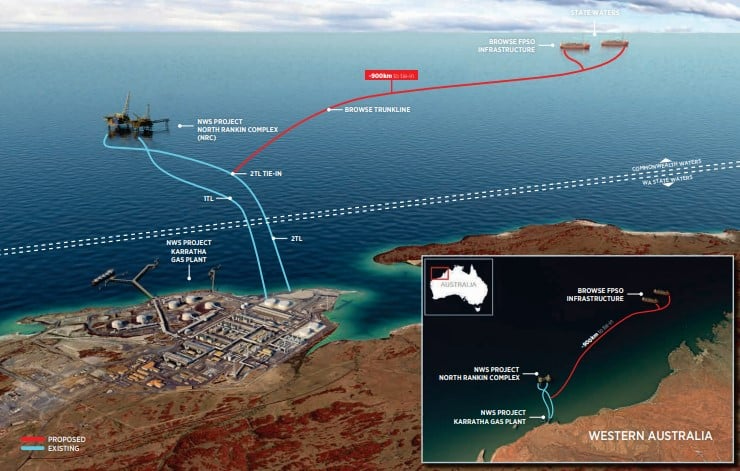
Browse to North-West Shelf project development concept; Source: Woodside After Woodside obtained environmental approval for the North West Shelf (NWS) project extension from the Western Australian government, restarting the federal environmental approvals process, the green light was perceived to be the key to advancing the firm’s Browse gas project and extending the Karratha gas plant’s life to 2070. This project is currently in the concept definition phase, and key activities continue in support of progress
The modelling estimates the project could deliver up to 4,760 direct and indirect full-time equivalent jobs across Australia at peak operations
Home Fossil Energy $30 billion mega gas project set to enrich Australia’s countrywide GDP by $98
Story 3Drilling Contractor

Drilling Rigs & Automation Archives - Drilling Contractor

Signal limitedDirectional

What happened

Drilling Contractor remains a core trade source covering the global drilling and completion industry, offering background on rig and completion trends. The site is a useful repository for industry practice and technical discussions but does not provide firm, transaction‑level signals for APAC procurement today

Buyer takeaway

Use trade content for market context and supplier behaviour cues, but rely on direct supplier confirmations for contractual and mobilisation decisions

Cost / money

Trade commentary can flag directional cost trends but lacks binding commercial detail; do not use it as a stand‑alone price signal

Supplier / commercial

Publications can indicate supplier sentiment but not specific contractual terms—verify with supplier letters or confirmations

Safety / operations

Technical articles can inform HSE practice and crew competency expectations, useful for pre‑qualification checklists

What to watch

Limited signal: treat trade reporting as background and verify any procurement actions with primary supplier data

Key facts

  • Trade publication focused on drilling and completion industry coverage
  • Longstanding industry resource for technical and market commentary

Source excerpts

Drilling Contractor is the only viable magazine exclusively covering the global drilling and completion industry, both land and offshore

VP Snapshot

Executive Risk & Action View

Woodside’s Browse-to-NWS concept moving toward FEED establishes a sustained regional demand driver that will tighten mobilisation windows and make long‑lead commitments more likely for rigs, vessels and fabricators.

Overall
56
Cost
97
Supply
61
Schedule
20
Compliance
15

Top signals

30-180dcost

Signal 1: Cost / money

Sustained project-scale demand from Browse increases likelihood suppliers will prioritise allocations to large sponsors, which raises the chance of mobilisation premiums and reservation fees for ad‑hoc APAC campaigns.

Signal 2: Cost / money

Seadrill’s new contract backlog reduces available short‑term rig supply that buyers could call on, pushing up spot hire and replacement‑rig mobilisation costs when schedules slip or overlap.

0-30dcost

Signal 3: Cost / money

If buyers delay decisions while FEED firms up, late commitments may cost more: long‑lead fabrication and vessel reservations are priced with less buyer leverage as demand firms.

30-180dcommercial

Signal 4: Supplier / commercial

Rig owners with growing forward books will likely insist on reservation or mobilisation clauses and stricter cancellation mechanics to protect contracted programmes; buyers should expect negotiation on those terms.

Signal 5: Supplier / commercial

Large staged projects (Browse) create opportunities for suppliers to push staged payments or shorter quote validities for long‑lead items unless RFQs force caps and definitions.

Signal 6: Supplier / commercial

Trade and industry outlets remain useful for supplier sentiment but provide limited operational detail; treat trade content as background rather than a replacement for direct supplier confirmations.

Recommended actions

ContractsDue 3d

Reconfirm mobilisation windows, reservation/cancellation mechanics and any mobilisation fee language with shortlisted rig owners and heavy‑lift vessel providers for planned Aust...

Written confirmations of mobilisation windows, reservation fees, and cancellation mechanics to use in bid comparisons and award decisions.

CategoryDue 3d

Ask nominated long‑lead fabricators and major rig providers to supply their current quote‑validity windows and any reservation fee schedules you would face if FEED triggers mobi...

Repository of supplier quote‑validity terms and reservation fee schedules for procurement scoring.

ContractsDue 21d

Update RFQ and contract templates to require explicit mobilisation fee caps, minimum quote validity where acceptable, and clear pass‑through trigger language for long‑lead items.

Revised RFQ and contract clauses enforce consistent mobilisation and pass‑through rules across active tenders.

CategoryDue 21d

Run a sourcing scenario to compare awarding integrated scopes (bundled rig+installation support) versus segmented awards (rig days, vessels, fabrication) for high‑risk work pack...

Decision matrix showing preferred award structure by commercial leverage and delivery certainty for key packages.

CategoryDue 60d

Pre‑qualify a shortlist of local fabricators, secondary vessel providers and spare‑parts suppliers and negotiate template mobilisation/flex clauses to preserve substitution righ...

A vetted supplier list and contract clauses enabling prioritized access or substitution with defined mobilisation triggers.

Risk register

RiskTriggerMitigation
Watch whether suppliers begin shortening quote validities or formally adding reservation/mobilisation fees as FEED milestones are announced; this would shift cost and timing risk onto buyers.Watch whether suppliers begin shortening quote validities or formally adding reservation/mobilisation fees as FEED milestones are announced; this would shift cost and timing risk onto buyers.Confirm exposure with category, contracts, and operations before the next supplier commitment.
Watch rig contract start dates and mobilisation revenue clauses for booked rigs that overlap with planned APAC windows; those dates determine when marginal capacity actually tightens.Watch rig contract start dates and mobilisation revenue clauses for booked rigs that overlap with planned APAC windows; those dates determine when marginal capacity actually tightens.Confirm exposure with category, contracts, and operations before the next supplier commitment.

CM Snapshot

Category Manager Decision Detail

Today's priorities

Reconfirm mobilisation windows, reservation/cancellation mechanics and any mobilisation fee language with shortlisted rig owners and heavy‑lift vessel providers for planned Aust...

Do this because Woodside’s move toward FEED and Seadrill’s backlog lift can change supplier allocation priorities and terms quickly, and written confirmations clarify current su...

Due 3d

high

CM move

Use this as the immediate supplier or contract action to move before the next sourcing gate.

Ask nominated long‑lead fabricators and major rig providers to supply their current quote‑validity windows and any reservation fee schedules you would face if FEED triggers mobi...

Do this because suppliers often shorten validity or add reservation fees once large project FEEDs firm up, and early visibility prevents late surprises in cost and schedule.

Due 3d

high

CM move

Use this as the immediate supplier or contract action to move before the next sourcing gate.

Update RFQ and contract templates to require explicit mobilisation fee caps, minimum quote validity where acceptable, and clear pass‑through trigger language for long‑lead items.

Do this because large project demand raises the probability suppliers will seek shorter validities or staged payments, and standard clauses protect buyer comparability and cost...

Due 21d

high

CM move

Use this as the immediate supplier or contract action to move before the next sourcing gate.

Run a sourcing scenario to compare awarding integrated scopes (bundled rig+installation support) versus segmented awards (rig days, vessels, fabrication) for high‑risk work pack...

Do this because rising supplier backlog and potential consolidation change trade‑offs between delivery certainty and price competition, and modelling reveals preferred award str...

Due 21d

high

CM move

Use this as the immediate supplier or contract action to move before the next sourcing gate.

Supplier radar

Offshore Energy

high

Observed supplier signal

Rig owners with growing forward books will likely insist on reservation or mobilisation clauses and stricter cancellation mechanics to protect contracted programmes; buyers should expect negotiation on those terms.

Commercial implication

Rig owners with growing forward books will likely insist on reservation or mobilisation clauses and stricter cancellation mechanics to protect contracted programmes; buyers should expect negotiation on those terms.

Next step: Validate the source-backed signal with incumbents and alternates before the next award or pricing decision.

Offshore Energy

high

Observed supplier signal

Large staged projects (Browse) create opportunities for suppliers to push staged payments or shorter quote validities for long‑lead items unless RFQs force caps and definitions.

Commercial implication

Large staged projects (Browse) create opportunities for suppliers to push staged payments or shorter quote validities for long‑lead items unless RFQs force caps and definitions.

Next step: Validate the source-backed signal with incumbents and alternates before the next award or pricing decision.

Drilling Contractor

high

Observed supplier signal

Trade and industry outlets remain useful for supplier sentiment but provide limited operational detail; treat trade content as background rather than a replacement for direct supplier confirmations.

Commercial implication

Trade and industry outlets remain useful for supplier sentiment but provide limited operational detail; treat trade content as background rather than a replacement for direct supplier confirmations.

Next step: Validate the source-backed signal with incumbents and alternates before the next award or pricing decision.

Negotiation levers

Reconfirm mobilisation windows, reservation/cancellation mechanics and any mobilisation fee language with shortlisted rig owners and heavy‑lift vessel providers for planned Aust...

When to use: Do this because Woodside’s move toward FEED and Seadrill’s backlog lift can change supplier allocation priorities and terms quickly, and written confirmations clarify current su...

Expected outcome: Written confirmations of mobilisation windows, reservation fees, and cancellation mechanics to use in bid comparisons and award decisions.

Commercial mechanism to carry into the next supplier conversation

Ask nominated long‑lead fabricators and major rig providers to supply their current quote‑validity windows and any reservation fee schedules you would face if FEED triggers mobi...

When to use: Do this because suppliers often shorten validity or add reservation fees once large project FEEDs firm up, and early visibility prevents late surprises in cost and schedule.

Expected outcome: Repository of supplier quote‑validity terms and reservation fee schedules for procurement scoring.

Commercial mechanism to carry into the next supplier conversation

Update RFQ and contract templates to require explicit mobilisation fee caps, minimum quote validity where acceptable, and clear pass‑through trigger language for long‑lead items.

When to use: Do this because large project demand raises the probability suppliers will seek shorter validities or staged payments, and standard clauses protect buyer comparability and cost...

Expected outcome: Revised RFQ and contract clauses enforce consistent mobilisation and pass‑through rules across active tenders.

Commercial mechanism to carry into the next supplier conversation

Run a sourcing scenario to compare awarding integrated scopes (bundled rig+installation support) versus segmented awards (rig days, vessels, fabrication) for high‑risk work pack...

When to use: Do this because rising supplier backlog and potential consolidation change trade‑offs between delivery certainty and price competition, and modelling reveals preferred award str...

Expected outcome: Decision matrix showing preferred award structure by commercial leverage and delivery certainty for key packages.

Commercial mechanism to carry into the next supplier conversation

Talking points

Woodside’s Browse-to-NWS concept moving toward FEED establishes a sustained regional demand driver that will tighten mobilisation windows and make long‑lead commitments more likely for rigs, vessels and fabricators.
Seadrill’s recent contract awards and backlog growth remove marginal rig capacity from the spot market, reducing short‑notice options for APAC charters and raising mobilisation price pressure.
Combined, a major Australian gas FEED push plus growing booked rig programmes means buyers should prioritise locking mobilisation terms, quote validity and reservation‑fee caps in upcoming tenders to control cost and schedule exposure.
This brief draws mainly on project and fleet allocation signals; drilling trade publications remain useful background but do not add new procurement signals for APAC activity today.

Supplier radar

SupplierSignalImplicationNext stepConfidence
Offshore EnergyRig owners with growing forward books will likely insist on reservation or mobilisation clauses and stricter cancellation mechanics to protect contracted programmes; buyers should expect negotiation on those terms.Rig owners with growing forward books will likely insist on reservation or mobilisation clauses and stricter cancellation mechanics to protect contracted programmes; buyers should expect negotiation on those terms.Validate the source-backed signal with incumbents and alternates before the next award or pricing decision.high
Offshore EnergyLarge staged projects (Browse) create opportunities for suppliers to push staged payments or shorter quote validities for long‑lead items unless RFQs force caps and definitions.Large staged projects (Browse) create opportunities for suppliers to push staged payments or shorter quote validities for long‑lead items unless RFQs force caps and definitions.Validate the source-backed signal with incumbents and alternates before the next award or pricing decision.high
Drilling ContractorTrade and industry outlets remain useful for supplier sentiment but provide limited operational detail; treat trade content as background rather than a replacement for direct supplier confirmations.Trade and industry outlets remain useful for supplier sentiment but provide limited operational detail; treat trade content as background rather than a replacement for direct supplier confirmations.Validate the source-backed signal with incumbents and alternates before the next award or pricing decision.high

Negotiation levers

  • Reconfirm mobilisation windows, reservation/cancellation mechanics and any mobilisation fee language with shortlisted rig owners and heavy‑lift vessel providers for planned Aust...Do this because Woodside’s move toward FEED and Seadrill’s backlog lift can change supplier allocation priorities and terms quickly, and written confirmations clarify current su...Written confirmations of mobilisation windows, reservation fees, and cancellation mechanics to use in bid comparisons and award decisions.

    high confidence

  • Ask nominated long‑lead fabricators and major rig providers to supply their current quote‑validity windows and any reservation fee schedules you would face if FEED triggers mobi...Do this because suppliers often shorten validity or add reservation fees once large project FEEDs firm up, and early visibility prevents late surprises in cost and schedule.Repository of supplier quote‑validity terms and reservation fee schedules for procurement scoring.

    high confidence

  • Update RFQ and contract templates to require explicit mobilisation fee caps, minimum quote validity where acceptable, and clear pass‑through trigger language for long‑lead items.Do this because large project demand raises the probability suppliers will seek shorter validities or staged payments, and standard clauses protect buyer comparability and cost...Revised RFQ and contract clauses enforce consistent mobilisation and pass‑through rules across active tenders.

    high confidence

  • Run a sourcing scenario to compare awarding integrated scopes (bundled rig+installation support) versus segmented awards (rig days, vessels, fabrication) for high‑risk work pack...Do this because rising supplier backlog and potential consolidation change trade‑offs between delivery certainty and price competition, and modelling reveals preferred award str...Decision matrix showing preferred award structure by commercial leverage and delivery certainty for key packages.

    high confidence

What to do / What to watch

What to do now

  • Reconfirm mobilisation windows, reservation/cancellation mechanics and any mobilisation fee language with shortlisted rig owners and heavy‑lift vessel providers for planned Aust...

    Why: Do this because Woodside’s move toward FEED and Seadrill’s backlog lift can change supplier allocation priorities and terms quickly, and written confirmations clarify current su...

    Owner: Contracts

    Expected outcome: Written confirmations of mobilisation windows, reservation fees, and cancellation mechanics to use in bid comparisons and award decisions.

    [1][2]
  • Ask nominated long‑lead fabricators and major rig providers to supply their current quote‑validity windows and any reservation fee schedules you would face if FEED triggers mobi...

    Why: Do this because suppliers often shorten validity or add reservation fees once large project FEEDs firm up, and early visibility prevents late surprises in cost and schedule.

    Owner: Category

    Expected outcome: Repository of supplier quote‑validity terms and reservation fee schedules for procurement scoring.

    [1][2]

Next few weeks

  • Update RFQ and contract templates to require explicit mobilisation fee caps, minimum quote validity where acceptable, and clear pass‑through trigger language for long‑lead items.

    Why: Do this because large project demand raises the probability suppliers will seek shorter validities or staged payments, and standard clauses protect buyer comparability and cost...

    Owner: Contracts

    Expected outcome: Revised RFQ and contract clauses enforce consistent mobilisation and pass‑through rules across active tenders.

    [1][2]
  • Run a sourcing scenario to compare awarding integrated scopes (bundled rig+installation support) versus segmented awards (rig days, vessels, fabrication) for high‑risk work pack...

    Why: Do this because rising supplier backlog and potential consolidation change trade‑offs between delivery certainty and price competition, and modelling reveals preferred award str...

    Owner: Category

    Expected outcome: Decision matrix showing preferred award structure by commercial leverage and delivery certainty for key packages.

    [2][1]

Longer view

  • Pre‑qualify a shortlist of local fabricators, secondary vessel providers and spare‑parts suppliers and negotiate template mobilisation/flex clauses to preserve substitution righ...

    Why: Do this because a major Australia‑scale gas project will generate sustained regional demand and negotiated flex clauses preserve execution optionality without paying full re‑cha...

    Owner: Category

    Expected outcome: A vetted supplier list and contract clauses enabling prioritized access or substitution with defined mobilisation triggers.

    [1]

What to watch

  • Watch whether suppliers begin shortening quote validities or formally adding reservation/mobilisation fees as FEED milestones are announced; this would shift cost and timing risk onto buyers
  • Watch rig contract start dates and mobilisation revenue clauses for booked rigs that overlap with planned APAC windows; those dates determine when marginal capacity actually tightens
  • Watch whether suppliers begin shortening quote validities or formally adding reservation/mobilisation fees as FEED milestones are announced; this would shift cost and timing risk onto buyers.: Watch whether suppliers begin shortening quote validities or formally adding reservation/mobilisation fees as FEED milestones are announced; this would shift cost and timing risk onto buyers
  • Watch rig contract start dates and mobilisation revenue clauses for booked rigs that overlap with planned APAC windows; those dates determine when marginal capacity actually tightens.: Watch rig contract start dates and mobilisation revenue clauses for booked rigs that overlap with planned APAC windows; those dates determine when marginal capacity actually tightens
  • Woodside’s Browse-to-NWS concept moving toward FEED establishes a sustained regional demand driver that will tighten mobilisation windows and make long‑lead commitments more likely for rigs, vessels and fabricators
  • Seadrill’s recent contract awards and backlog growth remove marginal rig capacity from the spot market, reducing short‑notice options for APAC charters and raising mobilisation price pressure
  • Combined, a major Australian gas FEED push plus growing booked rig programmes means buyers should prioritise locking mobilisation terms, quote validity and reservation‑fee caps in upcoming tenders to control cost and schedule exposure
  • This brief draws mainly on project and fleet allocation signals; drilling trade publications remain useful background but do not add new procurement signals for APAC activity today

Market pulse

IndexLatestChangeAs of
WTI Crude (WTI)71.23 /bbl+0.00 (+0.00%)May 11, 2026, 10:06 PM
Brent Crude (BRENT)74.89 /bbl+0.00 (+0.00%)May 11, 2026, 10:06 PM
Natural Gas (NG)3.12 /MMBtu+0.00 (+0.00%)May 11, 2026, 10:06 PM
Transocean (RIG)4.5 +0.00 (+0.00%)May 11, 2026, 10:06 PM
Valaris (VAL)52 +0.00 (+0.00%)May 11, 2026, 10:06 PM
  • Transocean: Rig owner backlog growth tightens available rig‑days for APAC mobilisations; monitor owner fleet status updates for allocation visibility
  • WTI Crude: Oil price direction affects operator FID appetite and therefore timing and scale of drilling campaigns that drive rig and vessel demand

Sources

Inline citations jump here. Expand a source to read the excerpt, the AI interpretation, and the original link.

[1] $30 billion mega gas project set to enrich Australia’s countrywide GDP by $98.7 billion

offshore-energy.biz · May 11, 2026

Expand

AI reading

Woodside’s Browse-to-North West Shelf concept advanced after state environmental approval and is moving toward FEED entry. The project is positioned as a very large offshore gas development intended to backfill declining supply, implying multi‑discipline procurement across rigs, vessels and fabrication. Watch FEED milestone announcements — they will be procurement triggers for long‑lead buys and mobilisation reservations

Buyer takeaway

Treat Browse as a sustained demand driver: secure mobilisation windows, heavy‑lift vessels and long‑lead fabrication earlier rather than assuming spot availability will suffice

Cost / money

Directional upward pressure on mobilisation and reservation fees is likely as suppliers prioritise allocations to large sponsored projects over ad‑hoc charters

Supplier / commercial

Expect suppliers to push for shorter quote validity and staged payments tied to FEED milestones unless RFQs specify caps and triggers

Safety / operations

Execution will depend on certified crews, marine warranty surveys and spare pools; compressed timelines can create start‑up HSE exposure if not properly resourced

What to watch

Confirmed: watch FEED milestone announcements that typically become procurement triggers and watch for suppliers to shorten quote windows as scope firms

Key facts

  • Project described as Australia’s largest untapped conventional gas resource
  • Project progressing toward FEED following environmental approvals
  • Capital expenditure estimated in the multi‑billion range for development phases

Source excerpts

Browse to North-West Shelf project development concept; Source: Woodside After Woodside obtained environmental approval for the North West Shelf (NWS) project extension from the Western Australian government, restarting the federal environmental approvals process, the green light was perceived to be the key to advancing the firm’s Browse gas project and extending the Karratha gas plant’s life to 2070. This project is currently in the concept definition phase, and key activities continue in support of progress
The modelling estimates the project could deliver up to 4,760 direct and indirect full-time equivalent jobs across Australia at peak operations
Home Fossil Energy $30 billion mega gas project set to enrich Australia’s countrywide GDP by $98

Used in this brief

  • Next 72 hours — Reconfirm mobilisation windows, reservation/cancellation mechanics and any mobilisation fee language with shortlisted rig owners and heavy‑lift vessel providers for planned Aust.... Rationale: Do this because Woodside’s move toward FEED and Seadrill’s backlog lift can change supplier allocation priorities and terms quickly, and written confirmations clarify current su.... Owner: Contracts. KPI: Written confirmations of mobilisation windows, reservation fees, and cancellation mechanics to use in bid comparisons and award decisions
  • Next 72 hours — Ask nominated long‑lead fabricators and major rig providers to supply their current quote‑validity windows and any reservation fee schedules you would face if FEED triggers mobi.... Rationale: Do this because suppliers often shorten validity or add reservation fees once large project FEEDs firm up, and early visibility prevents late surprises in cost and schedule.. Owner: Category. KPI: Repository of supplier quote‑validity terms and reservation fee schedules for procurement scoring
  • Next 2-4 weeks — Update RFQ and contract templates to require explicit mobilisation fee caps, minimum quote validity where acceptable, and clear pass‑through trigger language for long‑lead items.. Rationale: Do this because large project demand raises the probability suppliers will seek shorter validities or staged payments, and standard clauses protect buyer comparability and cost.... Owner: Contracts. KPI: Revised RFQ and contract clauses enforce consistent mobilisation and pass‑through rules across active tenders
Open original source

[2] Seadrill’s new rig deals of over $860 million lift total backlog to $3.1 billion

offshore-energy.biz · May 11, 2026

Expand

AI reading

Seadrill added over $860 million to its contract backlog through multiple rig awards and extensions across regions. Several of the wins include multi‑period starts that remove available capacity from the spot market and have mobilisation revenue tied to specific start dates. Buyers should monitor those start dates and mobilisation clauses to understand when short‑notice APAC options will erode

Buyer takeaway

Factor recent fleet bookings into regional availability forecasts and treat backlog growth as a constraint when planning short‑notice campaigns

Cost / money

Reduced spot rig supply is likely to push mobilisation and replacement hire costs higher as buyers compete for marginal capacity

Supplier / commercial

Rig owners with fuller books will prioritise contracted programmes and may insist on reservation fees or stricter cancellation clauses

Safety / operations

Firm contracts generally improve maintenance planning but reduce the pool of rigs available for emergency re‑assignment, increasing single‑point execution risk

What to watch

Confirmed: monitor rig start dates and mobilisation revenue clauses to know when booked rigs cease to be available for alternative work

Key facts

  • Backlog increase reported at over $860 million
  • Multiple rig contracts and extensions with program start dates in late‑2026 and beyond

Source excerpts

Home Fossil Energy Seadrill’s new rig deals of over $860 million lift total backlog to $3. 1 billion May 11, 2026, by Seadrill, an offshore drilling contractor, has secured a batch of rig assignments and extensions across the U
While the first drillship was given a 365-day contract extension, with operations scheduled to start in October 2026, the second rig was hired on a program with a duration of 270 days and an expected commencement in September 2026. The 2015-built Sonangol Quenguela drillship landed a contract extension with TotalEnergies in Angola for an estimated 480 days, committing the rig through July 2028
West Jupiter drillship; Source: Seadrill Seadrill’s latest fleet status report shows the rig owner obtained multiple contract awards across the Americas and Africa, adding over $860 million to contract backlog since the previous report. As a result, the company’s total contract backlog now stands at $3

Used in this brief

  • Cost / money: Seadrill’s new contract backlog reduces available short‑term rig supply that buyers could call on, pushing up spot hire and replacement‑rig mobilisation costs when schedules slip or overlap
  • Next 2-4 weeks — Run a sourcing scenario to compare awarding integrated scopes (bundled rig+installation support) versus segmented awards (rig days, vessels, fabrication) for high‑risk work pack.... Rationale: Do this because rising supplier backlog and potential consolidation change trade‑offs between delivery certainty and price competition, and modelling reveals preferred award str.... Owner: Category. KPI: Decision matrix showing preferred award structure by commercial leverage and delivery certainty for key packages
  • Watch rig contract start dates and mobilisation revenue clauses for booked rigs that overlap with planned APAC windows; those dates determine when marginal capacity actually tightens
Open original source

[3] Drilling Rigs & Automation Archives - Drilling Contractor

drillingcontractor.org · n.d.

Expand

AI reading

Drilling Contractor remains a core trade source covering the global drilling and completion industry, offering background on rig and completion trends. The site is a useful repository for industry practice and technical discussions but does not provide firm, transaction‑level signals for APAC procurement today

Buyer takeaway

Use trade content for market context and supplier behaviour cues, but rely on direct supplier confirmations for contractual and mobilisation decisions

Cost / money

Trade commentary can flag directional cost trends but lacks binding commercial detail; do not use it as a stand‑alone price signal

Supplier / commercial

Publications can indicate supplier sentiment but not specific contractual terms—verify with supplier letters or confirmations

Safety / operations

Technical articles can inform HSE practice and crew competency expectations, useful for pre‑qualification checklists

What to watch

Limited signal: treat trade reporting as background and verify any procurement actions with primary supplier data

Key facts

  • Trade publication focused on drilling and completion industry coverage
  • Longstanding industry resource for technical and market commentary

Source excerpts

Drilling Contractor is the only viable magazine exclusively covering the global drilling and completion industry, both land and offshore

Used in this brief

  • Drilling Contractor remains a core trade source covering the global drilling and completion industry, offering background on rig and completion trends. The site is a useful repository for industry practice and technical discussions but does not provide firm, transaction‑level signals for APAC procurement today
  • Buyer bottom line: useful industry reference for standards and trends, but limited operational signal for immediate APAC mobilisation planning
  • Use trade content for market context and supplier behaviour cues, but rely on direct supplier confirmations for contractual and mobilisation decisions
Open original source

[4] Transocean

finance.yahoo.com · n.d.

Expand

[5] WTI Crude

finance.yahoo.com · n.d.

Expand