Wells Materials & OCTG · Australia (Perth)

Tighten mobilisation clauses and validate specialised plant capability

Published May 17, 2026, 6:08 AM AWSTAPACFull category signal
Ask AI
Austrack Equipment sends out the big guns

In 60 seconds

Top move

Long‑distance heavy‑plant moves are operationally real and often require police/pilot escorts, specialised prime movers and route planning — expect escort and route pass‑throughs to appear in bids unless contracts assign responsibility

Key takeaways

  • Long‑distance heavy‑plant moves are operationally real and often require police/pilot escorts, specialised prime movers and route planning — expect escort and route pass‑throughs to appear in bids unless contracts assign responsibility.[1]
  • Suppliers are fabricating bespoke HDD rigs and engineered containment (concrete pits, fluid controls) for complex drills, which creates supplier‑specific mobilisation and environmental acceptance requirements you should verify during pre‑qualification.[3]
  • NSW's fast‑track renewable projects policy is a concrete demand concentrator in the region and increases the chance suppliers prioritise state‑backed work, tightening local availability for heavy plant and OCTG unless allocation is secured in contracts.[4]
  • Regional events like PNG Expo are practical sourcing forums to pre‑qualify local contractors and validate equipment ownership claims, but they generate intelligence not immediate contractual commitments.[2]
  • Major infrastructure work that includes power, comms or utilities can add OT commissioning, inspection and integration scope to OCTG or wells‑materials packages — build those deliverables into scopes where projects intersect with utility installation.[3]

What changed since last run

  • Added concrete heavy‑haul precedent: Austrack's long‑distance excavator move demonstrates police/pilot escort and push‑pull prime mover requirements that should be referenced in mobilisation scoping (article 10).
  • Added supplier fabrication detail: Snowy 2.0 reporting confirms suppliers are building custom HDD rigs and engineered fluid containment that need contractual acceptance gates (article 3).
  • Policy moved from background to action: NSW's proposed prioritisation bill is now explicit as a regional demand concentrator buyers must test against supplier capacity (article 4).

Key facts

  • Multiple complex HDDs executed for Snowy 2.0
  • One HDD length reported at 2,248m with a 563m elevation differential
  • Rigs set up inside engineered concrete pits for drilling‑fluid separation
  • 120‑ton excavator mobilised with police and pilot escorts
  • Transport used push‑pull prime mover setup and complex route arrangements
  • Move supported a major river deviation earthmoving scope

Why it matters

Long‑distance heavy‑plant moves are operationally real and often require police/pilot escorts, specialised prime movers and route planning — expect escort and route pass‑throughs to appear in bids unless contracts assign responsibility. Suppliers are fabricating bespoke HDD rigs and engineered containment (concrete pits, fluid controls) for complex drills, which creates supplier‑specific mobilisation and environmental acceptance requirements you should verify during pre‑qualification. NSW's fast‑track renewable projects policy is a concrete demand concentrator in the region and increases the chance suppliers prioritise state‑backed work, tightening local availability for heavy plant and OCTG unless allocation is secured in contracts. Regional events like PNG Expo are practical sourcing forums to pre‑qualify local contractors and validate equipment ownership claims, but they generate intelligence not immediate contractual commitments

Cost / money

  • Expect transport, escort and specialised prime‑mover charges to show up as pass‑throughs in bids; without contractual caps these erode contingency and increase mobilisation line‑item risk.[1]
  • Bespoke rig fabrication and engineered containment shift capital cost onto suppliers, which is likely reflected in higher unit or mobilisation fees compared with standard rental fleets.[3]
  • Concentration of projects under NSW fast‑track rules can compress supplier availability windows and raise allocation premiums in that geography unless buyers secure committed supply slots contractually.[4]

Supplier / commercial

  • Vendors who own specialised HDD rigs or high‑capacity excavators gain scheduling leverage and may shorten quote validity or insist on staged deliveries to protect fleet rotation.[3]
  • Heavy‑haul transport contractors are likely to itemise route surveys, permits and escort coordination as separate commercial line items unless mobilisation responsibilities are explicitly assigned.[1]
  • Suppliers will prioritise state‑flagged fast‑track projects; expect allocation bias toward those awards which may force commercial trade‑offs on non‑priority work.[4]

Safety / operations

  • Engineered containment (concrete pits, separated fluids) used on HDD reduces environmental risk; omitting these controls in scopes increases remediation and acceptance risk at handover.[3]
  • Traffic management, certified drivers/operators and escort coordination are safety‑critical elements for long‑haul moves and should be defined in mobilisation and site‑handover plans.[1]
  • Faster project approvals do not eliminate compliance steps; accelerated schedules without documented environmental and safety controls elevate non‑conformance risk.[4]

What to watch

  • Watch for suppliers shortening quote validity or inserting staged‑delivery clauses — this can be an early signal they are managing scarce specialised assets and escort bookings.[1]
  • Watch for late‑added line items after award for route surveys, police/pilot escorts or waste‑handling tied to containment — these are common post‑award pass‑throughs if responsibilities weren't contractually allocated.[1]
  • Watch whether bespoke rig vendors start requiring specific acceptance evidence (containment photographs, operator certificates); these improve safety but can delay acceptance if not pre‑agreed.[3]

Top stories

Story 1The Australian PipelinerApr 27, 2026

Getting technical at Snowy 2.0

Signal strongSource-grounded

What happened

Michels Trenchless executed multiple complex horizontal directional drills for Snowy 2.0 using custom‑designed rigs and engineered containment. One HDD ran 2,248m with an exceptional elevation differential and rigs were installed inside concrete pits to separate drilling fluids. This makes containment and bespoke rig capability operational realities to capture in RFQs and acceptance gates; watch whether follow‑on projects replicate this approach

Buyer takeaway

Treat custom rig builds and containment as verifiable supplier capabilities to score, not as assumed open‑hire availability

Cost / money

Directional: bespoke fabrication and engineered containment increase mobilisation and unit costs versus standard rental fleets because suppliers carry specialised capital

Supplier / commercial

Vendors offering bespoke rigs can demand scheduling priority and shorten quote validity since capacity substitution is limited

Safety / operations

Engineered pits and fluid controls materially reduce environmental risk; missing these controls in scope raises acceptance and compliance risk

What to watch

Require containment proof, waste‑handling plans and certified operators up front to avoid absorbing cleanup or remediation costs later

Key facts

  • Multiple complex HDDs executed for Snowy 2.0
  • One HDD length reported at 2,248m with a 563m elevation differential
  • Rigs set up inside engineered concrete pits for drilling‑fluid separation

Source excerpts

In accordance with these rules, both rigs were set up inside large, engineered concrete pits to keep the drilling fluids separated from the ground
To address these concerns, the project team installed a valve-closed rotary diverter on the lower entry side to direct the return flow cuttings and drilling fluids to a concrete containment pit where they are directed to a fluid separation plant for treatment
The pilot hole intersect method was selected over a traditional one-rig pilot hole method for its unique advantages for the project, including fluid pressure management, reduced risk of inadvertent returns, and steerability through hard rock present at the park
Story 2The Australian PipelinerMay 11, 2026

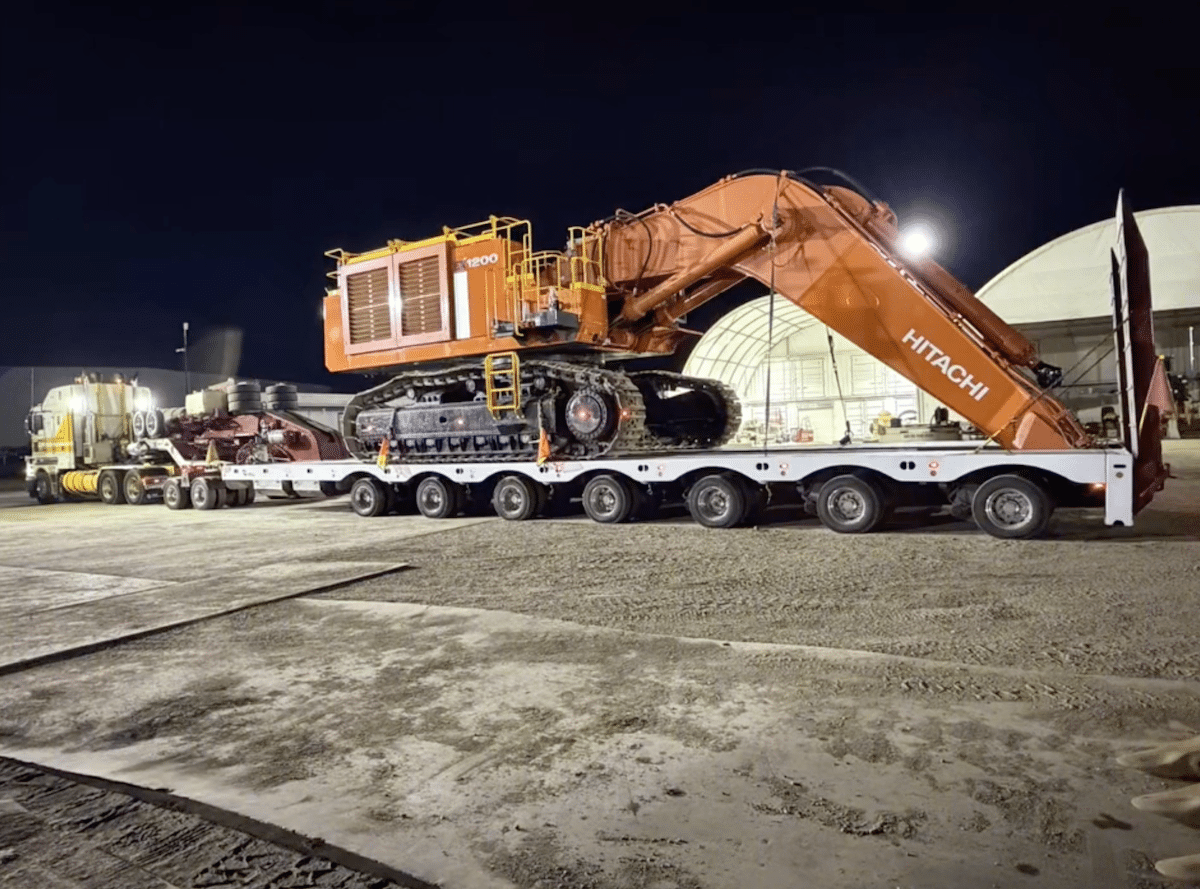
Austrack Equipment sends out the big guns

Signal strongSource-grounded

What happened

Austrack Equipment moved its largest excavator to central Queensland, necessitating police and pilot escorts and a push‑pull prime mover arrangement for route constraints. The transport required detailed planning and escort coordination, making last‑mile mobilisation and escort cost a visible procurement factor. Use this as a practical example to lock transport and escort responsibilities into mobilisation clauses and price schedules

Buyer takeaway

Require suppliers to disclose transport, escort and route survey needs and to commit responsibilities in writing before award

Cost / money

Transport, escort and specialised haul arrangements are likely to appear as pass‑throughs and can erode contingency if uncapped

Supplier / commercial

Heavy‑haul contractors may shorten quote validity or stage deliveries to manage fleet rotation and escort bookings

Safety / operations

Traffic management, escort coordination and certified drivers/operators are safety‑critical and should be included in mobilisation scopes

What to watch

Lock escort and route survey responsibilities into the contract schedule; otherwise expect late line items after award

Key facts

  • 120‑ton excavator mobilised with police and pilot escorts
  • Transport used push‑pull prime mover setup and complex route arrangements
  • Move supported a major river deviation earthmoving scope

Source excerpts

The transport arrangements required both pilot and police escorts
Image: Austrack Austrack Equipment recently dispatched the biggest excavator in its fleet to a central Queensland mine
The transport arrangements required both pilot and police escorts. In addition, the huge horsepower requirements to handle the heavy load were met by lead and trailing prime movers in a push-pull set up
Story 3Processonline

NSW Government to fast‍-‍track renewable energy projects

Signal moderateDirectional

What happened

The NSW Government proposed legislation to fast‑track priority renewable energy projects while maintaining environmental and consultation obligations. The bill is intended to speed delivery of generation, storage and transmission infrastructure and includes benefit‑sharing requirements for host communities. Treat the policy as a regional demand concentrator and test supplier allocation and capacity in NSW before assuming steady availability

Buyer takeaway

Treat the bill as a demand concentrator and proactively test supplier capacity and allocation commitments in the region

Cost / money

Accelerated pipelines can tighten availability for heavy plant and steel, creating upward pressure on mobilisation premiums in affected geographies

Supplier / commercial

Suppliers may prioritise state‑backed fast‑track projects and shorten quote windows for other regional work

Safety / operations

Faster approvals still require documented environmental and safety controls; rushing execution increases compliance risk

What to watch

Monitor which projects are flagged as priority and where they overlap with your geographies to avoid competing for the same supplier slots

Key facts

  • Energy legislation proposed to prioritise renewable projects
  • Policy aims to accelerate infrastructure delivery while keeping environmental checks
  • Includes benefit‑sharing guideline support for councils and communities

Source excerpts

The proposed legislation will allow the NSW Energy Minister to identify the highest-priority renewable energy projects in the planning pipeline, and prioritise them for streamlining. Priority energy projects must demonstrate best practice in how they work with landholders and communities, particularly in regional NSW
The NSW Government has announced it will introduce a new law to speed up the delivery of key renewable energy projects to power large energy users. The proposed legislation will allow the NSW Energy Minister to identify the highest-priority renewable energy projects in the planning pipeline, and prioritise them for streamlining
Renewable energy already provides about 36% of NSW’s annual electricity supply
Story 4The Australian PipelinerMay 10, 2026

PNG Expo 2026 to feature top voices from mining, government and community sectors

Signal moderateDirectional

What happened

PNG Expo 2026 will gather mining, government and community leaders to discuss sustainability, public health and operational resilience, creating a concentrated forum for supplier networking. The event is positioned for practical outcomes and relationship building rather than immediate contracting, so use it to pre‑qualify local suppliers and start partnership conversations

Buyer takeaway

Prioritise supplier diligence and relationship building at the expo to reduce reliance on distant contractors for Pacific projects

Cost / money

Pre‑qualifying regional suppliers can reduce long‑haul mobilisation and associated transport costs on future awards

Supplier / commercial

Local suppliers may leverage proximity but must demonstrate equipment ownership and safety certifications to be competitive

Safety / operations

Regional partners need verified safety systems and logistics capability to meet remote operation requirements

What to watch

Treat expo introductions as first‑step intelligence; follow up with formal pre‑qualification and evidence requests

Key facts

  • Two‑day program with panels on sustainability, public health and resilience
  • Speakers include leading miners, service providers and government bodies
  • Event designed to connect operators, suppliers and community stakeholders

Source excerpts

Other key participants include speakers from The PNG Chiefs, Stream Tech PNG, Pacific Lime and Cement, Great pacific Gold and OK Tedi. With a high-calibre speaker program and an emphasis on practical outcomes, PNG Expo 2026 will play a vital role in connecting the industry, sharing critical insights and supporting the future growth of PNG’s mining and resources sector
“PNG Expo is about connecting the full spectrum of the mining industry, from operators and suppliers through to government and community leaders,” she said
Other key participants include speakers from The PNG Chiefs, Stream Tech PNG, Pacific Lime and Cement, Great pacific Gold and OK Tedi

VP Snapshot

Executive Risk & Action View

Long‑distance heavy‑plant moves are operationally real and often require police/pilot escorts, specialised prime movers and route planning — expect escort and route pass‑throughs to appear in bids unless contracts assign responsibility.

Overall
52
Cost
79
Supply
43
Schedule
56
Compliance
35

Top signals

30-180dcost

Signal 1: Cost / money

Expect transport, escort and specialised prime‑mover charges to show up as pass‑throughs in bids; without contractual caps these erode contingency and increase mobilisation line‑item risk.

Signal 2: Cost / money

Bespoke rig fabrication and engineered containment shift capital cost onto suppliers, which is likely reflected in higher unit or mobilisation fees compared with standard rental fleets.

0-30dcost

Signal 3: Cost / money

Concentration of projects under NSW fast‑track rules can compress supplier availability windows and raise allocation premiums in that geography unless buyers secure committed supply slots contractually.

30-180dsupply

Signal 4: Supplier / commercial

Vendors who own specialised HDD rigs or high‑capacity excavators gain scheduling leverage and may shorten quote validity or insist on staged deliveries to protect fleet rotation.

30-180dcommercial

Signal 5: Supplier / commercial

Heavy‑haul transport contractors are likely to itemise route surveys, permits and escort coordination as separate commercial line items unless mobilisation responsibilities are explicitly assigned.

Signal 6: Supplier / commercial

Suppliers will prioritise state‑flagged fast‑track projects; expect allocation bias toward those awards which may force commercial trade‑offs on non‑priority work.

Recommended actions

CategoryDue 3d

Request shortlisted heavy‑haul and transport suppliers to confirm in writing their escort, route‑survey and mobilisation requirements plus typical quote validity.

Supplier register updated with declared escort/route needs and quote‑validity windows to use in award scoring and budget planning.

OpsDue 3d

Ask nominated HDD/trenchless contractors to provide evidence of engineered containment practices, drilling‑fluid disposal plans and certified operator rosters.

Operational readiness checklist with containment and operator evidence to attach to pre‑start and contract acceptance gates.

ContractsDue 21d

Update RFQ and contract templates to allocate mobilisation responsibilities, cap pass‑throughs for escorts/route surveys and require minimum quote validity commitments.

Revised RFQ clauses that limit unexpected transport pass‑throughs and require suppliers to commit to mobilisation windows in writing.

CategoryDue 21d

Run a regional capacity test for key suppliers against likely NSW fast‑track clusters to identify allocation risk and need for committed slots.

Demand‑capacity assessment matrix that identifies capacity shortfalls and informs whether to seek committed allocations or flexible options.

CategoryDue 60d

Plan targeted attendance at PNG Expo to meet regional suppliers, validate equipment ownership claims and start formal pre‑qualification follow‑ups.

Pre‑qualified regional supplier list with verified equipment and certification records to use in future RFQs for Pacific work.

ContractsDue 60d

Pilot an award that requires demonstrated owned specialised handlers and documented containment controls with contractual acceptance gates.

Pilot contract results on mobilisation cost stability, acceptance cycle time and post‑award pass‑through incidence to inform standard terms.

Risk register

RiskTriggerMitigation
Watch for suppliers shortening quote validity or inserting staged‑delivery clauses — this can be an early signal they are managing scarce specialised assets and escort bookings.Watch for suppliers shortening quote validity or inserting staged‑delivery clauses — this can be an early signal they are managing scarce specialised assets and escort bookings.Confirm exposure with category, contracts, and operations before the next supplier commitment.
Watch for late‑added line items after award for route surveys, police/pilot escorts or waste‑handling tied to containment — these are common post‑award pass‑throughs if responsibilities weren't contractually allocated.Watch for late‑added line items after award for route surveys, police/pilot escorts or waste‑handling tied to containment — these are common post‑award pass‑throughs if responsibilities weren't contractually allocated.Confirm exposure with category, contracts, and operations before the next supplier commitment.
Watch whether bespoke rig vendors start requiring specific acceptance evidence (containment photographs, operator certificates); these improve safety but can delay acceptance if not pre‑agreed.Watch whether bespoke rig vendors start requiring specific acceptance evidence (containment photographs, operator certificates); these improve safety but can delay acceptance if not pre‑agreed.Confirm exposure with category, contracts, and operations before the next supplier commitment.

CM Snapshot

Category Manager Decision Detail

Today's priorities

Request shortlisted heavy‑haul and transport suppliers to confirm in writing their escort, route‑survey and mobilisation requirements plus typical quote validity.

because Austrack's long‑haul excavator move shows escort and route constraints materially affect cost and schedule, so documented commitments convert assumptions into negotiable...

Due 3d

high

CM move

Use this as the immediate supplier or contract action to move before the next sourcing gate.

Ask nominated HDD/trenchless contractors to provide evidence of engineered containment practices, drilling‑fluid disposal plans and certified operator rosters.

because Snowy 2.0 used concrete pits and bespoke rigs for fluid control, so requiring containment proof reduces environmental and handover risk during execution.

Due 3d

high

CM move

Use this as the immediate supplier or contract action to move before the next sourcing gate.

Update RFQ and contract templates to allocate mobilisation responsibilities, cap pass‑throughs for escorts/route surveys and require minimum quote validity commitments.

because transport and escort costs are appearing as separate bid items, so clear contract language preserves buyer negotiating leverage and budget predictability.

Due 21d

high

CM move

Use this as the immediate supplier or contract action to move before the next sourcing gate.

Run a regional capacity test for key suppliers against likely NSW fast‑track clusters to identify allocation risk and need for committed slots.

because the NSW prioritisation bill concentrates demand in the region, so pre‑testing supplier capacity reduces the risk of reactive premium costs or missed allocations.

Due 21d

high

CM move

Use this as the immediate supplier or contract action to move before the next sourcing gate.

Supplier radar

The Australian Pipeliner

high

Observed supplier signal

Vendors who own specialised HDD rigs or high‑capacity excavators gain scheduling leverage and may shorten quote validity or insist on staged deliveries to protect fleet rotation.

Commercial implication

Vendors who own specialised HDD rigs or high‑capacity excavators gain scheduling leverage and may shorten quote validity or insist on staged deliveries to protect fleet rotation.

Next step: Validate the source-backed signal with incumbents and alternates before the next award or pricing decision.

The Australian Pipeliner

high

Observed supplier signal

Heavy‑haul transport contractors are likely to itemise route surveys, permits and escort coordination as separate commercial line items unless mobilisation responsibilities are explicitly assigned.

Commercial implication

Heavy‑haul transport contractors are likely to itemise route surveys, permits and escort coordination as separate commercial line items unless mobilisation responsibilities are explicitly assigned.

Next step: Validate the source-backed signal with incumbents and alternates before the next award or pricing decision.

Processonline

high

Observed supplier signal

Suppliers will prioritise state‑flagged fast‑track projects; expect allocation bias toward those awards which may force commercial trade‑offs on non‑priority work.

Commercial implication

Suppliers will prioritise state‑flagged fast‑track projects; expect allocation bias toward those awards which may force commercial trade‑offs on non‑priority work.

Next step: Validate the source-backed signal with incumbents and alternates before the next award or pricing decision.

Negotiation levers

Request shortlisted heavy‑haul and transport suppliers to confirm in writing their escort, route‑survey and mobilisation requirements plus typical quote validity.

When to use: because Austrack's long‑haul excavator move shows escort and route constraints materially affect cost and schedule, so documented commitments convert assumptions into negotiable...

Expected outcome: Supplier register updated with declared escort/route needs and quote‑validity windows to use in award scoring and budget planning.

Commercial mechanism to carry into the next supplier conversation

Ask nominated HDD/trenchless contractors to provide evidence of engineered containment practices, drilling‑fluid disposal plans and certified operator rosters.

When to use: because Snowy 2.0 used concrete pits and bespoke rigs for fluid control, so requiring containment proof reduces environmental and handover risk during execution.

Expected outcome: Operational readiness checklist with containment and operator evidence to attach to pre‑start and contract acceptance gates.

Commercial mechanism to carry into the next supplier conversation

Update RFQ and contract templates to allocate mobilisation responsibilities, cap pass‑throughs for escorts/route surveys and require minimum quote validity commitments.

When to use: because transport and escort costs are appearing as separate bid items, so clear contract language preserves buyer negotiating leverage and budget predictability.

Expected outcome: Revised RFQ clauses that limit unexpected transport pass‑throughs and require suppliers to commit to mobilisation windows in writing.

Commercial mechanism to carry into the next supplier conversation

Run a regional capacity test for key suppliers against likely NSW fast‑track clusters to identify allocation risk and need for committed slots.

When to use: because the NSW prioritisation bill concentrates demand in the region, so pre‑testing supplier capacity reduces the risk of reactive premium costs or missed allocations.

Expected outcome: Demand‑capacity assessment matrix that identifies capacity shortfalls and informs whether to seek committed allocations or flexible options.

Commercial mechanism to carry into the next supplier conversation

Talking points

Long‑distance heavy‑plant moves are operationally real and often require police/pilot escorts, specialised prime movers and route planning — expect escort and route pass‑throughs to appear in bids unless contracts assign responsibility.
Suppliers are fabricating bespoke HDD rigs and engineered containment (concrete pits, fluid controls) for complex drills, which creates supplier‑specific mobilisation and environmental acceptance requirements you should verify during pre‑qualification.
NSW's fast‑track renewable projects policy is a concrete demand concentrator in the region and increases the chance suppliers prioritise state‑backed work, tightening local availability for heavy plant and OCTG unless allocation is secured in contracts.
Regional events like PNG Expo are practical sourcing forums to pre‑qualify local contractors and validate equipment ownership claims, but they generate intelligence not immediate contractual commitments.

Supplier radar

SupplierSignalImplicationNext stepConfidence
The Australian PipelinerVendors who own specialised HDD rigs or high‑capacity excavators gain scheduling leverage and may shorten quote validity or insist on staged deliveries to protect fleet rotation.Vendors who own specialised HDD rigs or high‑capacity excavators gain scheduling leverage and may shorten quote validity or insist on staged deliveries to protect fleet rotation.Validate the source-backed signal with incumbents and alternates before the next award or pricing decision.high
The Australian PipelinerHeavy‑haul transport contractors are likely to itemise route surveys, permits and escort coordination as separate commercial line items unless mobilisation responsibilities are explicitly assigned.Heavy‑haul transport contractors are likely to itemise route surveys, permits and escort coordination as separate commercial line items unless mobilisation responsibilities are explicitly assigned.Validate the source-backed signal with incumbents and alternates before the next award or pricing decision.high
ProcessonlineSuppliers will prioritise state‑flagged fast‑track projects; expect allocation bias toward those awards which may force commercial trade‑offs on non‑priority work.Suppliers will prioritise state‑flagged fast‑track projects; expect allocation bias toward those awards which may force commercial trade‑offs on non‑priority work.Validate the source-backed signal with incumbents and alternates before the next award or pricing decision.high

Negotiation levers

  • Request shortlisted heavy‑haul and transport suppliers to confirm in writing their escort, route‑survey and mobilisation requirements plus typical quote validity.because Austrack's long‑haul excavator move shows escort and route constraints materially affect cost and schedule, so documented commitments convert assumptions into negotiable...Supplier register updated with declared escort/route needs and quote‑validity windows to use in award scoring and budget planning.

    high confidence

  • Ask nominated HDD/trenchless contractors to provide evidence of engineered containment practices, drilling‑fluid disposal plans and certified operator rosters.because Snowy 2.0 used concrete pits and bespoke rigs for fluid control, so requiring containment proof reduces environmental and handover risk during execution.Operational readiness checklist with containment and operator evidence to attach to pre‑start and contract acceptance gates.

    high confidence

  • Update RFQ and contract templates to allocate mobilisation responsibilities, cap pass‑throughs for escorts/route surveys and require minimum quote validity commitments.because transport and escort costs are appearing as separate bid items, so clear contract language preserves buyer negotiating leverage and budget predictability.Revised RFQ clauses that limit unexpected transport pass‑throughs and require suppliers to commit to mobilisation windows in writing.

    high confidence

  • Run a regional capacity test for key suppliers against likely NSW fast‑track clusters to identify allocation risk and need for committed slots.because the NSW prioritisation bill concentrates demand in the region, so pre‑testing supplier capacity reduces the risk of reactive premium costs or missed allocations.Demand‑capacity assessment matrix that identifies capacity shortfalls and informs whether to seek committed allocations or flexible options.

    high confidence

What to do / What to watch

What to do now

  • Request shortlisted heavy‑haul and transport suppliers to confirm in writing their escort, route‑survey and mobilisation requirements plus typical quote validity.

    Why: because Austrack's long‑haul excavator move shows escort and route constraints materially affect cost and schedule, so documented commitments convert assumptions into negotiable...

    Owner: Category

    Expected outcome: Supplier register updated with declared escort/route needs and quote‑validity windows to use in award scoring and budget planning.

    [1]
  • Ask nominated HDD/trenchless contractors to provide evidence of engineered containment practices, drilling‑fluid disposal plans and certified operator rosters.

    Why: because Snowy 2.0 used concrete pits and bespoke rigs for fluid control, so requiring containment proof reduces environmental and handover risk during execution.

    Owner: Ops

    Expected outcome: Operational readiness checklist with containment and operator evidence to attach to pre‑start and contract acceptance gates.

    [3]

Next few weeks

  • Update RFQ and contract templates to allocate mobilisation responsibilities, cap pass‑throughs for escorts/route surveys and require minimum quote validity commitments.

    Why: because transport and escort costs are appearing as separate bid items, so clear contract language preserves buyer negotiating leverage and budget predictability.

    Owner: Contracts

    Expected outcome: Revised RFQ clauses that limit unexpected transport pass‑throughs and require suppliers to commit to mobilisation windows in writing.

    [1]
  • Run a regional capacity test for key suppliers against likely NSW fast‑track clusters to identify allocation risk and need for committed slots.

    Why: because the NSW prioritisation bill concentrates demand in the region, so pre‑testing supplier capacity reduces the risk of reactive premium costs or missed allocations.

    Owner: Category

    Expected outcome: Demand‑capacity assessment matrix that identifies capacity shortfalls and informs whether to seek committed allocations or flexible options.

    [4]

Longer view

  • Plan targeted attendance at PNG Expo to meet regional suppliers, validate equipment ownership claims and start formal pre‑qualification follow‑ups.

    Why: because the expo aggregates mining and supplier decision makers, attending converts introductions into a provisional shortlist without committing spend and reduces long‑haul mob...

    Owner: Category

    Expected outcome: Pre‑qualified regional supplier list with verified equipment and certification records to use in future RFQs for Pacific work.

    [2]
  • Pilot an award that requires demonstrated owned specialised handlers and documented containment controls with contractual acceptance gates.

    Why: because piloting a supplier with proven owned capability and containment documentation will show if those requirements shorten handover friction and reduce post‑award pass‑throu...

    Owner: Contracts

    Expected outcome: Pilot contract results on mobilisation cost stability, acceptance cycle time and post‑award pass‑through incidence to inform standard terms.

    [3]

What to watch

  • Watch for suppliers shortening quote validity or inserting staged‑delivery clauses — this can be an early signal they are managing scarce specialised assets and escort bookings
  • Watch for late‑added line items after award for route surveys, police/pilot escorts or waste‑handling tied to containment — these are common post‑award pass‑throughs if responsibilities weren't contractually allocated
  • Watch whether bespoke rig vendors start requiring specific acceptance evidence (containment photographs, operator certificates); these improve safety but can delay acceptance if not pre‑agreed
  • Watch for suppliers shortening quote validity or inserting staged‑delivery clauses — this can be an early signal they are managing scarce specialised assets and escort bookings.: Watch for suppliers shortening quote validity or inserting staged‑delivery clauses — this can be an early signal they are managing scarce specialised assets and escort bookings
  • Watch for late‑added line items after award for route surveys, police/pilot escorts or waste‑handling tied to containment — these are common post‑award pass‑throughs if responsibilities weren't contractually allocated.: Watch for late‑added line items after award for route surveys, police/pilot escorts or waste‑handling tied to containment — these are common post‑award pass‑throughs if responsibilities weren't contractually allocated
  • Watch whether bespoke rig vendors start requiring specific acceptance evidence (containment photographs, operator certificates); these improve safety but can delay acceptance if not pre‑agreed.: Watch whether bespoke rig vendors start requiring specific acceptance evidence (containment photographs, operator certificates); these improve safety but can delay acceptance if not pre‑agreed
  • Long‑distance heavy‑plant moves are operationally real and often require police/pilot escorts, specialised prime movers and route planning — expect escort and route pass‑throughs to appear in bids unless contracts assign responsibility
  • Suppliers are fabricating bespoke HDD rigs and engineered containment (concrete pits, fluid controls) for complex drills, which creates supplier‑specific mobilisation and environmental acceptance requirements you should verify during pre‑qualification

Market pulse

IndexLatestChangeAs of
HRC Steel (HRC)740 /ton+0.00 (+0.00%)May 16, 2026, 10:12 PM
Copper (COPPER)3.85 /lb+0.00 (+0.00%)May 16, 2026, 10:12 PM
Iron Ore (IRON)108.5 /t+0.00 (+0.00%)May 16, 2026, 10:12 PM
Tenaris (TS)32 +0.00 (+0.00%)May 16, 2026, 10:12 PM
  • HRC Steel: Monitor HRC steel for raw material cost pressure that feeds into OCTG pricing and mobilisation budgets
  • Tenaris: Watch Tenaris signals for supplier pricing posture or capacity notes that may affect OCTG availability

Sources

Inline citations jump here. Expand a source to read the excerpt, the AI interpretation, and the original link.

[1] Austrack Equipment sends out the big guns

pipeliner.com.au · May 11, 2026

Expand

AI reading

Austrack Equipment moved its largest excavator to central Queensland, necessitating police and pilot escorts and a push‑pull prime mover arrangement for route constraints. The transport required detailed planning and escort coordination, making last‑mile mobilisation and escort cost a visible procurement factor. Use this as a practical example to lock transport and escort responsibilities into mobilisation clauses and price schedules

Buyer takeaway

Require suppliers to disclose transport, escort and route survey needs and to commit responsibilities in writing before award

Cost / money

Transport, escort and specialised haul arrangements are likely to appear as pass‑throughs and can erode contingency if uncapped

Supplier / commercial

Heavy‑haul contractors may shorten quote validity or stage deliveries to manage fleet rotation and escort bookings

Safety / operations

Traffic management, escort coordination and certified drivers/operators are safety‑critical and should be included in mobilisation scopes

What to watch

Lock escort and route survey responsibilities into the contract schedule; otherwise expect late line items after award

Key facts

  • 120‑ton excavator mobilised with police and pilot escorts
  • Transport used push‑pull prime mover setup and complex route arrangements
  • Move supported a major river deviation earthmoving scope

Source excerpts

The transport arrangements required both pilot and police escorts
Image: Austrack Austrack Equipment recently dispatched the biggest excavator in its fleet to a central Queensland mine
The transport arrangements required both pilot and police escorts. In addition, the huge horsepower requirements to handle the heavy load were met by lead and trailing prime movers in a push-pull set up

Used in this brief

  • What to watch: Watch for late‑added line items after award for route surveys, police/pilot escorts or waste‑handling tied to containment — these are common post‑award pass‑throughs if responsibilities weren't contractually allocated
  • Next 72 hours — Request shortlisted heavy‑haul and transport suppliers to confirm in writing their escort, route‑survey and mobilisation requirements plus typical quote validity.. Rationale: because Austrack's long‑haul excavator move shows escort and route constraints materially affect cost and schedule, so documented commitments convert assumptions into negotiable.... Owner: Category. KPI: Supplier register updated with declared escort/route needs and quote‑validity windows to use in award scoring and budget planning
  • Next 2-4 weeks — Update RFQ and contract templates to allocate mobilisation responsibilities, cap pass‑throughs for escorts/route surveys and require minimum quote validity commitments.. Rationale: because transport and escort costs are appearing as separate bid items, so clear contract language preserves buyer negotiating leverage and budget predictability.. Owner: Contracts. KPI: Revised RFQ clauses that limit unexpected transport pass‑throughs and require suppliers to commit to mobilisation windows in writing
Open original source

[2] PNG Expo 2026 to feature top voices from mining, government and community sectors

pipeliner.com.au · May 10, 2026

Expand

AI reading

PNG Expo 2026 will gather mining, government and community leaders to discuss sustainability, public health and operational resilience, creating a concentrated forum for supplier networking. The event is positioned for practical outcomes and relationship building rather than immediate contracting, so use it to pre‑qualify local suppliers and start partnership conversations

Buyer takeaway

Prioritise supplier diligence and relationship building at the expo to reduce reliance on distant contractors for Pacific projects

Cost / money

Pre‑qualifying regional suppliers can reduce long‑haul mobilisation and associated transport costs on future awards

Supplier / commercial

Local suppliers may leverage proximity but must demonstrate equipment ownership and safety certifications to be competitive

Safety / operations

Regional partners need verified safety systems and logistics capability to meet remote operation requirements

What to watch

Treat expo introductions as first‑step intelligence; follow up with formal pre‑qualification and evidence requests

Key facts

  • Two‑day program with panels on sustainability, public health and resilience
  • Speakers include leading miners, service providers and government bodies
  • Event designed to connect operators, suppliers and community stakeholders

Source excerpts

Other key participants include speakers from The PNG Chiefs, Stream Tech PNG, Pacific Lime and Cement, Great pacific Gold and OK Tedi. With a high-calibre speaker program and an emphasis on practical outcomes, PNG Expo 2026 will play a vital role in connecting the industry, sharing critical insights and supporting the future growth of PNG’s mining and resources sector
“PNG Expo is about connecting the full spectrum of the mining industry, from operators and suppliers through to government and community leaders,” she said
Other key participants include speakers from The PNG Chiefs, Stream Tech PNG, Pacific Lime and Cement, Great pacific Gold and OK Tedi

Used in this brief

  • Next quarter — Plan targeted attendance at PNG Expo to meet regional suppliers, validate equipment ownership claims and start formal pre‑qualification follow‑ups.. Rationale: because the expo aggregates mining and supplier decision makers, attending converts introductions into a provisional shortlist without committing spend and reduces long‑haul mob.... Owner: Category. KPI: Pre‑qualified regional supplier list with verified equipment and certification records to use in future RFQs for Pacific work
  • PNG Expo 2026 will gather mining, government and community leaders to discuss sustainability, public health and operational resilience, creating a concentrated forum for supplier networking. The event is positioned for practical outcomes and relationship building rather than immediate contracting, so use it to pre‑qualify local suppliers and start partnership conversations
  • Buyer bottom line: use the expo to expand and validate the regional supplier pool for Pacific projects; the event is sourcing intelligence, not a purchase order forum
Open original source

[3] Getting technical at Snowy 2.0

pipeliner.com.au · Apr 27, 2026

Expand

AI reading

Michels Trenchless executed multiple complex horizontal directional drills for Snowy 2.0 using custom‑designed rigs and engineered containment. One HDD ran 2,248m with an exceptional elevation differential and rigs were installed inside concrete pits to separate drilling fluids. This makes containment and bespoke rig capability operational realities to capture in RFQs and acceptance gates; watch whether follow‑on projects replicate this approach

Buyer takeaway

Treat custom rig builds and containment as verifiable supplier capabilities to score, not as assumed open‑hire availability

Cost / money

Directional: bespoke fabrication and engineered containment increase mobilisation and unit costs versus standard rental fleets because suppliers carry specialised capital

Supplier / commercial

Vendors offering bespoke rigs can demand scheduling priority and shorten quote validity since capacity substitution is limited

Safety / operations

Engineered pits and fluid controls materially reduce environmental risk; missing these controls in scope raises acceptance and compliance risk

What to watch

Require containment proof, waste‑handling plans and certified operators up front to avoid absorbing cleanup or remediation costs later

Key facts

  • Multiple complex HDDs executed for Snowy 2.0
  • One HDD length reported at 2,248m with a 563m elevation differential
  • Rigs set up inside engineered concrete pits for drilling‑fluid separation

Source excerpts

In accordance with these rules, both rigs were set up inside large, engineered concrete pits to keep the drilling fluids separated from the ground
To address these concerns, the project team installed a valve-closed rotary diverter on the lower entry side to direct the return flow cuttings and drilling fluids to a concrete containment pit where they are directed to a fluid separation plant for treatment
The pilot hole intersect method was selected over a traditional one-rig pilot hole method for its unique advantages for the project, including fluid pressure management, reduced risk of inadvertent returns, and steerability through hard rock present at the park

Used in this brief

  • Safety / operations: Engineered containment (concrete pits, separated fluids) used on HDD reduces environmental risk; omitting these controls in scopes increases remediation and acceptance risk at handover
  • Next 72 hours — Ask nominated HDD/trenchless contractors to provide evidence of engineered containment practices, drilling‑fluid disposal plans and certified operator rosters.. Rationale: because Snowy 2.0 used concrete pits and bespoke rigs for fluid control, so requiring containment proof reduces environmental and handover risk during execution.. Owner: Ops. KPI: Operational readiness checklist with containment and operator evidence to attach to pre‑start and contract acceptance gates
  • Next quarter — Pilot an award that requires demonstrated owned specialised handlers and documented containment controls with contractual acceptance gates.. Rationale: because piloting a supplier with proven owned capability and containment documentation will show if those requirements shorten handover friction and reduce post‑award pass‑throu.... Owner: Contracts. KPI: Pilot contract results on mobilisation cost stability, acceptance cycle time and post‑award pass‑through incidence to inform standard terms
Open original source

[4] NSW Government to fast‍-‍track renewable energy projects

processonline.com.au · n.d.

Expand

AI reading

The NSW Government proposed legislation to fast‑track priority renewable energy projects while maintaining environmental and consultation obligations. The bill is intended to speed delivery of generation, storage and transmission infrastructure and includes benefit‑sharing requirements for host communities. Treat the policy as a regional demand concentrator and test supplier allocation and capacity in NSW before assuming steady availability

Buyer takeaway

Treat the bill as a demand concentrator and proactively test supplier capacity and allocation commitments in the region

Cost / money

Accelerated pipelines can tighten availability for heavy plant and steel, creating upward pressure on mobilisation premiums in affected geographies

Supplier / commercial

Suppliers may prioritise state‑backed fast‑track projects and shorten quote windows for other regional work

Safety / operations

Faster approvals still require documented environmental and safety controls; rushing execution increases compliance risk

What to watch

Monitor which projects are flagged as priority and where they overlap with your geographies to avoid competing for the same supplier slots

Key facts

  • Energy legislation proposed to prioritise renewable projects
  • Policy aims to accelerate infrastructure delivery while keeping environmental checks
  • Includes benefit‑sharing guideline support for councils and communities

Source excerpts

The proposed legislation will allow the NSW Energy Minister to identify the highest-priority renewable energy projects in the planning pipeline, and prioritise them for streamlining. Priority energy projects must demonstrate best practice in how they work with landholders and communities, particularly in regional NSW
The NSW Government has announced it will introduce a new law to speed up the delivery of key renewable energy projects to power large energy users. The proposed legislation will allow the NSW Energy Minister to identify the highest-priority renewable energy projects in the planning pipeline, and prioritise them for streamlining
Renewable energy already provides about 36% of NSW’s annual electricity supply

Used in this brief

  • Next 2-4 weeks — Run a regional capacity test for key suppliers against likely NSW fast‑track clusters to identify allocation risk and need for committed slots.. Rationale: because the NSW prioritisation bill concentrates demand in the region, so pre‑testing supplier capacity reduces the risk of reactive premium costs or missed allocations.. Owner: Category. KPI: Demand‑capacity assessment matrix that identifies capacity shortfalls and informs whether to seek committed allocations or flexible options
  • The NSW Government proposed legislation to fast‑track priority renewable energy projects while maintaining environmental and consultation obligations. The bill is intended to speed delivery of generation, storage and transmission infrastructure and includes benefit‑sharing requirements for host communities. Treat the policy as a regional demand concentrator and test supplier allocation and capacity in NSW before assuming steady availability
  • Buyer bottom line: policy acceleration can cluster demand for heavy plant and OCTG in NSW; verify supplier allocation commitments rather than assume steady local availability
Open original source

[5] HRC Steel

cmegroup.com · n.d.

Expand

[6] Tenaris

finance.yahoo.com · n.d.

Expand