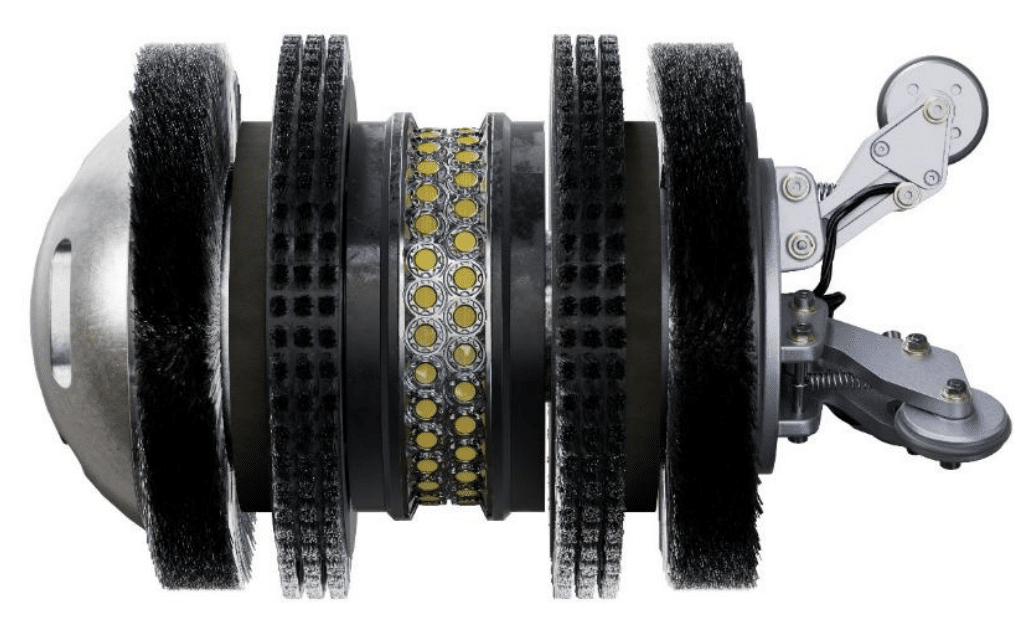
Cokebusters unveils single-bodied UT in-line inspection tool
What happened
Cokebusters launched a compact single‑bodied ultrasonic inline inspection tool that integrates an odometer and can collect very high‑density wall‑thickness readings while navigating tight bends. The design aims to let operators use existing inline valves as launch and receive points, which reduces the need for dedicated launchers and can lower project downtime if field trials confirm compatibility. Watch whether inspection service providers adopt it widely and start imposing new mobilisation or data‑delivery terms
Buyer takeaway
Treat this as an actionable capability change: it can reduce launcher rentals and downtime but only if buyers validate valve launch points and data formats ahead of campaigns
Cost / money
Potential to lower mobilisation and downtime OPEX by avoiding dedicated launcher/receiver gear when valve points are compatible
Supplier / commercial
Vendors owning the tool may shorten quote windows or add mobilisation annexes to protect tool bookings and recoup specialised run margins
Safety / operations
Higher positional accuracy helps defect prioritisation but requires acceptance testing and trained technicians to avoid misinterpreting dense data into unsafe work scopes
What to watch
Watch whether vendors package launch/receive logistics or restrict third‑party access to new tooling, which narrows competitive options
Key facts
- Designed for 6‑inch pipeline runs
- Up to 60,000 wall‑thickness readings per linear metre reported
- Deployed in a 1,853‑metre multiphase pipeline trial
Source excerpts
The lighter, free-swimming design is intended to reduce operational downtime and lower project costs by enabling the use of existing inline valves as launch and receive points
Pipeline inspection specialist Cokebusters has developed a new single-bodied ultrasonic in-line inspection (ILI) tool designed to improve defect detection and axial positioning in complex pipeline systems
The client later compared the reported defect locations against previous inspection data generated by conventional multi-bodied inspection tools