Rigs & Integrated Drilling · Australia (Perth)

Adjust sourcing for topside fabrication and vessel electrification in APAC

Published May 20, 2026, 6:02 AM AWSTAPACFull category signal
Ask AI
Chinese firm kicks off topside fabrication for Black Sea bound-FPU

In 60 seconds

Top move

Topsides fabrication for a Black Sea floating production unit (FPU) has entered module construction and scheduled lifts, which makes heavy‑lift yard and fabrication capacity an operational procurement constraint rather than a remote project plan

Key takeaways

  • Topsides fabrication for a Black Sea floating production unit (FPU) has entered module construction and scheduled lifts, which makes heavy‑lift yard and fabrication capacity an operational procurement constraint rather than a remote project plan.[3]
  • A large LNG power and terminal project in Southeast Asia has broken ground, adding a clear multi‑year demand horizon for installation, marine logistics and onshore terminal build services in the APAC supplier market.[1]
  • An EU‑funded offshore vessel charging pilot is moving to live trials soon, creating a tangible pathway to electrification for idle service vessels and accommodation support but also introducing new connectivity and commercial testing requirements.[2]
  • A thematic study flags oil‑and‑gas skill transfer into geothermal in India; this is useful for long‑range category planning but is not an immediate mobilization signal for rigs in APAC.[4]
  • Taken together the items tighten the buyer focus on long‑lead fabrication slots, heavy‑lift coordination, and vessel decarbonisation pathways — each creates supplier leverage points buyers should map now.[3]

What changed since last run

  • Added a confirmed topside fabrication milestone for a Black Sea FPU with module lifting scheduled in mid‑2027, creating a near‑term heavy‑lift booking implication (Article 4).
  • Added a Southeast Asia LNG project ground‑breaking that increases APAC installation and terminal build demand visibility (Article 8).
  • Added an EU‑backed offshore vessel charging pilot moving to live trials, introducing new electrification proof‑of‑concept procurement considerations for support vessels (Article 12).

Key facts

  • Main functional modules scheduled to complete lifting in June 2027
  • FPU designed to support gas processing, compression and export functions
  • EU Horizon Europe funded pilot with multiple industry partners
  • Pilot will support an initial single ship connection in a busy anchorage
  • Quynh Lap project includes LNG terminal and a combined‑cycle power plant
  • Project site in Nghe An Province targeted to begin commercial operations in the medium term

Why it matters

Topsides fabrication for a Black Sea floating production unit (FPU) has entered module construction and scheduled lifts, which makes heavy‑lift yard and fabrication capacity an operational procurement constraint rather than a remote project plan. A large LNG power and terminal project in Southeast Asia has broken ground, adding a clear multi‑year demand horizon for installation, marine logistics and onshore terminal build services in the APAC supplier market. An EU‑funded offshore vessel charging pilot is moving to live trials soon, creating a tangible pathway to electrification for idle service vessels and accommodation support but also introducing new connectivity and commercial testing requirements. A thematic study flags oil‑and‑gas skill transfer into geothermal in India; this is useful for long‑range category planning but is not an immediate mobilization signal for rigs in APAC

Cost / money

  • Active topside fabrication and scheduled lifts make heavy‑lift yards and transport capacity a priced input; buyers can expect tighter pass‑through fabrication and transport premiums as lifting dates firm up.[3]
  • The SE Asia LNG ground‑breaking signals extended capital spend in regionally‑competing installation services, which will push longer lead times and upward pressure on integrated EPC and marine installation pricing over the project lifecycle.[1]

Supplier / commercial

  • Awarding the FPU topside to a single fabricator creates supplier booking visibility and gives that supplier leverage to shorten quote validity windows or tighten mobilisation terms for related scopes.[3]
  • Vessel charging pilots require supplier partnerships (ports, integrators, shore power providers) and will change commercial terms around electrical connectivity, metering and at‑sea access fees as pilots move to commercial scale.[2]

Safety / operations

  • Faster module completion and lift schedules compress readiness windows for survey, QA/QC, and spares staging — increasing the need for pre‑lift contingency planning and shore‑side inspection sign‑offs.[3]
  • Shore‑power and at‑anchor charging introduce new operational failure modes (power quality, connector integrity, emergency disconnect) and require integration with vessel emergency procedures and shore‑side testing plans.[2]

What to watch

  • Watch for schedule slippage, permitting or integration issues on the FPU topside that would cascade into heavy‑lift yard rebooking and raise mobilisation costs — currently the fabrication milestone is confirmed but module integration work remains complex.[3]
  • Watch whether vessel charging economics and regulatory pathways scale beyond the pilot; if commercial terms (access fees, liability for shore power faults) are unfavourable, suppliers may delay offering the service broadly.[2]

Top stories

Story 1Offshore EnergyMay 19, 2026

Chinese firm kicks off topside fabrication for Black Sea bound-FPU

Signal strongSource-grounded

What happened

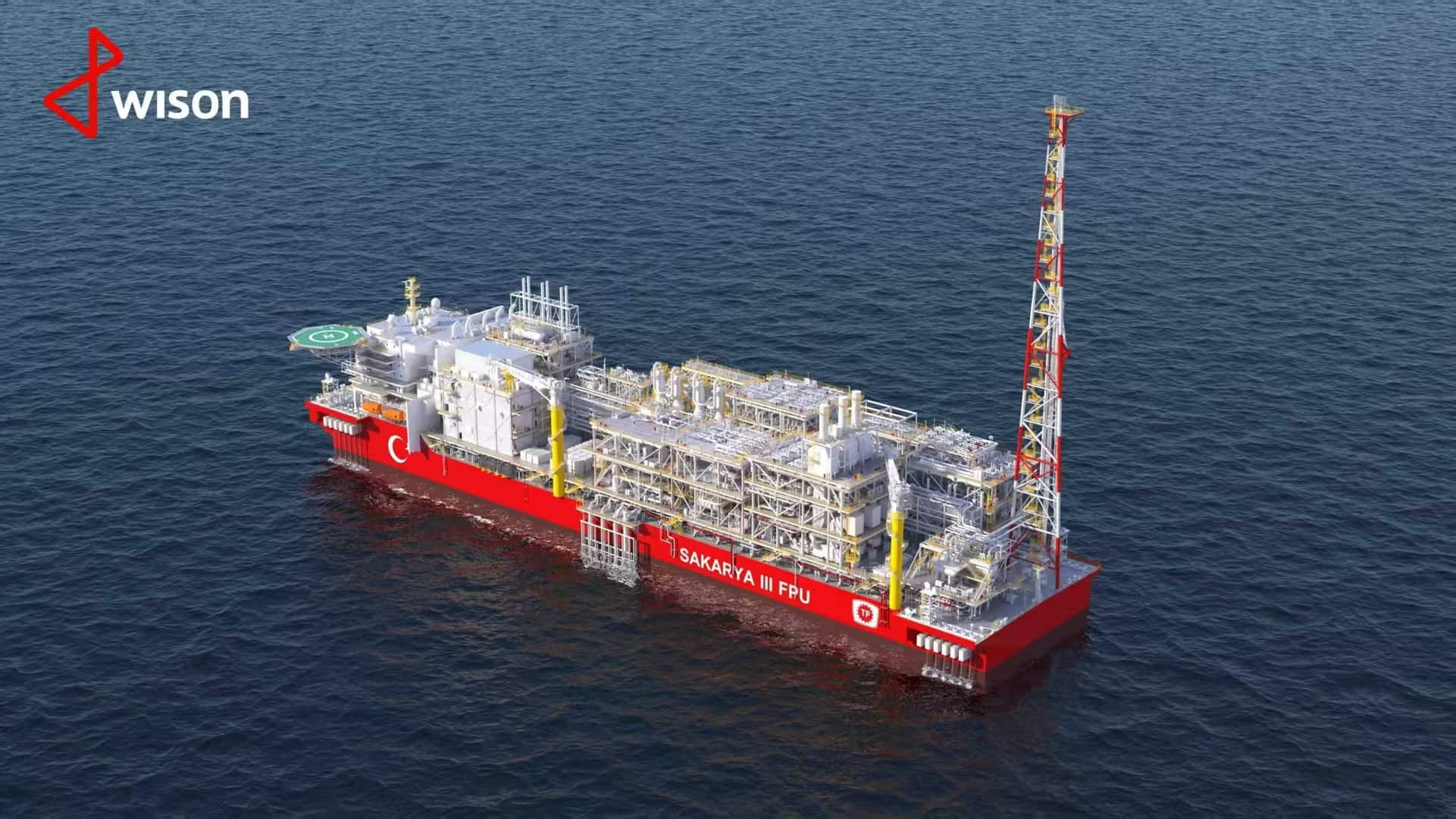
Wison New Energies has started topside fabrication for an FPU destined for the Sakarya Black Sea gas project. The main functional modules have lifting scheduled in June 2027 and completion of module lifts is a clear mobilisation milestone that will pressure heavy‑lift yards. Watch whether integration or supply‑chain delays push lifts later, which would cascade into rebooking and cost pass‑throughs

Buyer takeaway

Treat the fabrication milestone as a booking and mobilisation risk: module lifts and delivery windows create near‑term dependencies on heavy‑lift yards and marine transport

Cost / money

Directional upward pressure on mobilisation, transport and integration pass‑throughs as lifts firm up and yards lock slots

Supplier / commercial

The fabricator gains booking visibility and can shorten quote validity or insist on reservation terms for related scopes (transport, lifting, hook‑up)

Safety / operations

Compressed integration timelines will increase the importance of pre‑lift QA, spares staging and pre‑mobilisation inspections to avoid lift delays

What to watch

Watch for integration or fabrication quality issues and for suppliers to push reservation fees for lifting slots as module dates become fixed

Key facts

  • Main functional modules scheduled to complete lifting in June 2027
  • FPU designed to support gas processing, compression and export functions

Source excerpts

Home Fossil Energy Chinese firm kicks off topside fabrication for Black Sea bound-FPU May 19, 2026, by China-based provider of clean energy services Wison New Energies (WNE) has initiated the construction of topside fabrication for a floating production unit (FPU) destined to be deployed at Türkiye’s largest natural gas field. FPU for Sakarya gas field; Source: Wison New Energies Wison New Energies has begun topsides fabrication for an FPU, which will work on the Sakarya gas field development project (Phase 3)
Home Fossil Energy Chinese firm kicks off topside fabrication for Black Sea bound-FPU May 19, 2026, by China-based provider of clean energy services Wison New Energies (WNE) has initiated the construction of topside fabrication for a floating production unit (FPU) destined to be deployed at Türkiye’s largest natural gas field
Following the first steel cutting in February 2026, the project has achieved another key milestone, according to the Chinese firm, which explains that the main functional modules are scheduled to complete lifting in June 2027
Story 2Offshore EnergyMay 19, 2026

Offshore vessel charging pilot launches this June in Denmark

Signal moderateDirectional

What happened

An EU‑funded consortium will start a pilot offshore vessel charging point to let at‑anchor vessels plug into shore power instead of idling engines. The project begins live trials soon and will test commercial, technical and regulatory viability in a busy anchorage, making electrification procurement decisions more tangible for support fleets

Buyer takeaway

Use the pilot to test commercial terms and technical integration before committing retrofit budgets for support vessels

Cost / money

Pilot commercial terms will reveal connection fee structures and potential capex for retrofits which may be passed through or shared with suppliers

Supplier / commercial

Ports and integrators that lead deployments can set access and metering terms that become baseline for wider adoption

Safety / operations

New electrical interfaces require updated emergency disconnect procedures, testing protocols and shore‑vessel coordination plans

What to watch

Watch for unresolved liability and metering arrangements; unclear commercial rules could stall scale‑up beyond the pilot

Key facts

  • EU Horizon Europe funded pilot with multiple industry partners
  • Pilot will support an initial single ship connection in a busy anchorage

Source excerpts

The offshore power zone will enable vessels to plug into an at-sea power point with electricity provided via the nearby Port of Skagen. The pilot will initially support a single ship connection to prove the concept in a live operational environment, with the goal of expanding the solution globally
The pilot will initially support a single ship connection to prove the concept in a live operational environment, with the goal of expanding the solution globally. Besides technical delivery, the project will assess commercial viability and regulatory pathways to support wider adoption across the maritime industry
Home Green Marine Offshore vessel charging pilot launches this June in Denmark May 19, 2026, by An international consortium led by Stillstrom, part of A
Story 3Offshore EnergyMay 19, 2026

$2.3 billion LNG project breaks ground in Southeast Asia

Signal strongSource-grounded

What happened

A consortium led by SK Innovation and local partners broke ground on the Quynh Lap LNG combined‑cycle power plant and terminal in Vietnam. The project is a regionally significant installation that will need marine logistics, terminal construction and long‑lead equipment, signaling extended demand for EPC and installation services in APAC

Buyer takeaway

Factor long‑lead terminal and power plant demand into mid‑term sourcing and vessel allocation plans for APAC

Cost / money

Sustained regional projects will increase competition for integrated EPC and installation suppliers and can push longer lead times

Supplier / commercial

Contract awards will create preferred supplier lists and booking visibility that can narrow market liquidity for smaller providers

Safety / operations

Large terminal builds require coordination across onshore and marine contractors, elevating interface risk and the need for integrated HSE plans

What to watch

Watch contracting strategy for local content, which will influence supplier pools and subcontracting pathways

Key facts

  • Quynh Lap project includes LNG terminal and a combined‑cycle power plant
  • Project site in Nghe An Province targeted to begin commercial operations in the medium term

Source excerpts

” The Quynh Lap LNG project is described as a large-scale energy infrastructure project that will develop a 1. 5 GW LNG combined-cycle power plant and LNG terminal in Nghe An Province, approximately 220 kilometers south of Hanoi
Bird’s-eye view of the Quynh Lap project site in Nghe An Province, Vietnam, where the LNG power plant, LNG terminal, and LNG storage tanks will be constructed; Source: SK Innovation SK Innovation, PetroVietnam Power, and NASU held the Quynh Lap LNG project launch and infrastructure groundbreaking ceremony on May 18, 2026, in Nghe An Province, Vietnam. The event, which took place in the Tan Mai area of Quynh Lap District, was attended by approximately 300 guests, including Choo Hyeong-Wook, President and CEO of
5 GW LNG combined-cycle power plant and LNG terminal in Nghe An Province, approximately 220 kilometers south of Hanoi
Story 4Offshore TechnologyMay 19, 2026

Oil and gas expertise makes geothermal a scalable energy source for India - Offshore Technology

Signal limitedDirectional

What happened

A study outlines how oil and gas skills can scale geothermal in India by repurposing wells and applying familiar regulatory frameworks. The report highlights a long‑term pathway for well repurposing and skills transfer, but it is a sectoral opportunity rather than an immediate demand change for APAC rigs

Buyer takeaway

Start a horizon scan for repurposing opportunities with current drilling suppliers to understand capability gaps

Cost / money

Early engagement may avoid stranded rig availability but does not immediately change current rate structures

Supplier / commercial

Suppliers with cross‑skill capability could gain a first‑mover advantage in new geothermal contracts

Safety / operations

Geothermal operations have different HSE profiles and will require revised procedures and training

What to watch

This is a thematic, longer‑horizon signal; treat as strategic supplier development rather than an operational change

Key facts

  • Study identifies geothermal as technically capable of supporting industrial heat and electric
  • Highlights well repurposing and oil‑and‑gas skills transfer as enablers

Source excerpts

It noted that the nascent sector would draw on oil and gas expertise, as well as the opportunities presented by well repurposing and regulatory similarities between the oil and gas and geothermal energy sectors
It pointed to improvements in drilling technologies, better subsurface mapping and India’s recently introduced National Policy on Geothermal Energy as factors that have improved the prospects for commercial-scale development. While India has explored geothermal resources intermittently for decades, progress has remained largely confined to pilot projects because of exploration risks, uncertain drilling outcomes and limited policy support
May 19, 2026 Geothermal power could provide a clean way to enhance grid security

VP Snapshot

Executive Risk & Action View

Topsides fabrication for a Black Sea floating production unit (FPU) has entered module construction and scheduled lifts, which makes heavy‑lift yard and fabrication capacity an operational procurement constraint rather than a remote project plan.

Overall
66
Cost
61
Supply
25
Schedule
56
Compliance
15

Top signals

30-180dcost

Signal 1: Cost / money

Active topside fabrication and scheduled lifts make heavy‑lift yards and transport capacity a priced input; buyers can expect tighter pass‑through fabrication and transport premiums as lifting dates firm up.

180d+cost

Signal 2: Cost / money

The SE Asia LNG ground‑breaking signals extended capital spend in regionally‑competing installation services, which will push longer lead times and upward pressure on integrated EPC and marine installation pricing over the project lifecycle.

30-180dcommercial

Signal 3: Supplier / commercial

Awarding the FPU topside to a single fabricator creates supplier booking visibility and gives that supplier leverage to shorten quote validity windows or tighten mobilisation terms for related scopes.

Signal 4: Supplier / commercial

Vessel charging pilots require supplier partnerships (ports, integrators, shore power providers) and will change commercial terms around electrical connectivity, metering and at‑sea access fees as pilots move to commercial scale.

30-180dsupplier

Signal 5: Safety / operations

Faster module completion and lift schedules compress readiness windows for survey, QA/QC, and spares staging — increasing the need for pre‑lift contingency planning and shore‑side inspection sign‑offs.

Signal 6: Safety / operations

Shore‑power and at‑anchor charging introduce new operational failure modes (power quality, connector integrity, emergency disconnect) and require integration with vessel emergency procedures and shore‑side testing plans.

Recommended actions

ContractsDue 3d

List and prioritise all contracts and PO lines exposed to topside fabrication, heavy‑lift and transport mobilisation terms.

Prioritised contract register showing mobilisation/cancellation exposure and recommended negotiation points for at‑risk scopes.

OpsDue 3d

Confirm current vessel availability and idle‑time assumptions for local service and accommodation vessels that could be candidates for shore‑power retrofit trials.

Shortlist of candidate vessels with availability windows and retrofit feasibility notes for pilot participation.

CategoryDue 21d

Engage the awarded topside fabricator and nominated heavy‑lift yards to confirm slot commitments, lifting windows and long‑lead material exposures; request written confirmation...

Signed letters or emails from fabricator/yard confirming slot dates, visible pass‑through charges, and suggested mitigation options.

ContractsDue 21d

Open commercial discussions with ports and shore‑power providers near key anchorages to assess commercial terms, connection availability and regulatory hurdles for scaling vesse...

Summary of connection offers, commercial terms and regulatory items to include in pilot and supplier agreements.

CategoryDue 60d

Run a sourcing scenario comparing current heavy‑lift, fabrication and installation suppliers against alternate yards and integrators, and include electrification retrofit abilit...

Decision‑grade sourcing scenario with ranked suppliers, identified contingency pathways, and recommended contractual levers to protect schedule and cost.

Risk register

RiskTriggerMitigation
Watch for schedule slippage, permitting or integration issues on the FPU topside that would cascade into heavy‑lift yard rebooking and raise mobilisation costs — currently the fabrication milestone is confirmed but module integration work remains complex.Watch for schedule slippage, permitting or integration issues on the FPU topside that would cascade into heavy‑lift yard rebooking and raise mobilisation costs — currently the fabrication milestone is confirmed but module integration work remains complex.Confirm exposure with category, contracts, and operations before the next supplier commitment.
Watch whether vessel charging economics and regulatory pathways scale beyond the pilot; if commercial terms (access fees, liability for shore power faults) are unfavourable, suppliers may delay offering the service broadly.Watch whether vessel charging economics and regulatory pathways scale beyond the pilot; if commercial terms (access fees, liability for shore power faults) are unfavourable, suppliers may delay offering the service broadly.Confirm exposure with category, contracts, and operations before the next supplier commitment.

CM Snapshot

Category Manager Decision Detail

Today's priorities

List and prioritise all contracts and PO lines exposed to topside fabrication, heavy‑lift and transport mobilisation terms.

Do this because the FPU topside has entered fabrication and scheduled lifts, and mobilisation or cancellation exposure will determine short‑term cost pass‑through and schedule r...

Due 3d

high

CM move

Use this as the immediate supplier or contract action to move before the next sourcing gate.

Confirm current vessel availability and idle‑time assumptions for local service and accommodation vessels that could be candidates for shore‑power retrofit trials.

Do this because an offshore charging pilot is moving to live trials and you need to identify which vessels could participate or be impacted by shore‑power access constraints.

Due 3d

high

CM move

Use this as the immediate supplier or contract action to move before the next sourcing gate.

Engage the awarded topside fabricator and nominated heavy‑lift yards to confirm slot commitments, lifting windows and long‑lead material exposures; request written confirmation...

Do this because confirmed lifting schedules and yard bookings materially affect mobilisation costs and supplier leverage; early confirmation preserves negotiation leverage on an...

Due 21d

high

CM move

Use this as the immediate supplier or contract action to move before the next sourcing gate.

Open commercial discussions with ports and shore‑power providers near key anchorages to assess commercial terms, connection availability and regulatory hurdles for scaling vesse...

Do this because the pilot transitions to operational trials and buyers need clarity on connection fees, metering arrangements and liability terms before committing support vessels.

Due 21d

high

CM move

Use this as the immediate supplier or contract action to move before the next sourcing gate.

Supplier radar

Offshore Energy

high

Observed supplier signal

Awarding the FPU topside to a single fabricator creates supplier booking visibility and gives that supplier leverage to shorten quote validity windows or tighten mobilisation terms for related scopes.

Commercial implication

Awarding the FPU topside to a single fabricator creates supplier booking visibility and gives that supplier leverage to shorten quote validity windows or tighten mobilisation terms for related scopes.

Next step: Validate the source-backed signal with incumbents and alternates before the next award or pricing decision.

Offshore Energy

high

Observed supplier signal

Vessel charging pilots require supplier partnerships (ports, integrators, shore power providers) and will change commercial terms around electrical connectivity, metering and at‑sea access fees as pilots move to commercial scale.

Commercial implication

Vessel charging pilots require supplier partnerships (ports, integrators, shore power providers) and will change commercial terms around electrical connectivity, metering and at‑sea access fees as pilots move to commercial scale.

Next step: Validate the source-backed signal with incumbents and alternates before the next award or pricing decision.

Negotiation levers

List and prioritise all contracts and PO lines exposed to topside fabrication, heavy‑lift and transport mobilisation terms.

When to use: Do this because the FPU topside has entered fabrication and scheduled lifts, and mobilisation or cancellation exposure will determine short‑term cost pass‑through and schedule r...

Expected outcome: Prioritised contract register showing mobilisation/cancellation exposure and recommended negotiation points for at‑risk scopes.

Commercial mechanism to carry into the next supplier conversation

Confirm current vessel availability and idle‑time assumptions for local service and accommodation vessels that could be candidates for shore‑power retrofit trials.

When to use: Do this because an offshore charging pilot is moving to live trials and you need to identify which vessels could participate or be impacted by shore‑power access constraints.

Expected outcome: Shortlist of candidate vessels with availability windows and retrofit feasibility notes for pilot participation.

Commercial mechanism to carry into the next supplier conversation

Engage the awarded topside fabricator and nominated heavy‑lift yards to confirm slot commitments, lifting windows and long‑lead material exposures; request written confirmation...

When to use: Do this because confirmed lifting schedules and yard bookings materially affect mobilisation costs and supplier leverage; early confirmation preserves negotiation leverage on an...

Expected outcome: Signed letters or emails from fabricator/yard confirming slot dates, visible pass‑through charges, and suggested mitigation options.

Commercial mechanism to carry into the next supplier conversation

Open commercial discussions with ports and shore‑power providers near key anchorages to assess commercial terms, connection availability and regulatory hurdles for scaling vesse...

When to use: Do this because the pilot transitions to operational trials and buyers need clarity on connection fees, metering arrangements and liability terms before committing support vessels.

Expected outcome: Summary of connection offers, commercial terms and regulatory items to include in pilot and supplier agreements.

Commercial mechanism to carry into the next supplier conversation

Talking points

Topsides fabrication for a Black Sea floating production unit (FPU) has entered module construction and scheduled lifts, which makes heavy‑lift yard and fabrication capacity an operational procurement constraint rather than a remote project plan.
A large LNG power and terminal project in Southeast Asia has broken ground, adding a clear multi‑year demand horizon for installation, marine logistics and onshore terminal build services in the APAC supplier market.
An EU‑funded offshore vessel charging pilot is moving to live trials soon, creating a tangible pathway to electrification for idle service vessels and accommodation support but also introducing new connectivity and commercial testing requirements.
A thematic study flags oil‑and‑gas skill transfer into geothermal in India; this is useful for long‑range category planning but is not an immediate mobilization signal for rigs in APAC.

Supplier radar

SupplierSignalImplicationNext stepConfidence
Offshore EnergyAwarding the FPU topside to a single fabricator creates supplier booking visibility and gives that supplier leverage to shorten quote validity windows or tighten mobilisation terms for related scopes.Awarding the FPU topside to a single fabricator creates supplier booking visibility and gives that supplier leverage to shorten quote validity windows or tighten mobilisation terms for related scopes.Validate the source-backed signal with incumbents and alternates before the next award or pricing decision.high
Offshore EnergyVessel charging pilots require supplier partnerships (ports, integrators, shore power providers) and will change commercial terms around electrical connectivity, metering and at‑sea access fees as pilots move to commercial scale.Vessel charging pilots require supplier partnerships (ports, integrators, shore power providers) and will change commercial terms around electrical connectivity, metering and at‑sea access fees as pilots move to commercial scale.Validate the source-backed signal with incumbents and alternates before the next award or pricing decision.high

Negotiation levers

  • List and prioritise all contracts and PO lines exposed to topside fabrication, heavy‑lift and transport mobilisation terms.Do this because the FPU topside has entered fabrication and scheduled lifts, and mobilisation or cancellation exposure will determine short‑term cost pass‑through and schedule r...Prioritised contract register showing mobilisation/cancellation exposure and recommended negotiation points for at‑risk scopes.

    high confidence

  • Confirm current vessel availability and idle‑time assumptions for local service and accommodation vessels that could be candidates for shore‑power retrofit trials.Do this because an offshore charging pilot is moving to live trials and you need to identify which vessels could participate or be impacted by shore‑power access constraints.Shortlist of candidate vessels with availability windows and retrofit feasibility notes for pilot participation.

    high confidence

  • Engage the awarded topside fabricator and nominated heavy‑lift yards to confirm slot commitments, lifting windows and long‑lead material exposures; request written confirmation...Do this because confirmed lifting schedules and yard bookings materially affect mobilisation costs and supplier leverage; early confirmation preserves negotiation leverage on an...Signed letters or emails from fabricator/yard confirming slot dates, visible pass‑through charges, and suggested mitigation options.

    high confidence

  • Open commercial discussions with ports and shore‑power providers near key anchorages to assess commercial terms, connection availability and regulatory hurdles for scaling vesse...Do this because the pilot transitions to operational trials and buyers need clarity on connection fees, metering arrangements and liability terms before committing support vessels.Summary of connection offers, commercial terms and regulatory items to include in pilot and supplier agreements.

    high confidence

What to do / What to watch

What to do now

  • List and prioritise all contracts and PO lines exposed to topside fabrication, heavy‑lift and transport mobilisation terms.

    Why: Do this because the FPU topside has entered fabrication and scheduled lifts, and mobilisation or cancellation exposure will determine short‑term cost pass‑through and schedule r...

    Owner: Contracts

    Expected outcome: Prioritised contract register showing mobilisation/cancellation exposure and recommended negotiation points for at‑risk scopes.

    [3]
  • Confirm current vessel availability and idle‑time assumptions for local service and accommodation vessels that could be candidates for shore‑power retrofit trials.

    Why: Do this because an offshore charging pilot is moving to live trials and you need to identify which vessels could participate or be impacted by shore‑power access constraints.

    Owner: Ops

    Expected outcome: Shortlist of candidate vessels with availability windows and retrofit feasibility notes for pilot participation.

    [2]

Next few weeks

  • Engage the awarded topside fabricator and nominated heavy‑lift yards to confirm slot commitments, lifting windows and long‑lead material exposures; request written confirmation...

    Why: Do this because confirmed lifting schedules and yard bookings materially affect mobilisation costs and supplier leverage; early confirmation preserves negotiation leverage on an...

    Owner: Category

    Expected outcome: Signed letters or emails from fabricator/yard confirming slot dates, visible pass‑through charges, and suggested mitigation options.

    [3]
  • Open commercial discussions with ports and shore‑power providers near key anchorages to assess commercial terms, connection availability and regulatory hurdles for scaling vesse...

    Why: Do this because the pilot transitions to operational trials and buyers need clarity on connection fees, metering arrangements and liability terms before committing support vessels.

    Owner: Contracts

    Expected outcome: Summary of connection offers, commercial terms and regulatory items to include in pilot and supplier agreements.

    [2]

Longer view

  • Run a sourcing scenario comparing current heavy‑lift, fabrication and installation suppliers against alternate yards and integrators, and include electrification retrofit abilit...

    Why: Do this because concurrent fabrication milestones and regional terminal build projects increase competition for yards and integrated service providers, and buyers should identif...

    Owner: Category

    Expected outcome: Decision‑grade sourcing scenario with ranked suppliers, identified contingency pathways, and recommended contractual levers to protect schedule and cost.

    [3]

What to watch

  • Watch for schedule slippage, permitting or integration issues on the FPU topside that would cascade into heavy‑lift yard rebooking and raise mobilisation costs — currently the fabrication milestone is confirmed but module integration work remains complex
  • Watch whether vessel charging economics and regulatory pathways scale beyond the pilot; if commercial terms (access fees, liability for shore power faults) are unfavourable, suppliers may delay offering the service broadly
  • Watch for schedule slippage, permitting or integration issues on the FPU topside that would cascade into heavy‑lift yard rebooking and raise mobilisation costs — currently the fabrication milestone is confirmed but module integration work remains complex.: Watch for schedule slippage, permitting or integration issues on the FPU topside that would cascade into heavy‑lift yard rebooking and raise mobilisation costs — currently the fabrication milestone is confirmed but module integration work remains complex
  • Watch whether vessel charging economics and regulatory pathways scale beyond the pilot; if commercial terms (access fees, liability for shore power faults) are unfavourable, suppliers may delay offering the service broadly.: Watch whether vessel charging economics and regulatory pathways scale beyond the pilot; if commercial terms (access fees, liability for shore power faults) are unfavourable, suppliers may delay offering the service broadly
  • Topsides fabrication for a Black Sea floating production unit (FPU) has entered module construction and scheduled lifts, which makes heavy‑lift yard and fabrication capacity an operational procurement constraint rather than a remote project plan
  • A large LNG power and terminal project in Southeast Asia has broken ground, adding a clear multi‑year demand horizon for installation, marine logistics and onshore terminal build services in the APAC supplier market
  • An EU‑funded offshore vessel charging pilot is moving to live trials soon, creating a tangible pathway to electrification for idle service vessels and accommodation support but also introducing new connectivity and commercial testing requirements
  • A thematic study flags oil‑and‑gas skill transfer into geothermal in India; this is useful for long‑range category planning but is not an immediate mobilization signal for rigs in APAC

Market pulse

IndexLatestChangeAs of
WTI Crude (WTI)71.23 /bbl+0.00 (+0.00%)May 19, 2026, 10:04 PM
Brent Crude (BRENT)74.89 /bbl+0.00 (+0.00%)May 19, 2026, 10:04 PM
Natural Gas (NG)3.12 /MMBtu+0.00 (+0.00%)May 19, 2026, 10:04 PM
Transocean (RIG)4.5 +0.00 (+0.00%)May 19, 2026, 10:04 PM
Valaris (VAL)52 +0.00 (+0.00%)May 19, 2026, 10:04 PM
  • Transocean: Rig operator share prices reflect investor sentiment on long‑lead project pipelines and can signal tighter contractor booking windows; use as a market check on supplier risk appetite
  • WTI Crude: Crude price direction influences owners' appetite for committing rigs and vessels to long installations; monitor for commodity‑driven shifts in contractor mobilisation posture

Sources

Inline citations jump here. Expand a source to read the excerpt, the AI interpretation, and the original link.

[1] $2.3 billion LNG project breaks ground in Southeast Asia

offshore-energy.biz · May 19, 2026

Expand

AI reading

A consortium led by SK Innovation and local partners broke ground on the Quynh Lap LNG combined‑cycle power plant and terminal in Vietnam. The project is a regionally significant installation that will need marine logistics, terminal construction and long‑lead equipment, signaling extended demand for EPC and installation services in APAC

Buyer takeaway

Factor long‑lead terminal and power plant demand into mid‑term sourcing and vessel allocation plans for APAC

Cost / money

Sustained regional projects will increase competition for integrated EPC and installation suppliers and can push longer lead times

Supplier / commercial

Contract awards will create preferred supplier lists and booking visibility that can narrow market liquidity for smaller providers

Safety / operations

Large terminal builds require coordination across onshore and marine contractors, elevating interface risk and the need for integrated HSE plans

What to watch

Watch contracting strategy for local content, which will influence supplier pools and subcontracting pathways

Key facts

  • Quynh Lap project includes LNG terminal and a combined‑cycle power plant
  • Project site in Nghe An Province targeted to begin commercial operations in the medium term

Source excerpts

” The Quynh Lap LNG project is described as a large-scale energy infrastructure project that will develop a 1. 5 GW LNG combined-cycle power plant and LNG terminal in Nghe An Province, approximately 220 kilometers south of Hanoi
Bird’s-eye view of the Quynh Lap project site in Nghe An Province, Vietnam, where the LNG power plant, LNG terminal, and LNG storage tanks will be constructed; Source: SK Innovation SK Innovation, PetroVietnam Power, and NASU held the Quynh Lap LNG project launch and infrastructure groundbreaking ceremony on May 18, 2026, in Nghe An Province, Vietnam. The event, which took place in the Tan Mai area of Quynh Lap District, was attended by approximately 300 guests, including Choo Hyeong-Wook, President and CEO of
5 GW LNG combined-cycle power plant and LNG terminal in Nghe An Province, approximately 220 kilometers south of Hanoi

Used in this brief

  • Added a Southeast Asia LNG project ground‑breaking that increases APAC installation and terminal build demand visibility (Article 8)
  • A consortium led by SK Innovation and local partners broke ground on the Quynh Lap LNG combined‑cycle power plant and terminal in Vietnam. The project is a regionally significant installation that will need marine logistics, terminal construction and long‑lead equipment, signaling extended demand for EPC and installation services in APAC
  • Buyer bottom line: large terminal and power projects in APAC lengthen regional demand horizons for rig‑related marine installation and shore‑side construction services
Open original source

[2] Offshore vessel charging pilot launches this June in Denmark

offshore-energy.biz · May 19, 2026

Expand

AI reading

An EU‑funded consortium will start a pilot offshore vessel charging point to let at‑anchor vessels plug into shore power instead of idling engines. The project begins live trials soon and will test commercial, technical and regulatory viability in a busy anchorage, making electrification procurement decisions more tangible for support fleets

Buyer takeaway

Use the pilot to test commercial terms and technical integration before committing retrofit budgets for support vessels

Cost / money

Pilot commercial terms will reveal connection fee structures and potential capex for retrofits which may be passed through or shared with suppliers

Supplier / commercial

Ports and integrators that lead deployments can set access and metering terms that become baseline for wider adoption

Safety / operations

New electrical interfaces require updated emergency disconnect procedures, testing protocols and shore‑vessel coordination plans

What to watch

Watch for unresolved liability and metering arrangements; unclear commercial rules could stall scale‑up beyond the pilot

Key facts

  • EU Horizon Europe funded pilot with multiple industry partners
  • Pilot will support an initial single ship connection in a busy anchorage

Source excerpts

The offshore power zone will enable vessels to plug into an at-sea power point with electricity provided via the nearby Port of Skagen. The pilot will initially support a single ship connection to prove the concept in a live operational environment, with the goal of expanding the solution globally
The pilot will initially support a single ship connection to prove the concept in a live operational environment, with the goal of expanding the solution globally. Besides technical delivery, the project will assess commercial viability and regulatory pathways to support wider adoption across the maritime industry
Home Green Marine Offshore vessel charging pilot launches this June in Denmark May 19, 2026, by An international consortium led by Stillstrom, part of A

Used in this brief

  • Next 72 hours — Confirm current vessel availability and idle‑time assumptions for local service and accommodation vessels that could be candidates for shore‑power retrofit trials.. Rationale: Do this because an offshore charging pilot is moving to live trials and you need to identify which vessels could participate or be impacted by shore‑power access constraints.. Owner: Ops. KPI: Shortlist of candidate vessels with availability windows and retrofit feasibility notes for pilot participation
  • Next 2-4 weeks — Open commercial discussions with ports and shore‑power providers near key anchorages to assess commercial terms, connection availability and regulatory hurdles for scaling vesse.... Rationale: Do this because the pilot transitions to operational trials and buyers need clarity on connection fees, metering arrangements and liability terms before committing support vessels.. Owner: Contracts. KPI: Summary of connection offers, commercial terms and regulatory items to include in pilot and supplier agreements
  • Watch whether vessel charging economics and regulatory pathways scale beyond the pilot; if commercial terms (access fees, liability for shore power faults) are unfavourable, suppliers may delay offering the service broadly
Open original source

[3] Chinese firm kicks off topside fabrication for Black Sea bound-FPU

offshore-energy.biz · May 19, 2026

Expand

AI reading

Wison New Energies has started topside fabrication for an FPU destined for the Sakarya Black Sea gas project. The main functional modules have lifting scheduled in June 2027 and completion of module lifts is a clear mobilisation milestone that will pressure heavy‑lift yards. Watch whether integration or supply‑chain delays push lifts later, which would cascade into rebooking and cost pass‑throughs

Buyer takeaway

Treat the fabrication milestone as a booking and mobilisation risk: module lifts and delivery windows create near‑term dependencies on heavy‑lift yards and marine transport

Cost / money

Directional upward pressure on mobilisation, transport and integration pass‑throughs as lifts firm up and yards lock slots

Supplier / commercial

The fabricator gains booking visibility and can shorten quote validity or insist on reservation terms for related scopes (transport, lifting, hook‑up)

Safety / operations

Compressed integration timelines will increase the importance of pre‑lift QA, spares staging and pre‑mobilisation inspections to avoid lift delays

What to watch

Watch for integration or fabrication quality issues and for suppliers to push reservation fees for lifting slots as module dates become fixed

Key facts

  • Main functional modules scheduled to complete lifting in June 2027
  • FPU designed to support gas processing, compression and export functions

Source excerpts

Home Fossil Energy Chinese firm kicks off topside fabrication for Black Sea bound-FPU May 19, 2026, by China-based provider of clean energy services Wison New Energies (WNE) has initiated the construction of topside fabrication for a floating production unit (FPU) destined to be deployed at Türkiye’s largest natural gas field. FPU for Sakarya gas field; Source: Wison New Energies Wison New Energies has begun topsides fabrication for an FPU, which will work on the Sakarya gas field development project (Phase 3)
Home Fossil Energy Chinese firm kicks off topside fabrication for Black Sea bound-FPU May 19, 2026, by China-based provider of clean energy services Wison New Energies (WNE) has initiated the construction of topside fabrication for a floating production unit (FPU) destined to be deployed at Türkiye’s largest natural gas field
Following the first steel cutting in February 2026, the project has achieved another key milestone, according to the Chinese firm, which explains that the main functional modules are scheduled to complete lifting in June 2027

Used in this brief

  • Topsides fabrication for a Black Sea floating production unit (FPU) has entered module construction and scheduled lifts, which makes heavy‑lift yard and fabrication capacity an operational procurement constraint rather than a remote project plan. A large LNG power and terminal project in Southeast Asia has broken ground, adding a clear multi‑year demand horizon for installation, marine logistics and onshore terminal build services in the APAC supplier market. An EU‑funded offshore vessel charging pilot is moving to live trials soon, creating a tangible pathway to electrification for idle service vessels and accommodation support but also introducing new connectivity and commercial testing requirements. A thematic study flags oil‑and‑gas skill transfer into geothermal in India; this is useful for long‑range category planning but is not an immediate mobilization signal for rigs in APAC
  • Next 72 hours — List and prioritise all contracts and PO lines exposed to topside fabrication, heavy‑lift and transport mobilisation terms.. Rationale: Do this because the FPU topside has entered fabrication and scheduled lifts, and mobilisation or cancellation exposure will determine short‑term cost pass‑through and schedule r.... Owner: Contracts. KPI: Prioritised contract register showing mobilisation/cancellation exposure and recommended negotiation points for at‑risk scopes
  • Next 2-4 weeks — Engage the awarded topside fabricator and nominated heavy‑lift yards to confirm slot commitments, lifting windows and long‑lead material exposures; request written confirmation.... Rationale: Do this because confirmed lifting schedules and yard bookings materially affect mobilisation costs and supplier leverage; early confirmation preserves negotiation leverage on an.... Owner: Category. KPI: Signed letters or emails from fabricator/yard confirming slot dates, visible pass‑through charges, and suggested mitigation options
Open original source

[4] Oil and gas expertise makes geothermal a scalable energy source for India - Offshore Technology

offshore-technology.com · May 19, 2026

Expand

AI reading

A study outlines how oil and gas skills can scale geothermal in India by repurposing wells and applying familiar regulatory frameworks. The report highlights a long‑term pathway for well repurposing and skills transfer, but it is a sectoral opportunity rather than an immediate demand change for APAC rigs

Buyer takeaway

Start a horizon scan for repurposing opportunities with current drilling suppliers to understand capability gaps

Cost / money

Early engagement may avoid stranded rig availability but does not immediately change current rate structures

Supplier / commercial

Suppliers with cross‑skill capability could gain a first‑mover advantage in new geothermal contracts

Safety / operations

Geothermal operations have different HSE profiles and will require revised procedures and training

What to watch

This is a thematic, longer‑horizon signal; treat as strategic supplier development rather than an operational change

Key facts

  • Study identifies geothermal as technically capable of supporting industrial heat and electric
  • Highlights well repurposing and oil‑and‑gas skills transfer as enablers

Source excerpts

It noted that the nascent sector would draw on oil and gas expertise, as well as the opportunities presented by well repurposing and regulatory similarities between the oil and gas and geothermal energy sectors
It pointed to improvements in drilling technologies, better subsurface mapping and India’s recently introduced National Policy on Geothermal Energy as factors that have improved the prospects for commercial-scale development. While India has explored geothermal resources intermittently for decades, progress has remained largely confined to pilot projects because of exploration risks, uncertain drilling outcomes and limited policy support
May 19, 2026 Geothermal power could provide a clean way to enhance grid security

Used in this brief

  • A study outlines how oil and gas skills can scale geothermal in India by repurposing wells and applying familiar regulatory frameworks. The report highlights a long‑term pathway for well repurposing and skills transfer, but it is a sectoral opportunity rather than an immediate demand change for APAC rigs
  • Buyer bottom line: geothermal could become an alternate revenue stream for drilling expertise, worth tracking for strategic supplier development but not immediate mobilization
  • Start a horizon scan for repurposing opportunities with current drilling suppliers to understand capability gaps
Open original source

[5] Transocean

finance.yahoo.com · n.d.

Expand

[6] WTI Crude

finance.yahoo.com · n.d.

Expand