Operations & Maintenance Services · Australia (Perth)

Prioritise inspection tech and mobilisation exposure in O&M sourcing

Published May 24, 2026, 6:04 AM AWSTAPACFull category signal
Ask AI
Cokebusters unveils single-bodied UT in-line inspection tool

In 60 seconds

Top move

New single-bodied ultrasonic inline inspection (ILI) tools can remove the need for separate launcher/receiver infrastructure on some pipelines, which changes how we scope inspections, mobilisation and downtime assumptions

Key takeaways

  • New single-bodied ultrasonic inline inspection (ILI) tools can remove the need for separate launcher/receiver infrastructure on some pipelines, which changes how we scope inspections, mobilisation and downtime assumptions.[5]
  • Recent large offshore awards and deepwater completions contracts are consuming specialist vessels, crews and EPCI windows, tightening global availability and raising the chance of mobilisation premiums for APAC buyers.[1][3]
  • Regulator-focused cooperation on asset-integrity and risk-based inspection (MoU) signals stronger acceptance gates and documentation expectations that should be reflected in SOWs and acceptance criteria.[4]
  • Operational caveat: the new ILI tool was validated in Europe and field-proven there, but local pipeline geometry, pigging regimes and launch point standards in APAC must be verified before removing launcher scopes.[5]
  • Procurement implication: update mobilisation, quote-validity and pass-through language in upcoming RFx and contract templates to protect against compressed supplier windows and retainer requests.[1]

What changed since last run

  • Added a verified field deployment of a compact single-bodied ultrasonic ILI tool (Cokebusters) that can use existing inline valves, which was not in the prior brief.
  • Added evidence of a large EPCI award (Subsea7) and a deepwater completions win (Weatherford) that increase specialist resource demand compared with the last run.
  • Added a regulator–vendor MoU (ROSEN) that raises the probability of tighter inspection acceptance gates versus prior assumptions.

Key facts

  • Structured cooperation on technical dialogue and consultancy
  • Pilot initiatives to demonstrate risk-based inspection methodologies
  • Objective to strengthen national regulatory and asset-integrity capability
  • Integrated upper and lower completions scope
  • Configured via global supply chain with local execution support
  • Part of a recent sequence of major completions and service contract wins

Why it matters

New single-bodied ultrasonic inline inspection (ILI) tools can remove the need for separate launcher/receiver infrastructure on some pipelines, which changes how we scope inspections, mobilisation and downtime assumptions. Recent large offshore awards and deepwater completions contracts are consuming specialist vessels, crews and EPCI windows, tightening global availability and raising the chance of mobilisation premiums for APAC buyers. Regulator-focused cooperation on asset-integrity and risk-based inspection (MoU) signals stronger acceptance gates and documentation expectations that should be reflected in SOWs and acceptance criteria. Operational caveat: the new ILI tool was validated in Europe and field-proven there, but local pipeline geometry, pigging regimes and launch point standards in APAC must be verified before removing launcher scopes

Cost / money

  • If single-bodied ILI is accepted locally, buyers can reduce launcher rental and associated downtime fees by removing bespoke launch/receive scope from SOWs; pilots and acceptance tests will have upfront cost.[5]
  • Concentrated EPCI and deepwater activity consumes vessels and specialist crews, which can push mobilisation premiums and shorten quote validity for APAC procurements that compete for the same global resources.[1]

Supplier / commercial

  • Vendors that own or certify new inspection tooling will push for contract terms tied to proprietary calibration, data ownership and limited quote windows; expect negotiations on data deliverables and liability.[5]
  • Integrated EPCI and completions winners are likely to prefer package deals and retainer arrangements to secure windows; buyers without predefined mobilisation caps risk paying early-commitment fees or accepting narrow validity.[3][1]

Safety / operations

  • A regulator-facing MoU on risk-based inspection raises the operational need for documented integrity methodologies and formal HSSE handover gates to avoid rework or enforcement delays during inspections.[4]
  • Higher-density ultrasonic readings and improved axial positioning claimed by the new ILI can materially improve defect detection and reduce unplanned maintenance if correlation is validated on local assets.[5]

What to watch

  • Watch for suppliers to narrow quote validity or require retainers as offshore schedules firm up; this reduces buyer leverage in later RFx rounds.[1]
  • Validate ILI performance on representative APAC pipeline bends and pigging practices before removing launcher/receiver scope; European deployments are promising but not a direct guarantee in-region.[5]

Top stories

Story 1The Australian PipelinerMay 18, 2026

ROSEN signs MoU with Uzbekistan to advance oil and gas infrastructure safety

Signal moderateSource-grounded

What happened

ROSEN signed a memorandum of understanding with Uzbekistan to collaborate on industrial safety, asset integrity and risk-based inspection methods. The agreement includes pilot initiatives and technical exchanges intended to strengthen regulatory capability and inspection practice. Watch whether pilots are codified into regulator acceptance gates or SOW requirements that could be applied regionally

Buyer takeaway

Anticipate tighter evidence requirements for integrity work and embed acceptance gates in SOWs to avoid rework or enforcement delays

Cost / money

Stricter inspection standards shift some cost into planning, reporting and certified vendor capability; buyers should define deliverables to limit pass-throughs

Supplier / commercial

Vendors with certified risk-based inspection frameworks gain advantage; require documented methodologies and prior-case evidence during evaluation

Safety / operations

Regulator alignment increases the importance of HSSE handover checkpoints and documented QA/QC on inspection outputs

What to watch

Initial pilots are targeted and diplomatic; regional adoption speed is uncertain so treat immediate impact as moderate until regulators publish standards

Key facts

  • Structured cooperation on technical dialogue and consultancy
  • Pilot initiatives to demonstrate risk-based inspection methodologies
  • Objective to strengthen national regulatory and asset-integrity capability

Source excerpts

The cooperation also includes pilot initiatives designed to demonstrate the application of modern, risk‑based inspection methodologies as an alternative to traditional inspection approaches, where appropriate and fully compliant with regulatory requirements
Effective infrastructure integrity is fundamental to public safety and energy security
ROSEN Group was selected as a cooperation partner due to its long‑standing experience working with regulators and operators worldwide, its comprehensive technical expertise in asset and pipeline integrity, and its strong regional presence and understanding of local operating conditions in Central Asia
Story 2Offshore EnergyMay 22, 2026

ExxonMobil tasks Weatherford with deepwater job in Nigerian waters

Signal strongSource-grounded

What happened

Weatherford won an integrated deepwater completions contract with ExxonMobil’s Nigeria affiliate to supply upper and lower completions and lifecycle well-integrity support. The scope will be configured through Weatherford’s global supply chain and supported locally in-country, linking global mobilisation to local execution. Watch for supplier scheduling and crew allocation impacts that could spill into other regional completions markets

Buyer takeaway

Expect compressed mobilisation windows and shorter quote validity from vendors active on major deepwater programmes; define mobilisation caps early in RFx

Cost / money

Compressed vendor capacity can increase mobilisation premiums and lead to early-commitment fees for critical completions services

Supplier / commercial

Integrated completions providers will push package deals and may seek retainers or narrow validity periods; require transparent mobilisation pricing

Safety / operations

Deepwater completions increase dependency on vendor lifecycle support and spare availability; SLAs must cover reliability and in-country support

What to watch

Execution models that use global configuration with local support may not map identically into APAC; assess local capability before relying on identical service levels

Key facts

  • Integrated upper and lower completions scope
  • Configured via global supply chain with local execution support
  • Part of a recent sequence of major completions and service contract wins

Source excerpts

Illustration; Source: Weatherford Weatherford’s deepwater integrated completions contract with ExxonMobil’s affiliate offshore Nigeria falls within the firm’s well construction and completions portfolio. The company will provide integrated upper and lower completions solutions for deepwater wells, with a scope focused on supporting safety, reliability, well integrity, and operational efficiency over the lifecycle of the well
Illustration; Source: Weatherford Weatherford’s deepwater integrated completions contract with ExxonMobil’s affiliate offshore Nigeria falls within the firm’s well construction and completions portfolio
S. firm explains that the integrated completions equipment will be configured and prepared through its global supply chain and supported locally in Nigeria, in line with contract terms, to enable in-country execution and service delivery
Story 3Offshore EnergyMay 22, 2026

BP, ExxonMobil set on ramping up production at US Gulf oil & gas platform

Signal moderateDirectional

What happened

BP and ExxonMobil approved a subsea pump development at the Thunder Horse platform to boost production and extend field life. The project is moving into engineering and procurement phases and positions subsea pumps as an alternative to drilling new wells. Watch procurement windows for specialised subsea equipment suppliers and lifecycle service agreements as engineering milestones firm up

Buyer takeaway

Prequalify specialised subsea vendors and secure long-lead visibility to avoid late supplier locking during engineering-to-procurement transitions

Cost / money

Long-lead subsea equipment moves cost earlier into procurement cycles and may require advance commitments for priority delivery

Supplier / commercial

Vendors will offer lifecycle servicing packages; negotiate warranties, spares and mobilisation terms up front

Safety / operations

Installation and subsea commissioning increase uptime dependency on vendor competence and joint HSSE plans; acceptance criteria must be explicit

What to watch

Track engineering completion dates to avoid being forced into late-stage supplier commitments under compressed timelines

Key facts

  • Subsea pump development to increase platform production
  • Project moved into engineering and procurement stages
  • Operator frames pump as a cost-efficient alternative to adding wells

Source excerpts

Subsea pumps are one example, supporting sustained and increased production over the life of our fields. “A subsea pump is installed on the seafloor as part of a subsea production system
“A subsea pump is installed on the seafloor as part of a subsea production system
Home Fossil Energy BP, ExxonMobil set on ramping up production at US Gulf oil & gas platform May 22, 2026, by UK-headquartered energy giant BP and its U
Story 4The Australian PipelinerMay 11, 2026

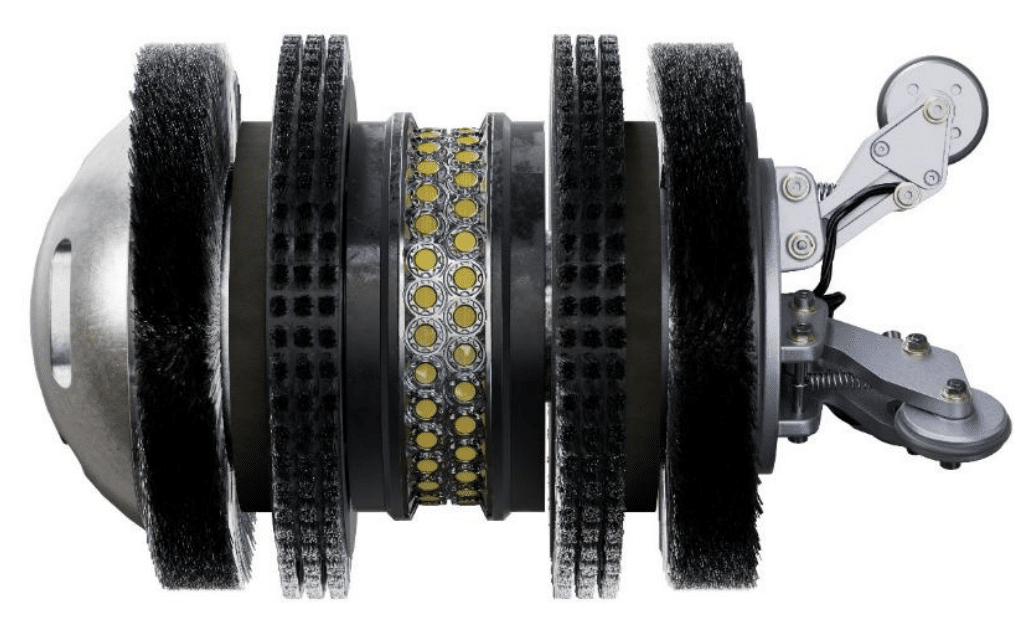
Cokebusters unveils single-bodied UT in-line inspection tool

Signal strongSource-grounded

What happened

Cokebusters unveiled a single-bodied ultrasonic ILI tool that integrates an odometer into the inspection assembly to improve axial positioning and enable high-density wall-thickness readings. The system was calibrated in a UK test facility and deployed on a complex European multiphase pipeline with heavy bends, demonstrating use where multi-bodied tools struggled. For APAC, validate the tool on representative geometry and pigging regimes before changing SOWs or removing launcher scopes

Buyer takeaway

Treat the tool as a material change to inspection SOWs; require vendor proof-of-performance on representative assets before adjusting mobilisation or launcher scopes

Cost / money

If validated locally, launcher rental and specialised receiving infrastructure costs can be reduced, though pilots will require upfront spend

Supplier / commercial

Vendor may seek bespoke terms around odometer calibration, data ownership and liability; clarify those in contracts

Safety / operations

Higher positional accuracy can improve defect detection, but miscorrelation risks must be mitigated by strict acceptance testing

What to watch

Field success in Europe is promising but limited until local geometry and pigging practices are validated; treat wider roll-out as confirmed only after pilot

Key facts

  • Single-bodied ultrasonic ILI with integrated odometer
  • High-density wall-thickness readings and improved axial positioning
  • Field deployment demonstrated on complex European multiphase pipeline

Source excerpts

Pipeline inspection specialist Cokebusters has developed a new single-bodied ultrasonic in-line inspection (ILI) tool designed to improve defect detection and axial positioning in complex pipeline systems
Pipeline inspection specialist Cokebusters has developed a new single-bodied ultrasonic in-line inspection (ILI) tool designed to improve defect detection and axial positioning in complex pipeline systems. The compact inspection tool integrates an odometer directly into the ultrasonic inspection assembly, allowing operators to gather up to 60,000 wall-thickness readings per linear metre while accurately correlating each measurement to its position along the pipeline
The lighter, free-swimming design is intended to reduce operational downtime and lower project costs by enabling the use of existing inline valves as launch and receive points
Story 5Offshore EnergyMay 22, 2026

Subsea7 clinches multimillion-dollar deal for Norwegian gas export project

Signal strongSource-grounded

What happened

Subsea7 secured a large EPCI contract with Vår Energi for the Goliat gas export project, covering pipeline and subsea tie-ins and starting immediate engineering work ahead of offshore operations. The award forms part of a strategic partnership and will consume specialist engineering and vessel windows as the project moves toward offshore execution. Buyers should monitor how this and similar awards affect regional vessel and crew availability

Buyer takeaway

Recognise that awarded EPCI programmes consume specialist resources; include alternate sourcing and retainer options in strategy to avoid capacity-driven premiums

Cost / money

Concentrated EPCI demand can increase mobilisation fees and vessel day rates for buyers without standing arrangements

Supplier / commercial

Strategic partnership arrangements may prioritise preferred suppliers; insist on transparency in subcontracting and mobilisation pricing

Safety / operations

EPCI campaigns raise HSSE interface points; enforce clear marine and offshore handover gates in SOWs to protect uptime

What to watch

Partner agreements and project timelines may constrain subcontracting options and regional vessel availability; monitor for cascade effects on APAC schedules

Key facts

  • EPCI scope includes a 12.7 km pipeline and subsea tie-ins
  • Contract value reported between $150 million and $300 million
  • Engineering starts immediately with offshore operations scheduled in the field campaign window

Source excerpts

“Together, we share a clear commitment to early engagement, predictable delivery, and safe, efficient execution
Luxembourg-domiciled firm’s scope of work encompasses engineering, procurement, construction, and installation (EPCI) of a 12
Goliat; Source: Var Energi Subsea7 has secured the award of a substantial contract, worth between $150 million and $300 million, with Vår Energi for the Goliat Gas Export project in the Barents Sea, offshore Norway

VP Snapshot

Executive Risk & Action View

New single-bodied ultrasonic inline inspection (ILI) tools can remove the need for separate launcher/receiver infrastructure on some pipelines, which changes how we scope inspections, mobilisation and downtime assumptions.

Overall
74
Cost
61
Supply
25
Schedule
20
Compliance
15

Top signals

30-180dcost

Signal 1: Cost / money

If single-bodied ILI is accepted locally, buyers can reduce launcher rental and associated downtime fees by removing bespoke launch/receive scope from SOWs; pilots and acceptance tests will have upfront cost.

Signal 2: Cost / money

Concentrated EPCI and deepwater activity consumes vessels and specialist crews, which can push mobilisation premiums and shorten quote validity for APAC procurements that compete for the same global resources.

30-180dcommercial

Signal 3: Supplier / commercial

Vendors that own or certify new inspection tooling will push for contract terms tied to proprietary calibration, data ownership and limited quote windows; expect negotiations on data deliverables and liability.

Signal 4: Supplier / commercial

Integrated EPCI and completions winners are likely to prefer package deals and retainer arrangements to secure windows; buyers without predefined mobilisation caps risk paying early-commitment fees or accepting narrow validity.

30-180dsupplier

Signal 5: Safety / operations

A regulator-facing MoU on risk-based inspection raises the operational need for documented integrity methodologies and formal HSSE handover gates to avoid rework or enforcement delays during inspections.

Signal 6: Safety / operations

Higher-density ultrasonic readings and improved axial positioning claimed by the new ILI can materially improve defect detection and reduce unplanned maintenance if correlation is validated on local assets.

Recommended actions

CategoryDue 3d

Flag inspection-tool vendors and key subsea/EPCI contractors in the supplier register with mobilisation, tooling-compatibility and regional-capacity notes.

Supplier register updated with mobilisation and tooling constraints to inform RFx and shortlist decisions.

OpsDue 3d

Ask Ops to confirm physical compatibility of priority pipeline assets with single-bodied ILI launch/receive claims (valve dimensions, pigging regimes, and inline access).

Compatibility checklist for target assets to decide whether launcher scope can be reduced or must remain in contracts.

OpsDue 21d

Run a controlled pilot and technical acceptance test for the single-bodied ILI on a representative pipeline segment with agreed data deliverables and correlation checks.

Pilot report with go/no-go recommendation and defined acceptance criteria for integrating the tool into SOWs.

ContractsDue 21d

Ask Contracts to draft SOW addenda that define mobilisation caps, minimum retainer visibility, quote-validity periods and explicit pass-through rules for specialised tooling and...

SOW addenda ready for upcoming RFx that limit pass-throughs and set clear mobilisation/standby terms.

CategoryDue 60d

Run a supplier capacity and lead-time stress test focused on deepwater completions, subsea EPCI and specialised inspection vendors to identify alternates and trigger points for...

Sourcing plan with ranked alternates, lead-time profiles and trigger points for early procurement or retainer use to protect uptime and costs.

Risk register

RiskTriggerMitigation
Watch for suppliers to narrow quote validity or require retainers as offshore schedules firm up; this reduces buyer leverage in later RFx rounds.Watch for suppliers to narrow quote validity or require retainers as offshore schedules firm up; this reduces buyer leverage in later RFx rounds.Confirm exposure with category, contracts, and operations before the next supplier commitment.
Validate ILI performance on representative APAC pipeline bends and pigging practices before removing launcher/receiver scope; European deployments are promising but not a direct guarantee in-region.Validate ILI performance on representative APAC pipeline bends and pigging practices before removing launcher/receiver scope; European deployments are promising but not a direct guarantee in-region.Confirm exposure with category, contracts, and operations before the next supplier commitment.

CM Snapshot

Category Manager Decision Detail

Today's priorities

Flag inspection-tool vendors and key subsea/EPCI contractors in the supplier register with mobilisation, tooling-compatibility and regional-capacity notes.

because recent field deployment of a compact ultrasonic ILI and large EPCI/completions awards change shortlists and mobilisation exposure for upcoming RFx processes.

Due 3d

high

CM move

Use this as the immediate supplier or contract action to move before the next sourcing gate.

Ask Ops to confirm physical compatibility of priority pipeline assets with single-bodied ILI launch/receive claims (valve dimensions, pigging regimes, and inline access).

because the vendor claims the tool can use existing inline valves and we must confirm physical fit before removing launcher scope from SOWs.

Due 3d

high

CM move

Use this as the immediate supplier or contract action to move before the next sourcing gate.

Run a controlled pilot and technical acceptance test for the single-bodied ILI on a representative pipeline segment with agreed data deliverables and correlation checks.

because vendor field claims are proven elsewhere and a pilot will verify positional accuracy, data quality and operability under our geometry and pigging practices.

Due 21d

high

CM move

Use this as the immediate supplier or contract action to move before the next sourcing gate.

Ask Contracts to draft SOW addenda that define mobilisation caps, minimum retainer visibility, quote-validity periods and explicit pass-through rules for specialised tooling and...

because recent EPCI and deepwater wins are tightening specialist resource availability and suppliers will likely seek retainers or compressed validity without clear contract lim...

Due 21d

high

CM move

Use this as the immediate supplier or contract action to move before the next sourcing gate.

Supplier radar

The Australian Pipeliner

high

Observed supplier signal

Vendors that own or certify new inspection tooling will push for contract terms tied to proprietary calibration, data ownership and limited quote windows; expect negotiations on data deliverables and liability.

Commercial implication

Vendors that own or certify new inspection tooling will push for contract terms tied to proprietary calibration, data ownership and limited quote windows; expect negotiations on data deliverables and liability.

Next step: Validate the source-backed signal with incumbents and alternates before the next award or pricing decision.

Offshore Energy

high

Observed supplier signal

Integrated EPCI and completions winners are likely to prefer package deals and retainer arrangements to secure windows; buyers without predefined mobilisation caps risk paying early-commitment fees or accepting narrow validity.

Commercial implication

Integrated EPCI and completions winners are likely to prefer package deals and retainer arrangements to secure windows; buyers without predefined mobilisation caps risk paying early-commitment fees or accepting narrow validity.

Next step: Validate the source-backed signal with incumbents and alternates before the next award or pricing decision.

Negotiation levers

Flag inspection-tool vendors and key subsea/EPCI contractors in the supplier register with mobilisation, tooling-compatibility and regional-capacity notes.

When to use: because recent field deployment of a compact ultrasonic ILI and large EPCI/completions awards change shortlists and mobilisation exposure for upcoming RFx processes.

Expected outcome: Supplier register updated with mobilisation and tooling constraints to inform RFx and shortlist decisions.

Commercial mechanism to carry into the next supplier conversation

Ask Ops to confirm physical compatibility of priority pipeline assets with single-bodied ILI launch/receive claims (valve dimensions, pigging regimes, and inline access).

When to use: because the vendor claims the tool can use existing inline valves and we must confirm physical fit before removing launcher scope from SOWs.

Expected outcome: Compatibility checklist for target assets to decide whether launcher scope can be reduced or must remain in contracts.

Commercial mechanism to carry into the next supplier conversation

Run a controlled pilot and technical acceptance test for the single-bodied ILI on a representative pipeline segment with agreed data deliverables and correlation checks.

When to use: because vendor field claims are proven elsewhere and a pilot will verify positional accuracy, data quality and operability under our geometry and pigging practices.

Expected outcome: Pilot report with go/no-go recommendation and defined acceptance criteria for integrating the tool into SOWs.

Commercial mechanism to carry into the next supplier conversation

Ask Contracts to draft SOW addenda that define mobilisation caps, minimum retainer visibility, quote-validity periods and explicit pass-through rules for specialised tooling and...

When to use: because recent EPCI and deepwater wins are tightening specialist resource availability and suppliers will likely seek retainers or compressed validity without clear contract lim...

Expected outcome: SOW addenda ready for upcoming RFx that limit pass-throughs and set clear mobilisation/standby terms.

Commercial mechanism to carry into the next supplier conversation

Talking points

New single-bodied ultrasonic inline inspection (ILI) tools can remove the need for separate launcher/receiver infrastructure on some pipelines, which changes how we scope inspections, mobilisation and downtime assumptions.
Recent large offshore awards and deepwater completions contracts are consuming specialist vessels, crews and EPCI windows, tightening global availability and raising the chance of mobilisation premiums for APAC buyers.
Regulator-focused cooperation on asset-integrity and risk-based inspection (MoU) signals stronger acceptance gates and documentation expectations that should be reflected in SOWs and acceptance criteria.
Operational caveat: the new ILI tool was validated in Europe and field-proven there, but local pipeline geometry, pigging regimes and launch point standards in APAC must be verified before removing launcher scopes.

Supplier radar

SupplierSignalImplicationNext stepConfidence
The Australian PipelinerVendors that own or certify new inspection tooling will push for contract terms tied to proprietary calibration, data ownership and limited quote windows; expect negotiations on data deliverables and liability.Vendors that own or certify new inspection tooling will push for contract terms tied to proprietary calibration, data ownership and limited quote windows; expect negotiations on data deliverables and liability.Validate the source-backed signal with incumbents and alternates before the next award or pricing decision.high
Offshore EnergyIntegrated EPCI and completions winners are likely to prefer package deals and retainer arrangements to secure windows; buyers without predefined mobilisation caps risk paying early-commitment fees or accepting narrow validity.Integrated EPCI and completions winners are likely to prefer package deals and retainer arrangements to secure windows; buyers without predefined mobilisation caps risk paying early-commitment fees or accepting narrow validity.Validate the source-backed signal with incumbents and alternates before the next award or pricing decision.high

Negotiation levers

  • Flag inspection-tool vendors and key subsea/EPCI contractors in the supplier register with mobilisation, tooling-compatibility and regional-capacity notes.because recent field deployment of a compact ultrasonic ILI and large EPCI/completions awards change shortlists and mobilisation exposure for upcoming RFx processes.Supplier register updated with mobilisation and tooling constraints to inform RFx and shortlist decisions.

    high confidence

  • Ask Ops to confirm physical compatibility of priority pipeline assets with single-bodied ILI launch/receive claims (valve dimensions, pigging regimes, and inline access).because the vendor claims the tool can use existing inline valves and we must confirm physical fit before removing launcher scope from SOWs.Compatibility checklist for target assets to decide whether launcher scope can be reduced or must remain in contracts.

    high confidence

  • Run a controlled pilot and technical acceptance test for the single-bodied ILI on a representative pipeline segment with agreed data deliverables and correlation checks.because vendor field claims are proven elsewhere and a pilot will verify positional accuracy, data quality and operability under our geometry and pigging practices.Pilot report with go/no-go recommendation and defined acceptance criteria for integrating the tool into SOWs.

    high confidence

  • Ask Contracts to draft SOW addenda that define mobilisation caps, minimum retainer visibility, quote-validity periods and explicit pass-through rules for specialised tooling and...because recent EPCI and deepwater wins are tightening specialist resource availability and suppliers will likely seek retainers or compressed validity without clear contract lim...SOW addenda ready for upcoming RFx that limit pass-throughs and set clear mobilisation/standby terms.

    high confidence

What to do / What to watch

What to do now

  • Flag inspection-tool vendors and key subsea/EPCI contractors in the supplier register with mobilisation, tooling-compatibility and regional-capacity notes.

    Why: because recent field deployment of a compact ultrasonic ILI and large EPCI/completions awards change shortlists and mobilisation exposure for upcoming RFx processes.

    Owner: Category

    Expected outcome: Supplier register updated with mobilisation and tooling constraints to inform RFx and shortlist decisions.

    [5][1]
  • Ask Ops to confirm physical compatibility of priority pipeline assets with single-bodied ILI launch/receive claims (valve dimensions, pigging regimes, and inline access).

    Why: because the vendor claims the tool can use existing inline valves and we must confirm physical fit before removing launcher scope from SOWs.

    Owner: Ops

    Expected outcome: Compatibility checklist for target assets to decide whether launcher scope can be reduced or must remain in contracts.

    [5]

Next few weeks

  • Run a controlled pilot and technical acceptance test for the single-bodied ILI on a representative pipeline segment with agreed data deliverables and correlation checks.

    Why: because vendor field claims are proven elsewhere and a pilot will verify positional accuracy, data quality and operability under our geometry and pigging practices.

    Owner: Ops

    Expected outcome: Pilot report with go/no-go recommendation and defined acceptance criteria for integrating the tool into SOWs.

    [5]
  • Ask Contracts to draft SOW addenda that define mobilisation caps, minimum retainer visibility, quote-validity periods and explicit pass-through rules for specialised tooling and...

    Why: because recent EPCI and deepwater wins are tightening specialist resource availability and suppliers will likely seek retainers or compressed validity without clear contract lim...

    Owner: Contracts

    Expected outcome: SOW addenda ready for upcoming RFx that limit pass-throughs and set clear mobilisation/standby terms.

    [1][3]

Longer view

  • Run a supplier capacity and lead-time stress test focused on deepwater completions, subsea EPCI and specialised inspection vendors to identify alternates and trigger points for...

    Why: because clustering of large offshore awards and new tool adoption can create single-source pressure that should be mitigated with ranked alternates and pre-agreed procurement tr...

    Owner: Category

    Expected outcome: Sourcing plan with ranked alternates, lead-time profiles and trigger points for early procurement or retainer use to protect uptime and costs.

    [3][1][5]

What to watch

  • Watch for suppliers to narrow quote validity or require retainers as offshore schedules firm up; this reduces buyer leverage in later RFx rounds
  • Validate ILI performance on representative APAC pipeline bends and pigging practices before removing launcher/receiver scope; European deployments are promising but not a direct guarantee in-region
  • Watch for suppliers to narrow quote validity or require retainers as offshore schedules firm up; this reduces buyer leverage in later RFx rounds.: Watch for suppliers to narrow quote validity or require retainers as offshore schedules firm up; this reduces buyer leverage in later RFx rounds
  • Validate ILI performance on representative APAC pipeline bends and pigging practices before removing launcher/receiver scope; European deployments are promising but not a direct guarantee in-region.: Validate ILI performance on representative APAC pipeline bends and pigging practices before removing launcher/receiver scope; European deployments are promising but not a direct guarantee in-region
  • New single-bodied ultrasonic inline inspection (ILI) tools can remove the need for separate launcher/receiver infrastructure on some pipelines, which changes how we scope inspections, mobilisation and downtime assumptions
  • Recent large offshore awards and deepwater completions contracts are consuming specialist vessels, crews and EPCI windows, tightening global availability and raising the chance of mobilisation premiums for APAC buyers
  • Regulator-focused cooperation on asset-integrity and risk-based inspection (MoU) signals stronger acceptance gates and documentation expectations that should be reflected in SOWs and acceptance criteria
  • Operational caveat: the new ILI tool was validated in Europe and field-proven there, but local pipeline geometry, pigging regimes and launch point standards in APAC must be verified before removing launcher scopes

Market pulse

IndexLatestChangeAs of
WTI Crude (WTI)71.23 /bbl+0.00 (+0.00%)May 23, 2026, 10:07 PM
Brent Crude (BRENT)74.89 /bbl+0.00 (+0.00%)May 23, 2026, 10:07 PM
Natural Gas (NG)3.12 /MMBtu+0.00 (+0.00%)May 23, 2026, 10:07 PM
Johnson Controls (JCI)65 +0.00 (+0.00%)May 23, 2026, 10:07 PM
  • WTI Crude: Crude price movements affect fuel and logistics costs for offshore and inspection campaigns; cost rises can increase supplier pass-throughs on vessel and helicopter logistics
  • Natural Gas: Natural gas price direction influences demand for gas-related export projects and may shift supplier focus toward gas campaigns, affecting vessel and crew allocation

Sources

Inline citations jump here. Expand a source to read the excerpt, the AI interpretation, and the original link.

[1] Subsea7 clinches multimillion-dollar deal for Norwegian gas export project

offshore-energy.biz · May 22, 2026

Expand

AI reading

Subsea7 secured a large EPCI contract with Vår Energi for the Goliat gas export project, covering pipeline and subsea tie-ins and starting immediate engineering work ahead of offshore operations. The award forms part of a strategic partnership and will consume specialist engineering and vessel windows as the project moves toward offshore execution. Buyers should monitor how this and similar awards affect regional vessel and crew availability

Buyer takeaway

Recognise that awarded EPCI programmes consume specialist resources; include alternate sourcing and retainer options in strategy to avoid capacity-driven premiums

Cost / money

Concentrated EPCI demand can increase mobilisation fees and vessel day rates for buyers without standing arrangements

Supplier / commercial

Strategic partnership arrangements may prioritise preferred suppliers; insist on transparency in subcontracting and mobilisation pricing

Safety / operations

EPCI campaigns raise HSSE interface points; enforce clear marine and offshore handover gates in SOWs to protect uptime

What to watch

Partner agreements and project timelines may constrain subcontracting options and regional vessel availability; monitor for cascade effects on APAC schedules

Key facts

  • EPCI scope includes a 12.7 km pipeline and subsea tie-ins
  • Contract value reported between $150 million and $300 million
  • Engineering starts immediately with offshore operations scheduled in the field campaign window

Source excerpts

“Together, we share a clear commitment to early engagement, predictable delivery, and safe, efficient execution
Luxembourg-domiciled firm’s scope of work encompasses engineering, procurement, construction, and installation (EPCI) of a 12
Goliat; Source: Var Energi Subsea7 has secured the award of a substantial contract, worth between $150 million and $300 million, with Vår Energi for the Goliat Gas Export project in the Barents Sea, offshore Norway

Used in this brief

  • Next 2-4 weeks — Ask Contracts to draft SOW addenda that define mobilisation caps, minimum retainer visibility, quote-validity periods and explicit pass-through rules for specialised tooling and.... Rationale: because recent EPCI and deepwater wins are tightening specialist resource availability and suppliers will likely seek retainers or compressed validity without clear contract lim.... Owner: Contracts. KPI: SOW addenda ready for upcoming RFx that limit pass-throughs and set clear mobilisation/standby terms
  • Watch for suppliers to narrow quote validity or require retainers as offshore schedules firm up; this reduces buyer leverage in later RFx rounds
  • Subsea7 secured a large EPCI contract with Vår Energi for the Goliat gas export project, covering pipeline and subsea tie-ins and starting immediate engineering work ahead of offshore operations. The award forms part of a strategic partnership and will consume specialist engineering and vessel windows as the project moves toward offshore execution. Buyers should monitor how this and similar awards affect regional vessel and crew availability
Open original source

[2] BP, ExxonMobil set on ramping up production at US Gulf oil & gas platform

offshore-energy.biz · May 22, 2026

Expand

AI reading

BP and ExxonMobil approved a subsea pump development at the Thunder Horse platform to boost production and extend field life. The project is moving into engineering and procurement phases and positions subsea pumps as an alternative to drilling new wells. Watch procurement windows for specialised subsea equipment suppliers and lifecycle service agreements as engineering milestones firm up

Buyer takeaway

Prequalify specialised subsea vendors and secure long-lead visibility to avoid late supplier locking during engineering-to-procurement transitions

Cost / money

Long-lead subsea equipment moves cost earlier into procurement cycles and may require advance commitments for priority delivery

Supplier / commercial

Vendors will offer lifecycle servicing packages; negotiate warranties, spares and mobilisation terms up front

Safety / operations

Installation and subsea commissioning increase uptime dependency on vendor competence and joint HSSE plans; acceptance criteria must be explicit

What to watch

Track engineering completion dates to avoid being forced into late-stage supplier commitments under compressed timelines

Key facts

  • Subsea pump development to increase platform production
  • Project moved into engineering and procurement stages
  • Operator frames pump as a cost-efficient alternative to adding wells

Source excerpts

Subsea pumps are one example, supporting sustained and increased production over the life of our fields. “A subsea pump is installed on the seafloor as part of a subsea production system
“A subsea pump is installed on the seafloor as part of a subsea production system
Home Fossil Energy BP, ExxonMobil set on ramping up production at US Gulf oil & gas platform May 22, 2026, by UK-headquartered energy giant BP and its U

Used in this brief

  • BP and ExxonMobil approved a subsea pump development at the Thunder Horse platform to boost production and extend field life. The project is moving into engineering and procurement phases and positions subsea pumps as an alternative to drilling new wells. Watch procurement windows for specialised subsea equipment suppliers and lifecycle service agreements as engineering milestones firm up
  • Buyer bottom line: subsea technology programs push long-lead MRO and procurement planning for specialised equipment across O&M portfolios
  • Prequalify specialised subsea vendors and secure long-lead visibility to avoid late supplier locking during engineering-to-procurement transitions
Open original source

[3] ExxonMobil tasks Weatherford with deepwater job in Nigerian waters

offshore-energy.biz · May 22, 2026

Expand

AI reading

Weatherford won an integrated deepwater completions contract with ExxonMobil’s Nigeria affiliate to supply upper and lower completions and lifecycle well-integrity support. The scope will be configured through Weatherford’s global supply chain and supported locally in-country, linking global mobilisation to local execution. Watch for supplier scheduling and crew allocation impacts that could spill into other regional completions markets

Buyer takeaway

Expect compressed mobilisation windows and shorter quote validity from vendors active on major deepwater programmes; define mobilisation caps early in RFx

Cost / money

Compressed vendor capacity can increase mobilisation premiums and lead to early-commitment fees for critical completions services

Supplier / commercial

Integrated completions providers will push package deals and may seek retainers or narrow validity periods; require transparent mobilisation pricing

Safety / operations

Deepwater completions increase dependency on vendor lifecycle support and spare availability; SLAs must cover reliability and in-country support

What to watch

Execution models that use global configuration with local support may not map identically into APAC; assess local capability before relying on identical service levels

Key facts

  • Integrated upper and lower completions scope
  • Configured via global supply chain with local execution support
  • Part of a recent sequence of major completions and service contract wins

Source excerpts

Illustration; Source: Weatherford Weatherford’s deepwater integrated completions contract with ExxonMobil’s affiliate offshore Nigeria falls within the firm’s well construction and completions portfolio. The company will provide integrated upper and lower completions solutions for deepwater wells, with a scope focused on supporting safety, reliability, well integrity, and operational efficiency over the lifecycle of the well
Illustration; Source: Weatherford Weatherford’s deepwater integrated completions contract with ExxonMobil’s affiliate offshore Nigeria falls within the firm’s well construction and completions portfolio
S. firm explains that the integrated completions equipment will be configured and prepared through its global supply chain and supported locally in Nigeria, in line with contract terms, to enable in-country execution and service delivery

Used in this brief

  • Next quarter — Run a supplier capacity and lead-time stress test focused on deepwater completions, subsea EPCI and specialised inspection vendors to identify alternates and trigger points for.... Rationale: because clustering of large offshore awards and new tool adoption can create single-source pressure that should be mitigated with ranked alternates and pre-agreed procurement tr.... Owner: Category. KPI: Sourcing plan with ranked alternates, lead-time profiles and trigger points for early procurement or retainer use to protect uptime and costs
  • Added evidence of a large EPCI award (Subsea7) and a deepwater completions win (Weatherford) that increase specialist resource demand compared with the last run
  • Weatherford won an integrated deepwater completions contract with ExxonMobil’s Nigeria affiliate to supply upper and lower completions and lifecycle well-integrity support. The scope will be configured through Weatherford’s global supply chain and supported locally in-country, linking global mobilisation to local execution. Watch for supplier scheduling and crew allocation impacts that could spill into other regional completions markets
Open original source

[4] ROSEN signs MoU with Uzbekistan to advance oil and gas infrastructure safety

pipeliner.com.au · May 18, 2026

Expand

AI reading

ROSEN signed a memorandum of understanding with Uzbekistan to collaborate on industrial safety, asset integrity and risk-based inspection methods. The agreement includes pilot initiatives and technical exchanges intended to strengthen regulatory capability and inspection practice. Watch whether pilots are codified into regulator acceptance gates or SOW requirements that could be applied regionally

Buyer takeaway

Anticipate tighter evidence requirements for integrity work and embed acceptance gates in SOWs to avoid rework or enforcement delays

Cost / money

Stricter inspection standards shift some cost into planning, reporting and certified vendor capability; buyers should define deliverables to limit pass-throughs

Supplier / commercial

Vendors with certified risk-based inspection frameworks gain advantage; require documented methodologies and prior-case evidence during evaluation

Safety / operations

Regulator alignment increases the importance of HSSE handover checkpoints and documented QA/QC on inspection outputs

What to watch

Initial pilots are targeted and diplomatic; regional adoption speed is uncertain so treat immediate impact as moderate until regulators publish standards

Key facts

  • Structured cooperation on technical dialogue and consultancy
  • Pilot initiatives to demonstrate risk-based inspection methodologies
  • Objective to strengthen national regulatory and asset-integrity capability

Source excerpts

The cooperation also includes pilot initiatives designed to demonstrate the application of modern, risk‑based inspection methodologies as an alternative to traditional inspection approaches, where appropriate and fully compliant with regulatory requirements
Effective infrastructure integrity is fundamental to public safety and energy security
ROSEN Group was selected as a cooperation partner due to its long‑standing experience working with regulators and operators worldwide, its comprehensive technical expertise in asset and pipeline integrity, and its strong regional presence and understanding of local operating conditions in Central Asia

Used in this brief

  • Safety / operations: A regulator-facing MoU on risk-based inspection raises the operational need for documented integrity methodologies and formal HSSE handover gates to avoid rework or enforcement delays during inspections
  • ROSEN signed a memorandum of understanding with Uzbekistan to collaborate on industrial safety, asset integrity and risk-based inspection methods. The agreement includes pilot initiatives and technical exchanges intended to strengthen regulatory capability and inspection practice. Watch whether pilots are codified into regulator acceptance gates or SOW requirements that could be applied regionally
  • Buyer bottom line: regulator-aligned risk-based inspection expectations increase the need for explicit inspection deliverables and acceptance gates in SOWs
Open original source

[5] Cokebusters unveils single-bodied UT in-line inspection tool

pipeliner.com.au · May 11, 2026

Expand

AI reading

Cokebusters unveiled a single-bodied ultrasonic ILI tool that integrates an odometer into the inspection assembly to improve axial positioning and enable high-density wall-thickness readings. The system was calibrated in a UK test facility and deployed on a complex European multiphase pipeline with heavy bends, demonstrating use where multi-bodied tools struggled. For APAC, validate the tool on representative geometry and pigging regimes before changing SOWs or removing launcher scopes

Buyer takeaway

Treat the tool as a material change to inspection SOWs; require vendor proof-of-performance on representative assets before adjusting mobilisation or launcher scopes

Cost / money

If validated locally, launcher rental and specialised receiving infrastructure costs can be reduced, though pilots will require upfront spend

Supplier / commercial

Vendor may seek bespoke terms around odometer calibration, data ownership and liability; clarify those in contracts

Safety / operations

Higher positional accuracy can improve defect detection, but miscorrelation risks must be mitigated by strict acceptance testing

What to watch

Field success in Europe is promising but limited until local geometry and pigging practices are validated; treat wider roll-out as confirmed only after pilot

Key facts

  • Single-bodied ultrasonic ILI with integrated odometer
  • High-density wall-thickness readings and improved axial positioning
  • Field deployment demonstrated on complex European multiphase pipeline

Source excerpts

Pipeline inspection specialist Cokebusters has developed a new single-bodied ultrasonic in-line inspection (ILI) tool designed to improve defect detection and axial positioning in complex pipeline systems
Pipeline inspection specialist Cokebusters has developed a new single-bodied ultrasonic in-line inspection (ILI) tool designed to improve defect detection and axial positioning in complex pipeline systems. The compact inspection tool integrates an odometer directly into the ultrasonic inspection assembly, allowing operators to gather up to 60,000 wall-thickness readings per linear metre while accurately correlating each measurement to its position along the pipeline
The lighter, free-swimming design is intended to reduce operational downtime and lower project costs by enabling the use of existing inline valves as launch and receive points

Used in this brief

  • New single-bodied ultrasonic inline inspection (ILI) tools can remove the need for separate launcher/receiver infrastructure on some pipelines, which changes how we scope inspections, mobilisation and downtime assumptions. Recent large offshore awards and deepwater completions contracts are consuming specialist vessels, crews and EPCI windows, tightening global availability and raising the chance of mobilisation premiums for APAC buyers. Regulator-focused cooperation on asset-integrity and risk-based inspection (MoU) signals stronger acceptance gates and documentation expectations that should be reflected in SOWs and acceptance criteria. Operational caveat: the new ILI tool was validated in Europe and field-proven there, but local pipeline geometry, pigging regimes and launch point standards in APAC must be verified before removing launcher scopes
  • Safety / operations: Higher-density ultrasonic readings and improved axial positioning claimed by the new ILI can materially improve defect detection and reduce unplanned maintenance if correlation is validated on local assets
  • Next 72 hours — Flag inspection-tool vendors and key subsea/EPCI contractors in the supplier register with mobilisation, tooling-compatibility and regional-capacity notes.. Rationale: because recent field deployment of a compact ultrasonic ILI and large EPCI/completions awards change shortlists and mobilisation exposure for upcoming RFx processes.. Owner: Category. KPI: Supplier register updated with mobilisation and tooling constraints to inform RFx and shortlist decisions
Open original source

[6] WTI Crude

finance.yahoo.com · n.d.

Expand

[7] Natural Gas

finance.yahoo.com · n.d.

Expand