Drilling Services · Australia (Perth)

Reposition Contracts to Capture Australian Decommissioning Demand and Leverage Local Vessels

Published May 27, 2026, 6:02 AM AWSTAPACFull category signal
Ask AI
ABL finds work on ExxonMobil’s huge Australian offshore decom campaign

In 60 seconds

Top move

Australia’s Bass Strait decommissioning campaign is now a concrete procurement demand signal: expect sustained need for heavy-lift vessels, marine warranty surveyors, and removal contractors that will compress vessel booking windows and mobilisation planning

Key takeaways

  • Australia’s Bass Strait decommissioning campaign is now a concrete procurement demand signal: expect sustained need for heavy-lift vessels, marine warranty surveyors, and removal contractors that will compress vessel booking windows and mobilisation planning.[2]
  • A newly formed Reach Subsea – Beacon Offshore partnership brings two DP2 offshore vessels to the Australian market with valid Australian safety cases, which immediately increases available subsea lift and survey capacity and can be used to relieve short-term vessel scarcity.[3]
  • A fatal FSO maintenance incident in Southeast Asia raises the likelihood of near-term contractor scrutiny, audits, and tighter crew competency checks across regional offshore workscopes — that will affect mobilisation readiness and may increase supplier compliance costs.[4]
  • Regional survey and geotechnical capacity is increasing through local DP2 activity and vessel introductions, which can reduce dependence on long- lead imported survey mobilisations but could also create competition for DP2 availability around plug & abandonment work.[5]
  • Technology qualification for an FPSO deepwater cooling system signals longer-term topsides retrofits and FPSO support demand, but it has limited immediate effect on drilling-day requirements or mobilisation in Australia.[1]

What changed since last run

  • Added a confirmed Australian decommissioning procurement signal (Esso/ExxonMobil Bass Strait) that creates explicit heavy-lift and MWS demand not present in the prior Otway-focused brief (article 9).
  • Noted a new commercial partnership (Reach Subsea + Beacon) that immediately expands deployable DP2 vessel capacity in Australia versus prior run (article 5).
  • Logged a regional safety event (FSO Sepat) that increases near-term supplier HSE scrutiny in SE Asia and may affect contractor availability and certification needs (article 3).

Key facts

  • Removal campaign covers multiple platforms and hundreds of wells in the Bass Strait
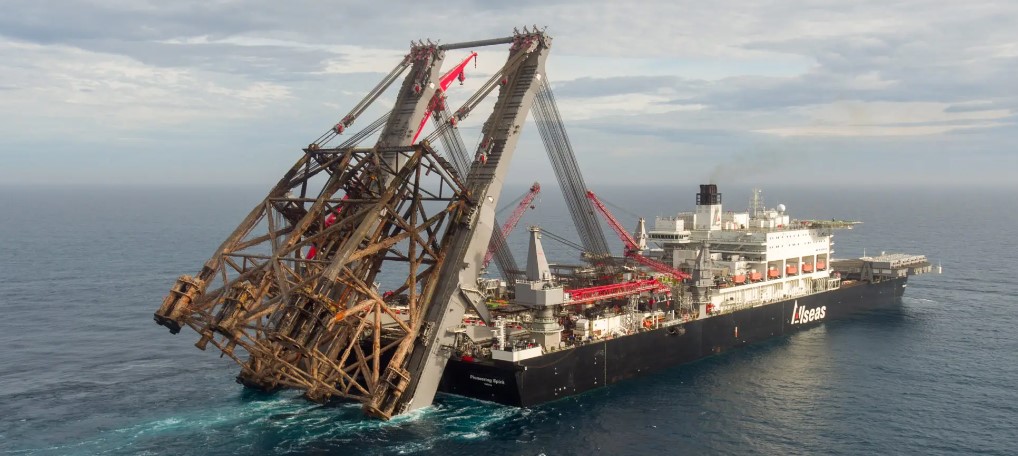
  • Offshore lifting campaign planned using Allseas’ Pioneering Spirit for initial removals
  • Preparation and suitability surveys already under way
  • Partnership provides access to two DPII offshore vessels (GO Explorer and GO Supporter)
  • Vessels are equipped for subsea operations and have valid Australian safety cases
  • Agreement is an MoA aimed at marketing, tendering and joint execution in Australia

Why it matters

Australia’s Bass Strait decommissioning campaign is now a concrete procurement demand signal: expect sustained need for heavy-lift vessels, marine warranty surveyors, and removal contractors that will compress vessel booking windows and mobilisation planning. A newly formed Reach Subsea – Beacon Offshore partnership brings two DP2 offshore vessels to the Australian market with valid Australian safety cases, which immediately increases available subsea lift and survey capacity and can be used to relieve short-term vessel scarcity. A fatal FSO maintenance incident in Southeast Asia raises the likelihood of near-term contractor scrutiny, audits, and tighter crew competency checks across regional offshore workscopes — that will affect mobilisation readiness and may increase supplier compliance costs. Regional survey and geotechnical capacity is increasing through local DP2 activity and vessel introductions, which can reduce dependence on long- lead imported survey mobilisations but could also create competition for DP2 availability around plug & abandonment work

Cost / money

  • Decommissioning shifts spend from exploration/drilling dayrates toward heavy-lift, dismantling, and recycling contracts which can concentrate single-event mobilisation costs and spot premiums for specialist vessels.[2]
  • Immediate availability of two DP2 vessels with Australian safety cases can ease short-term vessel hire pressure and reduce logistics pass-throughs if procured instead of importing overseas assets.[3]
  • Heightened safety investigations and audits after the FSO incident will likely increase supplier compliance and oversight costs (inspections, re-certifications, local HSE audits) that buyers may need to absorb or negotiate into contract scopes.[4]

Supplier / commercial

  • Suppliers holding confirmed heavy-lift or Pioneering Spirit-class vessel windows will gain commercial leverage on mobilisation terms and short-validity quotes for decommissioning lots.[2]
  • The Reach Subsea – Beacon MoA is a procurement opportunity: buyers can request competitive access to those DP2 vessels in tenders or use them to benchmark supplier dayrates and availability.[3]
  • Long-term local service contracts (geotechnical and survey) indicate some suppliers are already booked for back-to-back campaigns; expect shortened quote validity and increased mobilisation deposit requests where schedules compress.[5]

Safety / operations

  • Large platform removals and heavy lifts in Bass Strait increase HSE interface complexity (marine lifting, subsea cut-and-recover, tow-off) and create dependencies on robust marine warranty and lift engineering before award.[2]
  • The FSO lifeboat maintenance fatalities demonstrate real operational risk in contractor maintenance scopes and should trigger immediate review of permit-to-work and maintenance supervision practices on similar offshore assets.[4]

What to watch

  • Watch vessel booking calendars for heavy-lift, pipelay and DP2 availability in Australia — short lead bookings and exclusive slot-holding by a few suppliers are plausible and would constrain buyer scheduling.[2]

Top stories

Story 1Offshore EnergyMay 26, 2026

ABL finds work on ExxonMobil’s huge Australian offshore decom campaign

Signal strongSource-grounded

What happened

ABL was contracted to support Esso Australia (ExxonMobil) on a large Bass Strait offshore decommissioning campaign involving platform removals and hundreds of wells. Preparations are advanced and a heavy-lift campaign using Allseas’ Pioneering Spirit is scheduled for the program, making this a sizable and scheduled demand stream. Watch vessel booking calendars and marine warranty requirements as they will drive mobilisation and contract packaging decisions

Buyer takeaway

Treat this as a real, scheduled demand source for decommissioning and heavy-lift services; vessel slots and MWS sign-off will be the gating resources for award and execution

Cost / money

Spending will shift from drilling dayrates to single-event heavy-lift, removal, and disposal packages with higher mobilisation profiles and potential spot premiums

Supplier / commercial

Suppliers holding confirmed vessel windows will have leverage on mobilisation deposits, quote validity and schedule guarantees; consider trade-offs between securing slots and preserving price leverage

Safety / operations

Execution depends on validated marine warranty, lift engineering and coordinated HSE between lifting, subsea and tow teams; failures in these areas can produce major schedule slips

What to watch

Monitor confirmed bookings for Pioneering Spirit and other heavy-lift assets and watch for suppliers tightening quote windows or requesting mobilisation deposits

Key facts

  • Removal campaign covers multiple platforms and hundreds of wells in the Bass Strait
  • Offshore lifting campaign planned using Allseas’ Pioneering Spirit for initial removals
  • Preparation and suitability surveys already under way

Source excerpts

ABL’s operations in Australia were commissioned by Esso to provide marine warranty survey (MWS) services to assist in the safe and efficient delivery of the first phase of the decommissioning campaign. The company is getting ready for this assignment by conducting suitability surveys to validate the proposed marine spread, and technical review and approval of decommissioning documentation
headquartered energy giant ExxonMobil, during an offshore removal campaign of multiple platforms, hundreds of wells, and subsea infrastructure off the coast of Australia. This program is described as the country’s largest offshore decommissioning campaign
Adam Solomons, East Coast Manager at ABL Australia, commented: “This is a landmark project for Australia’s offshore industry, involving highly complex marine operations, including offshore lifting, transportation and discharge of substantial tonnage of assets that are up to half a century old. “Our extensive track record and multi-disciplined expertise that we offer in decommissioning, alongside our deep experience in offshore Australia – makes ABL well positioned to support Esso in reducing risk and optimizin
Story 2Offshore EnergyMay 26, 2026

Reach Subsea and Beacon Offshore jointly pursuing subsea projects in Australia

Signal moderateSource-grounded

What happened

Reach Subsea and Beacon Offshore signed a memorandum of agreement to jointly pursue subsea projects in Australia, giving Reach access to two DPII vessels already equipped for subsea work. The vessels have valid Australian safety cases and can be deployed immediately, which changes short-term local vessel availability. Watch whether the arrangement converts into firm charter agreements or remains a commercial marketing partnership

Buyer takeaway

This MoA gives buyers an immediate supply-side option for DP2 subsea services in Australia that can be used to short-circuit long international mobilisations

Cost / money

If used, these locally validated vessels can reduce logistics pass-throughs and potentially lower short-term hire costs compared with imported units

Supplier / commercial

Treat the partnership as a potential supplier pool: invite the partners to tender or use them to benchmark availability and dayrates

Safety / operations

Vessels already having safety cases reduces mobilisation time and regulatory friction for Australian campaigns

What to watch

Confirm whether the MoA results in firm charter availability or is primarily market-facing; exclusivity or priority terms could limit access

Key facts

  • Partnership provides access to two DPII offshore vessels (GO Explorer and GO Supporter)
  • Vessels are equipped for subsea operations and have valid Australian safety cases
  • Agreement is an MoA aimed at marketing, tendering and joint execution in Australia

Source excerpts

According to Reach Subsea, a key element of the partnership is access to two DPII offshore vessels, GO Explorer and GO Supporter, enabling Reach Subsea to expand its operational footprint and service offering in the region. The vessels can immediately be deployed in the market as they are already equipped for subsea operations and have valid Australian Safety Cases
The vessels can immediately be deployed in the market as they are already equipped for subsea operations and have valid Australian Safety Cases
Source: Reach Subsea Under a memorandum of agreement (MoA), the companies will collaborate exclusively to market, tender for, and execute subsea projects in Australia, combining Reach Subsea’s engineering and technology offering with vessel capabilities provided by Beacon Offshore. According to Reach Subsea, a key element of the partnership is access to two DPII offshore vessels, GO Explorer and GO Supporter, enabling Reach Subsea to expand its operational footprint and service offering in the region
Story 3Offshore EnergyMay 26, 2026

After Shell, Malaysian firm gets to work for Petronas

Signal moderateSource-grounded

What happened

Helms Geomarine completed a geotechnical investigation campaign ahead of schedule for Shell and plans back-to-back campaigns supporting Petronas P&A work in Sarawak waters. The company is preparing a new DP2 geotechnical vessel that will add local survey and soil-investigation capacity. Watch schedules for P&A campaigns as local DP2 availability could be absorbed quickly

Buyer takeaway

Local geotechnical capacity can shorten mobilisations and lower logistics costs for foundation and P&A scopes if booked early

Cost / money

Greater local DP2 presence can reduce charter premiums but back-to-back campaigns increase the risk of short validity on quotes and mobilisation surcharges

Supplier / commercial

Long-term contracts indicate supplier continuity but also the potential for limited spot availability for new entrants

Safety / operations

Campaigns completed ahead of schedule with safety emphasis suggest competent local delivery but verify records before award

What to watch

Track the commissioning date and first availabilities of the new DP2 vessel to understand when relief to demand will materialise

Key facts

  • Campaign included soil boring, seabed sampling and downhole CPT operations
  • Work executed under a long-term geotechnical services contract
  • New DP2 vessel (Keyfield Itqan) is being prepared for market entry

Source excerpts

” Following the completion, Helms reported it would resume its back-to-back lineup of soil investigation campaigns for PETRONAS Carigali Sdn Bhd (PCSB) to support plug & abandonment (P&A) works in Sarawak waters. The company further announced it was preparing for the upcoming launch of its latest DP2 geotechnical survey vessel, Keyfield Itqan
The company further announced it was preparing for the upcoming launch of its latest DP2 geotechnical survey vessel, Keyfield Itqan
The work was executed under the parties’ long-term offshore geotechnical engineering services contract
Story 4Offshore EnergyMay 26, 2026

Investigation ongoing: Three dead and one injured in Southeast Asian FSO incident

Signal moderateSource-grounded

What happened

An FSO lifeboat maintenance incident in Malaysian waters resulted in three contractor fatalities and an ongoing investigation; the event occurred during maintenance activity and involved contractor personnel. Investigations and regulator attention are ongoing, which means contractors operating similar maintenance scopes should expect scrutiny and possible temporary operational constraints

Buyer takeaway

Expect suppliers to face immediate scrutiny; require refreshed competency evidence and emergency-response verification for maintenance and lifeboat workscopes

Cost / money

Additional oversight, audits and short-notice training or vetting add near-term compliance costs that may be passed through if not contractually controlled

Supplier / commercial

Contractors may respond by tightening crew selection, requesting higher rates for high-risk maintenance, or limiting crews available for quick mobilisation

Safety / operations

Prioritise review of permit-to-work, supervision for maintenance tasks, and lifeboat maintenance procedures in regional contracts

What to watch

Investigation outcomes could lead to regulatory changes or temporary work suspensions that affect contractor availability in SE Asia

Key facts

  • Incident occurred during lifeboat maintenance on the FSO Sepat
  • Three contractor personnel were pronounced dead and one injured
  • Investigations are ongoing with limited public detail at present

Source excerpts

50 pm on May 24, 2025, during lifeboat maintenance work at the FSO Sepat, Petronas explained that four contractor personnel were involved in the tragic event, which took place in Malaysian waters
FSO Sepat; Source: Bumi Armada While confirming that an incident occurred at approximately 12. 50 pm on May 24, 2025, during lifeboat maintenance work at the FSO Sepat, Petronas explained that four contractor personnel were involved in the tragic event, which took place in Malaysian waters
The company reported that three personnel were pronounced dead upon arrival at Hospital Sultanah Nur Zahirah, Kuala Terengganu, while one injured worker was evacuated for medical treatment and remains under observation
Story 5Offshore EnergyMay 26, 2026

ABS endorses SBM Offshore’s Shell-backed FPSO deepwater cooling tech

Signal limitedDirectional

What happened

ABS issued a statement of maturity for SBM Offshore’s seawater intake riser (SWIR) deepwater cooling technology after prototype testing, qualifying it for production unit inclusion. The tech pumps colder seawater from depth to topsides to reduce fuel gas use and emissions, which may create future demand for FPSO retrofit support and associated topsides contractors. Watch uptake and retrofit tendering schedules, as adoption will be project-specific and not immediate for drilling services

Buyer takeaway

Treat SWIR as a longer-term support and retrofit demand stream for FPSO owners; it is not an immediate drilling services driver but may affect FPSO support scopes

Cost / money

Potential long-term reductions in FPSO fuel spend could reallocate operator budgets toward retrofit CAPEX and contractor services

Supplier / commercial

Specialist topsides retrofit contractors may see a future uptick in demand; coordinate early engagement if FPSOs in your portfolio are retrofit candidates

Safety / operations

Technology has passed prototype qualification which reduces technical uncertainty, but retrofit execution will need integrated topsides and safety verification

What to watch

Monitor operator retrofit plans and retrofit tender timelines to identify supply opportunities for FPSO support and topsides contractors

Key facts

  • Prototype qualification completed and a statement of maturity issued by ABS
  • Technology aims to use deep cold seawater for topside cooling and fuel reduction
  • Development traced back to a multi-year effort with industry partners

Source excerpts

Home Fossil Energy ABS endorses SBM Offshore’s Shell-backed FPSO deepwater cooling tech May 26, 2026, by Netherlands-based SBM Offshore, a provider of the design, construction, installation, and operation of offshore floating facilities, has received the green light for its seawater intake riser (SWIR) technology from American Bureau of Shipping (ABS), a classification society. FPSO illustration; Source: SBM Offshore Following the application of its new technology qualification (NTQ) program to evaluate the pro
The statement of maturity signifies that the technology is qualified to be incorporated into a production unit in the aftermath of tests and validation. The SWIR technology is described as featuring an innovative technique to pump colder seawater from around 700 meters below the ocean’s surface up to an FPSO’s topsides to be used for cooling purposes
The SWIR technology is described as featuring an innovative technique to pump colder seawater from around 700 meters below the ocean’s surface up to an FPSO’s topsides to be used for cooling purposes

VP Snapshot

Executive Risk & Action View

Australia’s Bass Strait decommissioning campaign is now a concrete procurement demand signal: expect sustained need for heavy-lift vessels, marine warranty surveyors, and removal contractors that will compress vessel booking windows and mobilisation planning.

Overall
55
Cost
79
Supply
61
Schedule
20
Compliance
35

Top signals

30-180dcost

Signal 1: Cost / money

Decommissioning shifts spend from exploration/drilling dayrates toward heavy-lift, dismantling, and recycling contracts which can concentrate single-event mobilisation costs and spot premiums for specialist vessels.

Signal 3: Cost / money

Heightened safety investigations and audits after the FSO incident will likely increase supplier compliance and oversight costs (inspections, re-certifications, local HSE audits) that buyers may need to absorb or negotiate into contract scopes.

0-30dcost

Signal 2: Cost / money

Immediate availability of two DP2 vessels with Australian safety cases can ease short-term vessel hire pressure and reduce logistics pass-throughs if procured instead of importing overseas assets.

30-180dcommercial

Signal 4: Supplier / commercial

Suppliers holding confirmed heavy-lift or Pioneering Spirit-class vessel windows will gain commercial leverage on mobilisation terms and short-validity quotes for decommissioning lots.

Signal 6: Supplier / commercial

Long-term local service contracts (geotechnical and survey) indicate some suppliers are already booked for back-to-back campaigns; expect shortened quote validity and increased mobilisation deposit requests where schedules compress.

0-30dsupply

Signal 5: Supplier / commercial

The Reach Subsea – Beacon MoA is a procurement opportunity: buyers can request competitive access to those DP2 vessels in tenders or use them to benchmark supplier dayrates and availability.

Recommended actions

CategoryDue 3d

Run a vessel and heavy-lift availability scan focused on Bass Strait requirements (heavy-lift, SOV/ROV, DP2, and marine warranty providers).

Register of available vessels, booked windows, and immediate single-point-of-failure providers for planned decommissioning scopes.

ContractsDue 3d

Ask Contracts to flag active offshore support agreements lacking explicit mobilisation-deposit, quote-validity, or safety-case verification clauses.

Prioritised list of contracts needing annexes or amendments to limit exposure to short-validity quotes and mobilisation pass-throughs.

CategoryDue 21d

Run sourcing scenarios comparing bundled decommissioning awards (single supplier for lifting+removal+disposal) versus segmented awards (separate lift, subsea cut, recycling cont...

Recommendation on procurement route with supplier shortlist and risk matrix to inform tender strategy for decommissioning packages.

OpsDue 21d

Ops to perform targeted supplier HSE and competency verifications for regionally nominated contractors and lifeboat/maintenance scopes.

Verified list of contractors meeting agreed HSE and maintenance competency gates prior to award or mobilisation.

OpsDue 60d

Develop a pre-award execution readiness gate for decommissioning and subsea tenders that requires confirmed vessel bookings, marine warranty endorsement, contractor safety cases...

Adopted pre-award checklist used to condition awards on confirmed logistics, HSE handover, and marine warranty confirmation.

Risk register

RiskTriggerMitigation
Watch vessel booking calendars for heavy-lift, pipelay and DP2 availability in Australia — short lead bookings and exclusive slot-holding by a few suppliers are plausible and would constrain buyer scheduling.Watch vessel booking calendars for heavy-lift, pipelay and DP2 availability in Australia — short lead bookings and exclusive slot-holding by a few suppliers are plausible and would constrain buyer scheduling.Confirm exposure with category, contracts, and operations before the next supplier commitment.

CM Snapshot

Category Manager Decision Detail

Today's priorities

Run a vessel and heavy-lift availability scan focused on Bass Strait requirements (heavy-lift, SOV/ROV, DP2, and marine warranty providers).

because the ABL/ExxonMobil decommissioning assignment signals concrete demand for heavy lifts and MWS services and vessel windows will be scheduled in advance, identifying clash...

Due 3d

high

CM move

Use this as the immediate supplier or contract action to move before the next sourcing gate.

Ask Contracts to flag active offshore support agreements lacking explicit mobilisation-deposit, quote-validity, or safety-case verification clauses.

because suppliers may shorten quote validity or request deposits as decommissioning and subsea campaigns tighten schedules, and pre-emptive contract fixes preserve negotiating r...

Due 3d

high

CM move

Use this as the immediate supplier or contract action to move before the next sourcing gate.

Run sourcing scenarios comparing bundled decommissioning awards (single supplier for lifting+removal+disposal) versus segmented awards (separate lift, subsea cut, recycling cont...

because large lifting campaigns can transfer mobilisation and schedule risk to suppliers when bundled, and modelling both approaches clarifies the trade-off between securing ves...

Due 21d

high

CM move

Use this as the immediate supplier or contract action to move before the next sourcing gate.

Ops to perform targeted supplier HSE and competency verifications for regionally nominated contractors and lifeboat/maintenance scopes.

because the recent FSO incident signals potential gaps in maintenance supervision and because early competency checks reduce award risk and avoid post-award stoppages.

Due 21d

high

CM move

Use this as the immediate supplier or contract action to move before the next sourcing gate.

Supplier radar

Offshore Energy

high

Observed supplier signal

Suppliers holding confirmed heavy-lift or Pioneering Spirit-class vessel windows will gain commercial leverage on mobilisation terms and short-validity quotes for decommissioning lots.

Commercial implication

Suppliers holding confirmed heavy-lift or Pioneering Spirit-class vessel windows will gain commercial leverage on mobilisation terms and short-validity quotes for decommissioning lots.

Next step: Validate the source-backed signal with incumbents and alternates before the next award or pricing decision.

Offshore Energy

high

Observed supplier signal

The Reach Subsea – Beacon MoA is a procurement opportunity: buyers can request competitive access to those DP2 vessels in tenders or use them to benchmark supplier dayrates and availability.

Commercial implication

The Reach Subsea – Beacon MoA is a procurement opportunity: buyers can request competitive access to those DP2 vessels in tenders or use them to benchmark supplier dayrates and availability.

Next step: Validate the source-backed signal with incumbents and alternates before the next award or pricing decision.

Offshore Energy

high

Observed supplier signal

Long-term local service contracts (geotechnical and survey) indicate some suppliers are already booked for back-to-back campaigns; expect shortened quote validity and increased mobilisation deposit requests where schedules compress.

Commercial implication

Long-term local service contracts (geotechnical and survey) indicate some suppliers are already booked for back-to-back campaigns; expect shortened quote validity and increased mobilisation deposit requests where schedules compress.

Next step: Validate the source-backed signal with incumbents and alternates before the next award or pricing decision.

Negotiation levers

Run a vessel and heavy-lift availability scan focused on Bass Strait requirements (heavy-lift, SOV/ROV, DP2, and marine warranty providers).

When to use: because the ABL/ExxonMobil decommissioning assignment signals concrete demand for heavy lifts and MWS services and vessel windows will be scheduled in advance, identifying clash...

Expected outcome: Register of available vessels, booked windows, and immediate single-point-of-failure providers for planned decommissioning scopes.

Commercial mechanism to carry into the next supplier conversation

Ask Contracts to flag active offshore support agreements lacking explicit mobilisation-deposit, quote-validity, or safety-case verification clauses.

When to use: because suppliers may shorten quote validity or request deposits as decommissioning and subsea campaigns tighten schedules, and pre-emptive contract fixes preserve negotiating r...

Expected outcome: Prioritised list of contracts needing annexes or amendments to limit exposure to short-validity quotes and mobilisation pass-throughs.

Commercial mechanism to carry into the next supplier conversation

Run sourcing scenarios comparing bundled decommissioning awards (single supplier for lifting+removal+disposal) versus segmented awards (separate lift, subsea cut, recycling cont...

When to use: because large lifting campaigns can transfer mobilisation and schedule risk to suppliers when bundled, and modelling both approaches clarifies the trade-off between securing ves...

Expected outcome: Recommendation on procurement route with supplier shortlist and risk matrix to inform tender strategy for decommissioning packages.

Commercial mechanism to carry into the next supplier conversation

Ops to perform targeted supplier HSE and competency verifications for regionally nominated contractors and lifeboat/maintenance scopes.

When to use: because the recent FSO incident signals potential gaps in maintenance supervision and because early competency checks reduce award risk and avoid post-award stoppages.

Expected outcome: Verified list of contractors meeting agreed HSE and maintenance competency gates prior to award or mobilisation.

Commercial mechanism to carry into the next supplier conversation

Talking points

Australia’s Bass Strait decommissioning campaign is now a concrete procurement demand signal: expect sustained need for heavy-lift vessels, marine warranty surveyors, and removal contractors that will compress vessel booking windows and mobilisation planning.
A newly formed Reach Subsea – Beacon Offshore partnership brings two DP2 offshore vessels to the Australian market with valid Australian safety cases, which immediately increases available subsea lift and survey capacity and can be used to relieve short-term vessel scarcity.
A fatal FSO maintenance incident in Southeast Asia raises the likelihood of near-term contractor scrutiny, audits, and tighter crew competency checks across regional offshore workscopes — that will affect mobilisation readiness and may increase supplier compliance costs.
Regional survey and geotechnical capacity is increasing through local DP2 activity and vessel introductions, which can reduce dependence on long- lead imported survey mobilisations but could also create competition for DP2 availability around plug & abandonment work.

Supplier radar

SupplierSignalImplicationNext stepConfidence
Offshore EnergySuppliers holding confirmed heavy-lift or Pioneering Spirit-class vessel windows will gain commercial leverage on mobilisation terms and short-validity quotes for decommissioning lots.Suppliers holding confirmed heavy-lift or Pioneering Spirit-class vessel windows will gain commercial leverage on mobilisation terms and short-validity quotes for decommissioning lots.Validate the source-backed signal with incumbents and alternates before the next award or pricing decision.high
Offshore EnergyThe Reach Subsea – Beacon MoA is a procurement opportunity: buyers can request competitive access to those DP2 vessels in tenders or use them to benchmark supplier dayrates and availability.The Reach Subsea – Beacon MoA is a procurement opportunity: buyers can request competitive access to those DP2 vessels in tenders or use them to benchmark supplier dayrates and availability.Validate the source-backed signal with incumbents and alternates before the next award or pricing decision.high
Offshore EnergyLong-term local service contracts (geotechnical and survey) indicate some suppliers are already booked for back-to-back campaigns; expect shortened quote validity and increased mobilisation deposit requests where schedules compress.Long-term local service contracts (geotechnical and survey) indicate some suppliers are already booked for back-to-back campaigns; expect shortened quote validity and increased mobilisation deposit requests where schedules compress.Validate the source-backed signal with incumbents and alternates before the next award or pricing decision.high

Negotiation levers

  • Run a vessel and heavy-lift availability scan focused on Bass Strait requirements (heavy-lift, SOV/ROV, DP2, and marine warranty providers).because the ABL/ExxonMobil decommissioning assignment signals concrete demand for heavy lifts and MWS services and vessel windows will be scheduled in advance, identifying clash...Register of available vessels, booked windows, and immediate single-point-of-failure providers for planned decommissioning scopes.

    high confidence

  • Ask Contracts to flag active offshore support agreements lacking explicit mobilisation-deposit, quote-validity, or safety-case verification clauses.because suppliers may shorten quote validity or request deposits as decommissioning and subsea campaigns tighten schedules, and pre-emptive contract fixes preserve negotiating r...Prioritised list of contracts needing annexes or amendments to limit exposure to short-validity quotes and mobilisation pass-throughs.

    high confidence

  • Run sourcing scenarios comparing bundled decommissioning awards (single supplier for lifting+removal+disposal) versus segmented awards (separate lift, subsea cut, recycling cont...because large lifting campaigns can transfer mobilisation and schedule risk to suppliers when bundled, and modelling both approaches clarifies the trade-off between securing ves...Recommendation on procurement route with supplier shortlist and risk matrix to inform tender strategy for decommissioning packages.

    high confidence

  • Ops to perform targeted supplier HSE and competency verifications for regionally nominated contractors and lifeboat/maintenance scopes.because the recent FSO incident signals potential gaps in maintenance supervision and because early competency checks reduce award risk and avoid post-award stoppages.Verified list of contractors meeting agreed HSE and maintenance competency gates prior to award or mobilisation.

    high confidence

What to do / What to watch

What to do now

  • Run a vessel and heavy-lift availability scan focused on Bass Strait requirements (heavy-lift, SOV/ROV, DP2, and marine warranty providers).

    Why: because the ABL/ExxonMobil decommissioning assignment signals concrete demand for heavy lifts and MWS services and vessel windows will be scheduled in advance, identifying clash...

    Owner: Category

    Expected outcome: Register of available vessels, booked windows, and immediate single-point-of-failure providers for planned decommissioning scopes.

    [2]
  • Ask Contracts to flag active offshore support agreements lacking explicit mobilisation-deposit, quote-validity, or safety-case verification clauses.

    Why: because suppliers may shorten quote validity or request deposits as decommissioning and subsea campaigns tighten schedules, and pre-emptive contract fixes preserve negotiating r...

    Owner: Contracts

    Expected outcome: Prioritised list of contracts needing annexes or amendments to limit exposure to short-validity quotes and mobilisation pass-throughs.

    [3]

Next few weeks

  • Run sourcing scenarios comparing bundled decommissioning awards (single supplier for lifting+removal+disposal) versus segmented awards (separate lift, subsea cut, recycling cont...

    Why: because large lifting campaigns can transfer mobilisation and schedule risk to suppliers when bundled, and modelling both approaches clarifies the trade-off between securing ves...

    Owner: Category

    Expected outcome: Recommendation on procurement route with supplier shortlist and risk matrix to inform tender strategy for decommissioning packages.

    [2]
  • Ops to perform targeted supplier HSE and competency verifications for regionally nominated contractors and lifeboat/maintenance scopes.

    Why: because the recent FSO incident signals potential gaps in maintenance supervision and because early competency checks reduce award risk and avoid post-award stoppages.

    Owner: Ops

    Expected outcome: Verified list of contractors meeting agreed HSE and maintenance competency gates prior to award or mobilisation.

    [4]

Longer view

  • Develop a pre-award execution readiness gate for decommissioning and subsea tenders that requires confirmed vessel bookings, marine warranty endorsement, contractor safety cases...

    Why: because decommissioning execution depends on confirmed heavy-lift windows and validated marine engineering, and conditioning awards on these items reduces schedule and mobilisat...

    Owner: Ops

    Expected outcome: Adopted pre-award checklist used to condition awards on confirmed logistics, HSE handover, and marine warranty confirmation.

    [2][3]

What to watch

  • Watch vessel booking calendars for heavy-lift, pipelay and DP2 availability in Australia — short lead bookings and exclusive slot-holding by a few suppliers are plausible and would constrain buyer scheduling
  • Watch vessel booking calendars for heavy-lift, pipelay and DP2 availability in Australia — short lead bookings and exclusive slot-holding by a few suppliers are plausible and would constrain buyer scheduling.: Watch vessel booking calendars for heavy-lift, pipelay and DP2 availability in Australia — short lead bookings and exclusive slot-holding by a few suppliers are plausible and would constrain buyer scheduling
  • Australia’s Bass Strait decommissioning campaign is now a concrete procurement demand signal: expect sustained need for heavy-lift vessels, marine warranty surveyors, and removal contractors that will compress vessel booking windows and mobilisation planning
  • A newly formed Reach Subsea – Beacon Offshore partnership brings two DP2 offshore vessels to the Australian market with valid Australian safety cases, which immediately increases available subsea lift and survey capacity and can be used to relieve short-term vessel scarcity
  • A fatal FSO maintenance incident in Southeast Asia raises the likelihood of near-term contractor scrutiny, audits, and tighter crew competency checks across regional offshore workscopes — that will affect mobilisation readiness and may increase supplier compliance costs
  • Regional survey and geotechnical capacity is increasing through local DP2 activity and vessel introductions, which can reduce dependence on long- lead imported survey mobilisations but could also create competition for DP2 availability around plug & abandonment work

Market pulse

IndexLatestChangeAs of
WTI Crude (WTI)71.23 /bbl+0.00 (+0.00%)May 26, 2026, 10:04 PM
Brent Crude (BRENT)74.89 /bbl+0.00 (+0.00%)May 26, 2026, 10:04 PM
Natural Gas (NG)3.12 /MMBtu+0.00 (+0.00%)May 26, 2026, 10:04 PM
Schlumberger (SLB)48 +0.00 (+0.00%)May 26, 2026, 10:04 PM
Halliburton (HAL)35 +0.00 (+0.00%)May 26, 2026, 10:04 PM
Baker Hughes (BKR)32 +0.00 (+0.00%)May 26, 2026, 10:04 PM
  • Baker Hughes: Baker Hughes activity signals service-market posture and can be used to benchmark supplier behaviour and equipment availability trends
  • WTI Crude: WTI crude prices influence operator spend priorities; sustained oil price strength tends to preserve budget for decommissioning and heavy-lift scope sequencing

Sources

Inline citations jump here. Expand a source to read the excerpt, the AI interpretation, and the original link.

[1] ABS endorses SBM Offshore’s Shell-backed FPSO deepwater cooling tech

offshore-energy.biz · May 26, 2026

Expand

AI reading

ABS issued a statement of maturity for SBM Offshore’s seawater intake riser (SWIR) deepwater cooling technology after prototype testing, qualifying it for production unit inclusion. The tech pumps colder seawater from depth to topsides to reduce fuel gas use and emissions, which may create future demand for FPSO retrofit support and associated topsides contractors. Watch uptake and retrofit tendering schedules, as adoption will be project-specific and not immediate for drilling services

Buyer takeaway

Treat SWIR as a longer-term support and retrofit demand stream for FPSO owners; it is not an immediate drilling services driver but may affect FPSO support scopes

Cost / money

Potential long-term reductions in FPSO fuel spend could reallocate operator budgets toward retrofit CAPEX and contractor services

Supplier / commercial

Specialist topsides retrofit contractors may see a future uptick in demand; coordinate early engagement if FPSOs in your portfolio are retrofit candidates

Safety / operations

Technology has passed prototype qualification which reduces technical uncertainty, but retrofit execution will need integrated topsides and safety verification

What to watch

Monitor operator retrofit plans and retrofit tender timelines to identify supply opportunities for FPSO support and topsides contractors

Key facts

  • Prototype qualification completed and a statement of maturity issued by ABS
  • Technology aims to use deep cold seawater for topside cooling and fuel reduction
  • Development traced back to a multi-year effort with industry partners

Source excerpts

Home Fossil Energy ABS endorses SBM Offshore’s Shell-backed FPSO deepwater cooling tech May 26, 2026, by Netherlands-based SBM Offshore, a provider of the design, construction, installation, and operation of offshore floating facilities, has received the green light for its seawater intake riser (SWIR) technology from American Bureau of Shipping (ABS), a classification society. FPSO illustration; Source: SBM Offshore Following the application of its new technology qualification (NTQ) program to evaluate the pro
The statement of maturity signifies that the technology is qualified to be incorporated into a production unit in the aftermath of tests and validation. The SWIR technology is described as featuring an innovative technique to pump colder seawater from around 700 meters below the ocean’s surface up to an FPSO’s topsides to be used for cooling purposes
The SWIR technology is described as featuring an innovative technique to pump colder seawater from around 700 meters below the ocean’s surface up to an FPSO’s topsides to be used for cooling purposes

Used in this brief

  • ABS issued a statement of maturity for SBM Offshore’s seawater intake riser (SWIR) deepwater cooling technology after prototype testing, qualifying it for production unit inclusion. The tech pumps colder seawater from depth to topsides to reduce fuel gas use and emissions, which may create future demand for FPSO retrofit support and associated topsides contractors. Watch uptake and retrofit tendering schedules, as adoption will be project-specific and not immediate for drilling services
  • Buyer bottom line: technology maturity on FPSO cooling shifts future scope toward topsides retrofit and TPS support contractors; this is a longer-term procurement consideration rather than a near-term change to drilling services
  • Treat SWIR as a longer-term support and retrofit demand stream for FPSO owners; it is not an immediate drilling services driver but may affect FPSO support scopes
Open original source

[2] ABL finds work on ExxonMobil’s huge Australian offshore decom campaign

offshore-energy.biz · May 26, 2026

Expand

AI reading

ABL was contracted to support Esso Australia (ExxonMobil) on a large Bass Strait offshore decommissioning campaign involving platform removals and hundreds of wells. Preparations are advanced and a heavy-lift campaign using Allseas’ Pioneering Spirit is scheduled for the program, making this a sizable and scheduled demand stream. Watch vessel booking calendars and marine warranty requirements as they will drive mobilisation and contract packaging decisions

Buyer takeaway

Treat this as a real, scheduled demand source for decommissioning and heavy-lift services; vessel slots and MWS sign-off will be the gating resources for award and execution

Cost / money

Spending will shift from drilling dayrates to single-event heavy-lift, removal, and disposal packages with higher mobilisation profiles and potential spot premiums

Supplier / commercial

Suppliers holding confirmed vessel windows will have leverage on mobilisation deposits, quote validity and schedule guarantees; consider trade-offs between securing slots and preserving price leverage

Safety / operations

Execution depends on validated marine warranty, lift engineering and coordinated HSE between lifting, subsea and tow teams; failures in these areas can produce major schedule slips

What to watch

Monitor confirmed bookings for Pioneering Spirit and other heavy-lift assets and watch for suppliers tightening quote windows or requesting mobilisation deposits

Key facts

  • Removal campaign covers multiple platforms and hundreds of wells in the Bass Strait
  • Offshore lifting campaign planned using Allseas’ Pioneering Spirit for initial removals
  • Preparation and suitability surveys already under way

Source excerpts

ABL’s operations in Australia were commissioned by Esso to provide marine warranty survey (MWS) services to assist in the safe and efficient delivery of the first phase of the decommissioning campaign. The company is getting ready for this assignment by conducting suitability surveys to validate the proposed marine spread, and technical review and approval of decommissioning documentation
headquartered energy giant ExxonMobil, during an offshore removal campaign of multiple platforms, hundreds of wells, and subsea infrastructure off the coast of Australia. This program is described as the country’s largest offshore decommissioning campaign
Adam Solomons, East Coast Manager at ABL Australia, commented: “This is a landmark project for Australia’s offshore industry, involving highly complex marine operations, including offshore lifting, transportation and discharge of substantial tonnage of assets that are up to half a century old. “Our extensive track record and multi-disciplined expertise that we offer in decommissioning, alongside our deep experience in offshore Australia – makes ABL well positioned to support Esso in reducing risk and optimizin

Used in this brief

  • Next 72 hours — Run a vessel and heavy-lift availability scan focused on Bass Strait requirements (heavy-lift, SOV/ROV, DP2, and marine warranty providers).. Rationale: because the ABL/ExxonMobil decommissioning assignment signals concrete demand for heavy lifts and MWS services and vessel windows will be scheduled in advance, identifying clash.... Owner: Category. KPI: Register of available vessels, booked windows, and immediate single-point-of-failure providers for planned decommissioning scopes
  • Next 2-4 weeks — Run sourcing scenarios comparing bundled decommissioning awards (single supplier for lifting+removal+disposal) versus segmented awards (separate lift, subsea cut, recycling cont.... Rationale: because large lifting campaigns can transfer mobilisation and schedule risk to suppliers when bundled, and modelling both approaches clarifies the trade-off between securing ves.... Owner: Category. KPI: Recommendation on procurement route with supplier shortlist and risk matrix to inform tender strategy for decommissioning packages
  • Next quarter — Develop a pre-award execution readiness gate for decommissioning and subsea tenders that requires confirmed vessel bookings, marine warranty endorsement, contractor safety cases.... Rationale: because decommissioning execution depends on confirmed heavy-lift windows and validated marine engineering, and conditioning awards on these items reduces schedule and mobilisat.... Owner: Ops. KPI: Adopted pre-award checklist used to condition awards on confirmed logistics, HSE handover, and marine warranty confirmation
Open original source

[3] Reach Subsea and Beacon Offshore jointly pursuing subsea projects in Australia

offshore-energy.biz · May 26, 2026

Expand

AI reading

Reach Subsea and Beacon Offshore signed a memorandum of agreement to jointly pursue subsea projects in Australia, giving Reach access to two DPII vessels already equipped for subsea work. The vessels have valid Australian safety cases and can be deployed immediately, which changes short-term local vessel availability. Watch whether the arrangement converts into firm charter agreements or remains a commercial marketing partnership

Buyer takeaway

This MoA gives buyers an immediate supply-side option for DP2 subsea services in Australia that can be used to short-circuit long international mobilisations

Cost / money

If used, these locally validated vessels can reduce logistics pass-throughs and potentially lower short-term hire costs compared with imported units

Supplier / commercial

Treat the partnership as a potential supplier pool: invite the partners to tender or use them to benchmark availability and dayrates

Safety / operations

Vessels already having safety cases reduces mobilisation time and regulatory friction for Australian campaigns

What to watch

Confirm whether the MoA results in firm charter availability or is primarily market-facing; exclusivity or priority terms could limit access

Key facts

  • Partnership provides access to two DPII offshore vessels (GO Explorer and GO Supporter)
  • Vessels are equipped for subsea operations and have valid Australian safety cases
  • Agreement is an MoA aimed at marketing, tendering and joint execution in Australia

Source excerpts

According to Reach Subsea, a key element of the partnership is access to two DPII offshore vessels, GO Explorer and GO Supporter, enabling Reach Subsea to expand its operational footprint and service offering in the region. The vessels can immediately be deployed in the market as they are already equipped for subsea operations and have valid Australian Safety Cases
The vessels can immediately be deployed in the market as they are already equipped for subsea operations and have valid Australian Safety Cases
Source: Reach Subsea Under a memorandum of agreement (MoA), the companies will collaborate exclusively to market, tender for, and execute subsea projects in Australia, combining Reach Subsea’s engineering and technology offering with vessel capabilities provided by Beacon Offshore. According to Reach Subsea, a key element of the partnership is access to two DPII offshore vessels, GO Explorer and GO Supporter, enabling Reach Subsea to expand its operational footprint and service offering in the region

Used in this brief

  • Australia’s Bass Strait decommissioning campaign is now a concrete procurement demand signal: expect sustained need for heavy-lift vessels, marine warranty surveyors, and removal contractors that will compress vessel booking windows and mobilisation planning. A newly formed Reach Subsea – Beacon Offshore partnership brings two DP2 offshore vessels to the Australian market with valid Australian safety cases, which immediately increases available subsea lift and survey capacity and can be used to relieve short-term vessel scarcity. A fatal FSO maintenance incident in Southeast Asia raises the likelihood of near-term contractor scrutiny, audits, and tighter crew competency checks across regional offshore workscopes — that will affect mobilisation readiness and may increase supplier compliance costs. Regional survey and geotechnical capacity is increasing through local DP2 activity and vessel introductions, which can reduce dependence on long- lead imported survey mobilisations but could also create competition for DP2 availability around plug & abandonment work
  • Cost / money: Immediate availability of two DP2 vessels with Australian safety cases can ease short-term vessel hire pressure and reduce logistics pass-throughs if procured instead of importing overseas assets
  • Supplier / commercial: The Reach Subsea – Beacon MoA is a procurement opportunity: buyers can request competitive access to those DP2 vessels in tenders or use them to benchmark supplier dayrates and availability
Open original source

[4] Investigation ongoing: Three dead and one injured in Southeast Asian FSO incident

offshore-energy.biz · May 26, 2026

Expand

AI reading

An FSO lifeboat maintenance incident in Malaysian waters resulted in three contractor fatalities and an ongoing investigation; the event occurred during maintenance activity and involved contractor personnel. Investigations and regulator attention are ongoing, which means contractors operating similar maintenance scopes should expect scrutiny and possible temporary operational constraints

Buyer takeaway

Expect suppliers to face immediate scrutiny; require refreshed competency evidence and emergency-response verification for maintenance and lifeboat workscopes

Cost / money

Additional oversight, audits and short-notice training or vetting add near-term compliance costs that may be passed through if not contractually controlled

Supplier / commercial

Contractors may respond by tightening crew selection, requesting higher rates for high-risk maintenance, or limiting crews available for quick mobilisation

Safety / operations

Prioritise review of permit-to-work, supervision for maintenance tasks, and lifeboat maintenance procedures in regional contracts

What to watch

Investigation outcomes could lead to regulatory changes or temporary work suspensions that affect contractor availability in SE Asia

Key facts

  • Incident occurred during lifeboat maintenance on the FSO Sepat
  • Three contractor personnel were pronounced dead and one injured
  • Investigations are ongoing with limited public detail at present

Source excerpts

50 pm on May 24, 2025, during lifeboat maintenance work at the FSO Sepat, Petronas explained that four contractor personnel were involved in the tragic event, which took place in Malaysian waters
FSO Sepat; Source: Bumi Armada While confirming that an incident occurred at approximately 12. 50 pm on May 24, 2025, during lifeboat maintenance work at the FSO Sepat, Petronas explained that four contractor personnel were involved in the tragic event, which took place in Malaysian waters
The company reported that three personnel were pronounced dead upon arrival at Hospital Sultanah Nur Zahirah, Kuala Terengganu, while one injured worker was evacuated for medical treatment and remains under observation

Used in this brief

  • Safety / operations: The FSO lifeboat maintenance fatalities demonstrate real operational risk in contractor maintenance scopes and should trigger immediate review of permit-to-work and maintenance supervision practices on similar offshore assets
  • Next 2-4 weeks — Ops to perform targeted supplier HSE and competency verifications for regionally nominated contractors and lifeboat/maintenance scopes.. Rationale: because the recent FSO incident signals potential gaps in maintenance supervision and because early competency checks reduce award risk and avoid post-award stoppages.. Owner: Ops. KPI: Verified list of contractors meeting agreed HSE and maintenance competency gates prior to award or mobilisation
  • Logged a regional safety event (FSO Sepat) that increases near-term supplier HSE scrutiny in SE Asia and may affect contractor availability and certification needs (article 3)
Open original source

[5] After Shell, Malaysian firm gets to work for Petronas

offshore-energy.biz · May 26, 2026

Expand

AI reading

Helms Geomarine completed a geotechnical investigation campaign ahead of schedule for Shell and plans back-to-back campaigns supporting Petronas P&A work in Sarawak waters. The company is preparing a new DP2 geotechnical vessel that will add local survey and soil-investigation capacity. Watch schedules for P&A campaigns as local DP2 availability could be absorbed quickly

Buyer takeaway

Local geotechnical capacity can shorten mobilisations and lower logistics costs for foundation and P&A scopes if booked early

Cost / money

Greater local DP2 presence can reduce charter premiums but back-to-back campaigns increase the risk of short validity on quotes and mobilisation surcharges

Supplier / commercial

Long-term contracts indicate supplier continuity but also the potential for limited spot availability for new entrants

Safety / operations

Campaigns completed ahead of schedule with safety emphasis suggest competent local delivery but verify records before award

What to watch

Track the commissioning date and first availabilities of the new DP2 vessel to understand when relief to demand will materialise

Key facts

  • Campaign included soil boring, seabed sampling and downhole CPT operations
  • Work executed under a long-term geotechnical services contract
  • New DP2 vessel (Keyfield Itqan) is being prepared for market entry

Source excerpts

” Following the completion, Helms reported it would resume its back-to-back lineup of soil investigation campaigns for PETRONAS Carigali Sdn Bhd (PCSB) to support plug & abandonment (P&A) works in Sarawak waters. The company further announced it was preparing for the upcoming launch of its latest DP2 geotechnical survey vessel, Keyfield Itqan
The company further announced it was preparing for the upcoming launch of its latest DP2 geotechnical survey vessel, Keyfield Itqan
The work was executed under the parties’ long-term offshore geotechnical engineering services contract

Used in this brief

  • Supplier / commercial: Long-term local service contracts (geotechnical and survey) indicate some suppliers are already booked for back-to-back campaigns; expect shortened quote validity and increased mobilisation deposit requests where schedules compress
  • Helms Geomarine completed a geotechnical investigation campaign ahead of schedule for Shell and plans back-to-back campaigns supporting Petronas P&A work in Sarawak waters. The company is preparing a new DP2 geotechnical vessel that will add local survey and soil-investigation capacity. Watch schedules for P&A campaigns as local DP2 availability could be absorbed quickly
  • Buyer bottom line: expanding local DP2 geotechnical capacity reduces reliance on imported survey rigs but tight scheduling can still create local resource contention for P&A and platform support
Open original source

[6] Baker Hughes

finance.yahoo.com · n.d.

Expand

[7] WTI Crude

finance.yahoo.com · n.d.

Expand